
REVIEW · MUSEUMS
Amsterdam: Houseboat Museum Entry Ticket
Book on GetYourGuide →Operated by Boat Boys · Bookable on GetYourGuide
A houseboat museum should not work this well. Step aboard the 1914 Hendrika Maria and you get a real-life snapshot of how people lived on the water, first as a freight barge and later as a home turned museum. I like that it’s a true ship-to-house transformation story, and I also love the small details—like the preserved mast and practical sailing hardware—that make the whole place feel believable. One heads-up: the boat is compact with steep stairs, so it may feel tight (or challenging) depending on your comfort level.
If you’re the type who likes history that you can touch, this visit hits the sweet spot. The 1970s interior is still there, with the familiar orange, yellow, and brown tones, so you’re not just reading about the past—you’re walking through it. My only caution is time: the experience is short, so if you want a long, sprawling museum day, you might feel like you saw it fast.
In This Review
- Key things I’d focus on
- On The 1914 Hendrika Maria: A Ship Converted Into a Home
- The 1970s Interior You Actually Walk Through
- Living Afloat: A Family of Four’s Daily Reality
- The Mast, the Leeboard, and Why Sailing Details Matter
- How Long You’ll Have (and How to Make It Feel Longer)
- Ticket Value: $12 for a One-Boat Experience
- Space, Stairs, and Practical Comfort Tips
- Languages and What That Means for Your Visit
- Who Should Book This Houseboat Museum Ticket?
- Should You Book the Amsterdam Houseboat Museum Entry Ticket?
- FAQ
- What boat is the Houseboat Museum on?
- How long does the visit take?
- What is included with the ticket?
- Is food or drinks included?
- Are photos allowed inside?
- Is the museum suitable for everyone?
Key things I’d focus on
- A real houseboat, not a themed exhibit: you’re inside an actual vessel that became a home.
- Restored 1970s interior: the look is part of the story, not an afterthought.
- A freight-ship origin: it started as a cargo ship and shifted to house life in 1967.
- Practical sailing details: mast and leeboard let you picture older routes, including travel toward Scandinavia.
- Interactive experience with commentary: there’s more to learn than just walking room to room.
On The 1914 Hendrika Maria: A Ship Converted Into a Home
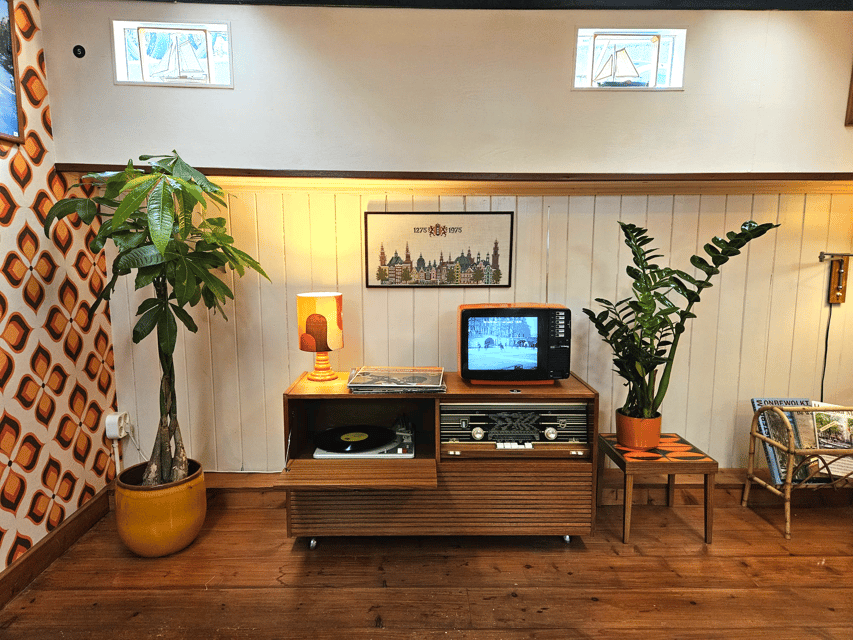
The Houseboat Museum in Amsterdam is built around one specific boat: the Hendrika Maria. This vessel dates to 1914 and started life as a cargo ship. In 1967, it was converted into residential use—turning a working freight barge into a place where a family could actually live day to day. That “how did this become a home?” question is the whole point, and it makes the visit more interesting than a typical museum where everything feels behind glass.
What I like is that you can feel the ship underneath the rooms. Even if the museum portion is smaller than a land-based attraction, the layout makes sense in a ship way: compact spaces, functional features, and a sense that every surface was meant to serve a purpose. The museum setting also helps you understand the lifestyle behind the structure—people didn’t choose houseboats for show. They chose them because life on the water was practical and possible.
Also, this is presented as the only houseboat museum in Amsterdam, which matters. You’re not comparing it to a chain of similar sites; you’re getting a focused experience on one preserved story. It’s a small package, but the theme is clear and satisfying.
You can also read our reviews of more tours and experiences in Amsterdam



The 1970s Interior You Actually Walk Through
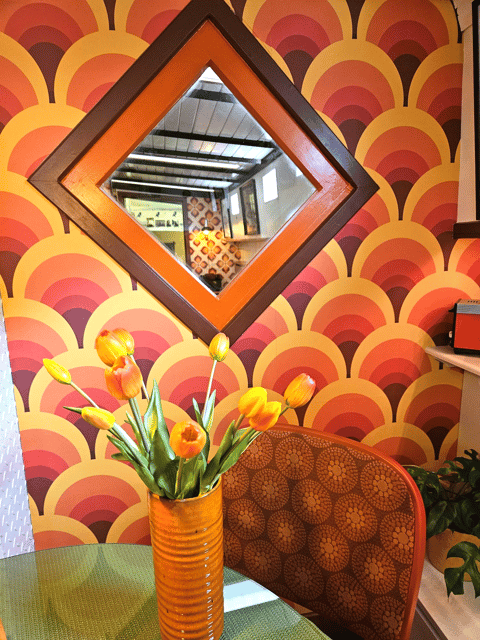
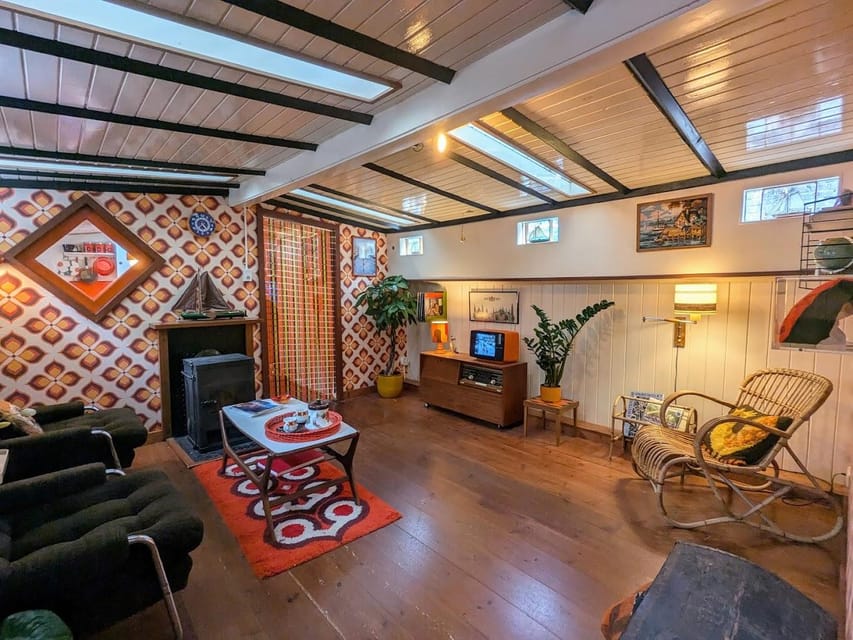
Once you’re inside, the museum leans into a time-and-place look. The interior is still original from the period when it started to function more like a regular house—around the 1970s. Expect a lot of orange, yellow, and brown colors. It might not match modern taste, but that’s the point. You’re stepping into a space as it was lived in, not a showroom recreation.
The vibe can surprise you. Instead of feeling “old,” it often feels like you’re catching someone mid-routine. The rooms are small, the walls and fixtures feel lived-with, and the boat’s layout makes everyday life look different from a standard apartment. If you’ve ever wondered what it would be like to downsize without becoming minimal on purpose, this gives you a realistic angle—no fantasy, no big dramatic spaces.
One more thing: the museum is described as interactive, and there’s a lot of knowledge shared during the visit. That matters because small spaces can become dull if the story is thin. Here, the context is the value. You’re guided through what you’re seeing and why it mattered, so the design choices and practical ship elements stop being random and start making sense.
Living Afloat: A Family of Four’s Daily Reality
A major highlight is the story of how a family of four lived on the ship when it was still used as a freight barge. That contrast—working vessel to home—helps you understand why houseboat life wasn’t just a romantic idea. People had to make real routines work inside a floating structure that was built for transport and cargo first.
You’ll also get a strong sense of continuity. The experience is framed around how residents have lived for more than 100 years on this kind of water-based home. Even if you’re not counting decades as you walk, you absorb the long timeline: changes in how people traveled, how goods were moved, and how that gradually turned into a different kind of lifestyle.
This is where the museum feels especially useful for modern travelers. Today, a lot of “floating homes” you see can look like they were designed for comfort first. Here, you’re learning the earlier logic: functionality, space constraints, and practical decisions. When you understand that, you start seeing the canal scenery in a new way when you’re back outside the boat—less postcard, more real lives.
The Mast, the Leeboard, and Why Sailing Details Matter
One of the most intriguing parts isn’t the living-room style stuff—it’s the ship hardware. The boat includes an original sailing mast and a leeboard. These aren’t decorations. They’re the kind of practical elements that made sailing work in older times, especially when the ship was used to travel to places like Scandinavia for transport.
Why should you care? Because these details connect the museum to the boat’s real purpose. It’s easy to think of old ships as purely historical. But when you see tools like a leeboard in the actual structure, you can picture how navigation and movement were handled when the boat was doing freight work. It turns the ship story from a generic timeline into a believable mechanics-and-life situation.
Also, it gives you something to look for beyond the rooms. If you’re the type who likes “spot the detail” experiences, you’ll probably enjoy focusing on the mast area and imagining the working setup. It’s a small museum, but it’s packed with cues that keep you curious.
How Long You’ll Have (and How to Make It Feel Longer)
The museum experience is short in practice. The official duration is listed as 1 day, but the actual time on-site is much more like a quick, concentrated visit. In fact, plan on something like 15–20 minutes if you follow the audio guide and take it at an easy pace. If you rush, it can feel like you’ve seen everything in just a few minutes.
So how do you make it feel worth your time? Slow down just enough to notice three things:
- the original-feeling spaces and tight corners
- the “1970s look” as a clue to daily life
- the sailing hardware, like the mast and leeboard
If you do that, the visit becomes less like checking off an attraction and more like understanding a living system. The museum includes knowledge-sharing and an audio guide-style flow, so it won’t drag. It just doesn’t pretend to be a full-day museum either.
One smart move: use your time indoors to form a mental picture of daily life—where people slept, ate, and moved around. Then when you’re done, look back at the boat from the outside with that picture in mind. That quick mental shift is where the value sneaks in.
You can also read our reviews of more museum experiences in Amsterdam






Ticket Value: $12 for a One-Boat Experience
At about $12 per person, this ticket isn’t expensive for Amsterdam, but it’s also not the kind of bargain you ignore. The real question is what you want from your day.
Here’s why it can feel like great value:
- You’re paying for access to a real houseboat museum, not a display in a building.
- The museum focuses on a specific story: freight ship → home → museum, with original elements still present.
- The interior is preserved from the 1970s, so the experience includes a strong “period snapshot,” not just a generic layout.
Here’s when it might feel pricey:
- Because the visit is compact, you’ll get more satisfaction if you enjoy detailed commentary and small-space learning rather than big-gallery sightseeing.
- If you’re expecting a long, room-after-room museum day, you may feel done quickly.
So think of the ticket like paying for a smart, focused hour with a clear theme. If that’s your style, you’ll likely feel satisfied. If your ideal museum is all scale and wandering time, you may want to pair this with something else in the neighborhood so your day has more volume.
Space, Stairs, and Practical Comfort Tips
This museum is in a real houseboat, which means space can be limited. You should assume you’ll be walking in a tighter environment than a normal building. The stairs are described as steep, and that’s the main physical consideration.
Here’s how to plan around it:
- Wear shoes with good grip.
- Move slowly on stairs and trust the handholds.
- If you don’t do well with narrow, steep access, consider whether you’re comfortable with that kind of layout.
Photography is allowed, but flash photography is not permitted inside. That’s a normal rule in smaller museums, and it also makes sense on a boat where light matters. If you want photos, plan to use available light and keep your shots respectful and quick.
Finally, be mentally ready for the “throwback” vibe. The design palette is part of the experience—so don’t expect minimalist modern styling. You’re there to see what a home on a boat felt like in that era.
Languages and What That Means for Your Visit
The museum provides support in multiple languages through the host/greeter. Available languages include English, French, Traditional Chinese, German, Spanish, Portuguese, Italian, and Dutch. That wide language range is a practical win: it makes it easier to fully follow the explanations and understand what you’re seeing instead of guessing.
If you’re choosing between languages, pick the one you’re most comfortable with for details. The museum’s value depends on context—how and why the ship was converted, how the family lived, and what the sailing features mean. Having that information in your language turns a short visit into a clearer one.
Who Should Book This Houseboat Museum Ticket?
This is best for:
- You like hands-on, compact history where the object itself is the attraction.
- You’re interested in how daily life worked in unusual living spaces.
- You enjoy guided explanation and audio-style storytelling more than wandering big rooms.
You might skip it (or limit expectations) if:
- You need a long, multi-hour museum experience with lots of open space.
- You’re uncomfortable with steep stairs and tight interiors.
- You’re primarily after views of Amsterdam rather than a specific historical structure.
In other words: book it if you’re curious about living history. Don’t book it expecting a sprawling museum day.
Should You Book the Amsterdam Houseboat Museum Entry Ticket?
I think you should book this ticket if you want a focused, authentic dose of Amsterdam canal life history—one boat, one story, and original details you can see up close. At $12, it’s a fair price for access to the Hendrika Maria and for the chance to experience the 1970s interior plus the freight-ship-to-home transformation.
Skip it only if you know you dislike small spaces or steep stairs, or if you’re hunting for a long sightseeing marathon. If that sounds like you, your time will be better spent elsewhere.
FAQ
What boat is the Houseboat Museum on?
The museum is on the Hendrika Maria, a 1914 cargo ship that was converted into a residential houseboat in 1967.
How long does the visit take?
The overall experience is listed for 1 day, but the practical visit time is short—plan for about 15–20 minutes if you follow the audio guide at an easy pace.
What is included with the ticket?
The ticket includes entrance to the Houseboat Museum.
Is food or drinks included?
No. Food and drinks are not included.
Are photos allowed inside?
Yes, photography is allowed, but flash photography is not permitted inside the museum.
Is the museum suitable for everyone?
Since it’s a real houseboat, space may be limited, and there are steep stairs, which may not be suitable for everyone.