REVIEW · FOOD
Amsterdam : Guided Cultural Food Tour
Book on Viator →Operated by Amsterdamliebe · Bookable on Viator
Follow the monuments, then follow the stories. This guided cultural food tour is a fast, high-signal way to understand how Amsterdam became Amsterdam, from the early city center to the Jordaan and the shopping streets nearby. I really like the small group size (max 15) because the guide can actually answer your questions, and I like the food-and-culture framing with included snacks along the way. One thing to consider: it moves at walking-tour pace, so some big sites near the end are quick looks rather than long visits.
You’ll start at the National Monument steps and get oriented fast, including how the city’s roots go back to the 13th century. I also appreciate that the tour is run in English, with a guide who feels friendly and clear, not like a lecturer. If you’re hoping for time inside every landmark, plan to do that on your own afterward—tickets aren’t included for a few of the major stops near the end.
In This Review
- Key Things I’d Watch For on This Amsterdamliebe Tour
- Getting Your Bearings at the National Monument and Dam Square
- Royal Power and Old Churches: Royal Palace Amsterdam and Oude Kerk
- Golden Age Trade Stories: Beurs van Berlage and Magna Plaza
- Colonialism, Literature, and the Jordaan’s People-First Feel
- Negen Straatjes: Best-Guess Shopping, Bars, and a Real Local Routing
- Near-Anne Frank, Westerkerk, and Begijnhof: Fast Context for Big Names
- The Food Angle: Snacks, Culture, and Why This Isn’t Just a Sightseeing Circuit
- Price and Value: What $102.41 Actually Buys You
- Where the Tour Starts and Ends: A Route That Sets Up Your Next Move
- Who This Tour Suits Best (and Who Might Want Something Different)
- Should You Book This Amsterdam Cultural Food Tour?
- FAQ
- How long is the Amsterdam Guided Cultural Food Tour?
- What’s the group size limit?
- Is the tour offered in English?
- What’s included in the price?
- Where does the tour start?
- Where does the tour end?
- Are tickets for Anne Frank House included?
- Are tickets for Westerkerk and Begijnhof included?
- Is the tour affected by weather?
- What’s the cancellation window for a full refund?
- Are mobile tickets used?
Key Things I’d Watch For on This Amsterdamliebe Tour
- Max 15 travelers: you get more back-and-forth instead of shouting over a crowd.
- English guide with lots of Q&A: the pace works well if you like asking why things happened.
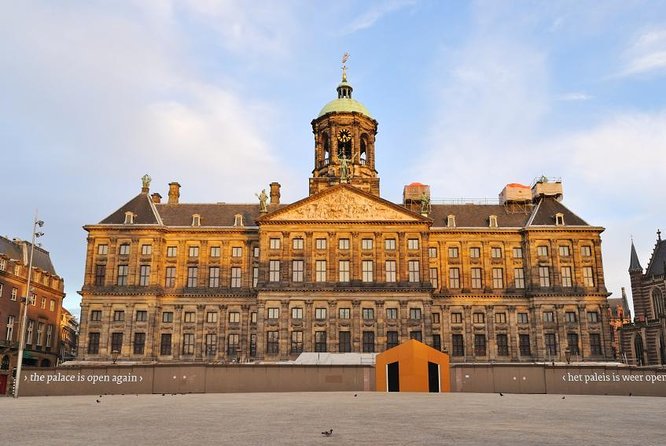
- Stops built around city-making themes: founding, monarchy, trade, colonial-era critique, and neighborhood life.
- Included snacks: small but helpful, especially during a 2.5-hour walk.
- Some sights are exterior/short looks: great for context, not for deep entry.
- Ends at Spui: convenient if you want to keep exploring afterward on foot.
Getting Your Bearings at the National Monument and Dam Square

The tour starts at the National Monument on Dam, which is one of the best places to learn Amsterdam quickly. You stand in the center and immediately get a sense of what the city is proud of, what it mourns, and how public space shapes identity. The guide connects the area to the way Amsterdam formed back in the 13th century, so the stories don’t feel random.
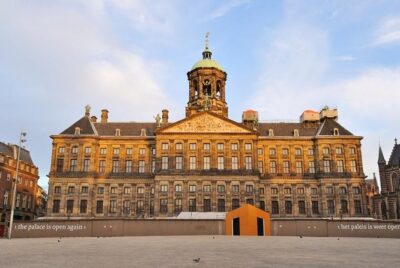
Next comes Dam Square, still the most central and historical kind of “city living room.” You’ll hear how Amsterdam grew from a small fishermen village into the city you see today, and you’ll walk past the royal symbolism with the added context of World War II victims. That matters because a monument-heavy tour can easily feel like dates only. Here, it stays human.
Dam Square also sets you up for the most important mindset shift of the day: Amsterdam isn’t just canals and pretty streets. It’s politics, trade, and power—layered on top of each other.
You can also read our reviews of more food & drink experiences in Amsterdam


Royal Power and Old Churches: Royal Palace Amsterdam and Oude Kerk
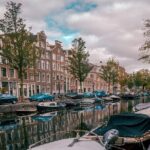
From Dam, you head to the Royal Palace Amsterdam. Even if you’re not a monarchy superfan, this stop is worth it because the guide frames the monarchy in the context of today, not just pageantry. You’ll get a clean overview of why the Netherlands keeps this role and how it shows up in the public story.
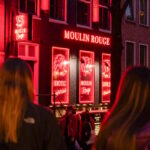
Then it’s on to Oude Kerk, the oldest church in Amsterdam. This is a quick stop, but it’s a strong one for understanding how religious space and social history overlap in older European cities. You’ll also hear how the area tied to the red-light district traces back to the 14th century, which gives you a better sense of how long this kind of urban tension has existed.
One practical tip: since these are landmark exteriors and short segments, wear shoes you trust. The route is compact, and it’s easy to feel like you’re always “just around the corner” until you realize you’ve already walked a couple miles.
Golden Age Trade Stories: Beurs van Berlage and Magna Plaza
Next you get a tour of Amsterdam’s commercial muscles. The Beurs van Berlage stop is where the city’s growth story gets business-like. You’ll learn about the trade history that helped turn a small town into the richest city worldwide during the Golden Age. For food lovers, this matters too, because the way a city gets rich changes what people eat, what businesses thrive, and how neighborhoods develop.
Right after that, you’ll pass through Magna Plaza, a building famous for its architecture and its earlier life as a former post office. The point of this stop isn’t just “pretty building.” It’s how Amsterdam repurposes major structures, keeping their identity while giving them new roles. If you like cities that reuse the bones instead of wiping them clean, this stop lands well.
Even in short segments, the guide keeps connecting the dots. You’ll start to see Amsterdam not as a museum, but as a working city with layers you can still read.
Colonialism, Literature, and the Jordaan’s People-First Feel

At the Statue of Multatuli, the tone shifts in an important way. You’ll learn about the dark side of colonialism that helped the Netherlands gain riches—and also the criticism that came after. The guide ties that to the life and importance of the Dutch author Multatuli. This is one of the best moments on the tour if you like your sightseeing with an ethical edge, not just postcard facts.
Then you move into the Jordaan, one of Amsterdam’s most picturesque neighborhoods. The guide gives the neighborhood story and explains how the smaller houses and canal-era living shapes came together. This is where the walk starts feeling less like “see the highlights” and more like “understand the vibe.”
For many people, this neighborhood is the highlight zone because it’s charming without being fake. You’ll likely slow down naturally as you pass streets designed for everyday life—small-scale views that make the rest of the city feel more lived-in.
Negen Straatjes: Best-Guess Shopping, Bars, and a Real Local Routing

After the Jordaan comes 9 Little Streets, also known as Negen Straatjes. This section is built for people who want to keep exploring on their own right after the tour, without wandering aimlessly. You’ll get tips for the best bars, restaurants, and shopping opportunities around the 9 straatjes area.
The value here is the “where should I go next” guidance. Amsterdam is full of pretty streets, but not every street is equally convenient for your exact interests. A good local route can save you an hour of trial-and-error.
Also, because this is still part of a timed tour, you’ll get just enough context to recognize what you’re looking at when you turn a corner again later.
You can also read our reviews of more tours and experiences in Amsterdam






Near-Anne Frank, Westerkerk, and Begijnhof: Fast Context for Big Names

The tour includes a brief look near the Anne Frank House. You don’t go deep here, and entry isn’t included, but it’s a meaningful pause in the route. If you know the story already, the quick context helps you place the house in the broader flow of the day. If you’re learning, the guide’s framing helps you understand why this site matters beyond Amsterdam’s usual tourist script.
Then there’s Westerkerk, one of the biggest and most beautiful churches in Amsterdam. Admission isn’t included, and the stop is short, but it’s a great moment for architecture context and scale. This is where you can appreciate how the city’s religious buildings aren’t just old—they’re dominant features in the urban skyline.
The day ends with Begijnhof, a stunning enclosed courtyard area with a hidden church inside (and yes, you’ll get a chance to spot it). This is the kind of stop that changes the mood. You go from streets and traffic flow to a quiet pocket where you can feel how different daily life must have been there.
If you’re someone who likes calm moments at the end of a busy day, this final stretch works well. It gives the tour a gentle landing after the busy central sights.
The Food Angle: Snacks, Culture, and Why This Isn’t Just a Sightseeing Circuit

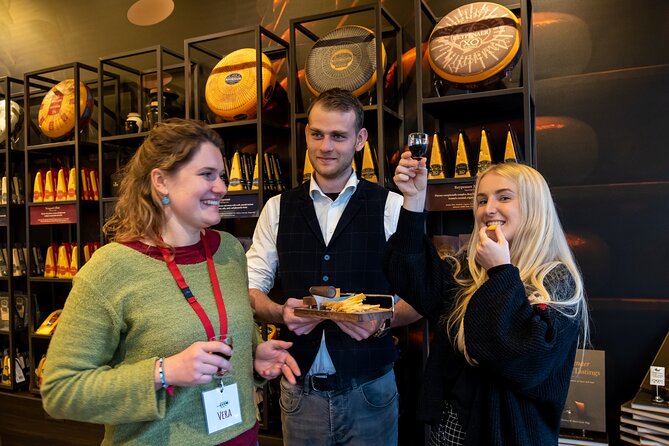
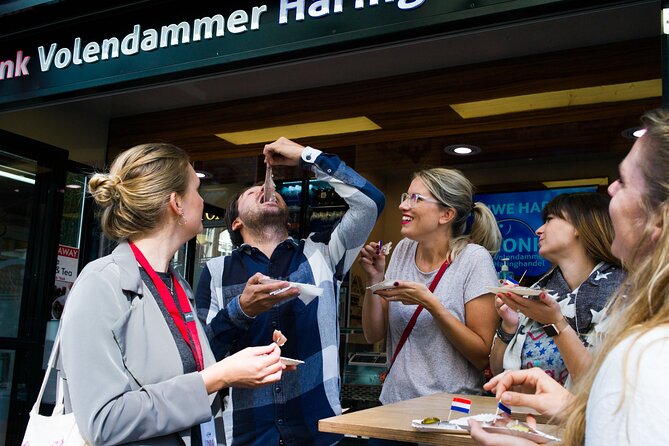
The title says guided cultural food tour, and what that means in practice is snacks included plus a guide who talks about culture as you walk. You’re not just memorizing buildings. You’re hearing how Amsterdam became the kind of place where food culture matters—how neighborhoods form, how trade history shapes daily life, and how people build traditions in the streets they live in.
Even without a long sit-down meal, snacks do something important: they keep your energy steady for a 2.5-hour walk. That makes the tour feel more “doable” than the typical marathon of landmarks.
If you’re deciding between a pure history walking tour and this one, this option is the better fit when you want both. You’ll get the big-story city framework, but the emphasis stays on culture you can connect to real daily life.
Price and Value: What $102.41 Actually Buys You
At $102.41 per person for about 2 hours 30 minutes, the price isn’t the cheapest option in Amsterdam. But it’s not just paying for motion—you’re paying for a guide, a small group, and a route that hits major “understand the city” themes without wasting time.
A key value point: most stops have free admission tickets included in the plan (the itinerary lists free tickets for the early sights), and you also get snacks plus a 1.50€ tourist tax included in the cost. When the tour is structured so many stops don’t require extra ticket purchases, you’re less likely to feel nickel-and-dimed mid-walk.
The other value piece is group size. A max of 15 travelers is a real difference in a city like Amsterdam, where crowds can turn questions into silence. If you’re the type who asks why a monarchy matters here, or what colonial criticism means in the middle of a walking route, this tour format helps.
Where the Tour Starts and Ends: A Route That Sets Up Your Next Move
You start at National Monument Dam, 1012 JS Amsterdam and end at Spui Square area (Art Amsterdam Spui, Spui 20HS, 1012 XA). That end point is handy because it’s easy to keep going on foot afterward. If you want to return to Dam Square, you can follow the guide back the way you came, but you don’t have to.
Also, the start location is central enough that getting there via public transportation is usually straightforward. If you’re planning a packed day, this kind of start-and-finish design reduces stress.
Who This Tour Suits Best (and Who Might Want Something Different)
This tour is a strong fit if you want an introduction to Amsterdam that doesn’t stay shallow. It works especially well for history buffs and food-minded travelers because the guide connects city growth, trade, and social change to the everyday culture you’ll notice later.
It’s also a good choice if you like small groups and clear English. The experience is run in English, and the guide’s style—charismatic, friendly, and easy to understand—means the tour doesn’t feel like you’re being rushed through a script.
You might want a different tour if you’re hoping for extended time at major indoor attractions. The Anne Frank House, Westerkerk, and Begijnhof are handled as shorter stops, with admission not included for some of them. Think of this as context and orientation, not a replacement for a ticketed visit.
Should You Book This Amsterdam Cultural Food Tour?
If you want a compact, story-driven walk that covers the city’s big themes and still leaves you energy for independent wandering, I’d book it. The best reasons are the small group limit, the English-speaking guide who answers questions clearly, and the way the route ties landmarks to how Amsterdam functions as a lived-in place.
I’d hesitate only if you’re the kind of traveler who needs lots of time inside attractions, or you hate walking when the schedule is tight. In that case, you might pair a longer ticketed visit later with a shorter orientation tour like this—or choose a route with longer museum time.
FAQ
How long is the Amsterdam Guided Cultural Food Tour?
It’s approximately 2 hours 30 minutes.
What’s the group size limit?
The tour has a maximum of 15 travelers.
Is the tour offered in English?
Yes, it’s offered in English.
What’s included in the price?
The tour includes a 2.5-hour walking tour with a guide, snacks, and a 1.50€ tourist tax.
Where does the tour start?
It starts at National Monument Dam, 1012 JS Amsterdam, Netherlands.
Where does the tour end?
It ends at Art Amsterdam Spui on Spui 20HS, 1012 XA Amsterdam, with the tour finishing on Spui square.
Are tickets for Anne Frank House included?
No. The Anne Frank House is listed as admission not included.
Are tickets for Westerkerk and Begijnhof included?
No. Westerkerk and Begijnhof are listed as admission not included.
Is the tour affected by weather?
Yes, it requires good weather. If it’s canceled due to poor weather, you’ll be offered a different date or a full refund.
What’s the cancellation window for a full refund?
You can cancel up to 24 hours in advance for a full refund.
Are mobile tickets used?
Yes, the tour uses a mobile ticket.