REVIEW · ROTTERDAM, DELFT & THE HAGUE TOURS
The Hague, Delft and Rotterdam Small-Group Tour (Max. 8 People)
Book on Viator →Operated by K7 Travel Amsterdam · Bookable on Viator
Three cities in one long, efficient day. I love the small-group size (max 8) and the hotel pickup that gets you out of Amsterdam fast, then back without drama. This one-day route mixes Rotterdam’s port-era grit and modern design with Delft’s blue pottery charm and The Hague’s law-and-politics landmarks.
The possible downside is that it’s a busy walking day. You’ll see a lot of famous places up close, but some stops are mostly for photos and views, not long museum-style time.
In This Review
- Key points worth knowing before you go
- Rotterdam, Delft, and The Hague in one day (and why it works)
- Small-group comfort and price value: what you’re really paying for
- Pickup from Amsterdam: the smooth part (if you prep it)
- Rotterdam’s Markthal and Oude Haven: food, art, and old harbor vibes
- Markthal: the huge indoor mural market
- Grote of Sint-Laurenskerk: a medieval survivor
- Oude Haven: Rotterdam’s oldest port, now for strolling
- Cube houses to the Erasmus Bridge: catching Rotterdam’s design identity
- Kijk-Kubus (Cube Houses): “living as an urban roof”
- Erasmus Bridge: Rotterdam’s landmark logo
- Euromast: tower views and a 1960s expo origin
- Delft’s Markt area: churches, city hall, and that blue-pottery gravity
- Stadhuis Delft (City Hall): Renaissance on the Markt
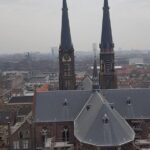
- New Church tower: the skyline marker
- Markt time: shop, snack, and choose your pace
- Royal Delft factory vs Madurodam: your included 45-minute ticket
- Royal Delft: live Delft Blue painting
- Madurodam: a miniature-city shortcut
- The Hague’s Peace Palace to Binnenhof: why this part feels different
- Peace Palace: the institutions in plain view
- Noordeinde Palace and royal workplace context
- House of Representatives and Binnenhof: the oldest parliament use in the world
- Pacing and what to expect on the ground (including walking)
- Who should book this tour (and who might feel frustrated)
- Should you book this Small-Group Tour to Rotterdam, Delft and The Hague?
- FAQ
- What time does the tour start, and when does pickup happen?
- What’s the group size?
- Is lunch included?
- Do I choose between Madurodam and Royal Delft?
- How much walking is involved?
- Where does hotel pickup happen in Amsterdam?
- What language is the tour in?
- Is the tour affected by weather?
- Can I cancel for a full refund?
Key points worth knowing before you go
- A real max-8 group: easier questions, better pace control, and more personal attention in tight city spots
- Rotterdam’s Market Hall and Oude Haven: a food-and-photo combo that feels like a break, not another lecture
- Cube Houses and Erasmus Bridge: modern Rotterdam design without needing to be an architecture buff
- Delft’s Markt area: you get the City Hall and New Church in a walkable, central pocket
- Pick one included ticket: Royal Delft live painting or Madurodam’s miniature city
- The Hague’s power centers: Peace Palace plus the Binnenhof complex give you political context fast
Rotterdam, Delft, and The Hague in one day (and why it works)
If you’ve only got a day and you want more than another canal stroll, this tour is built for that moment. You’ll start in Rotterdam, slow down a bit in Delft, then finish in The Hague where you can literally feel the weight of international law and Dutch governance.
What makes the day click is the mix of “see it, understand it, eat it, walk it.” In Rotterdam you get Markthal’s huge indoor mural scene and a quick pass through the city’s older layers around the harbor. Then Delft gives you the classic center—Markt square, churches, and city buildings. Finally, The Hague delivers the big institutions: Peace Palace, parliamentary buildings, and palaces used by the royal family.
It’s also a small-group format, which matters. When the van carries up to eight people, the guide can stop at the right places for photos and keep the timing realistic. That’s how you end up with a day that feels full, not chaotic.
You can also read our reviews of more tours and experiences in Amsterdam.
Small-group comfort and price value: what you’re really paying for
The price is about $156.07 per person, and the value is in the package. You’re not just paying for a guide. You’re paying for the whole “day-assembly” work: hotel pickup, transportation between three cities, and a structured itinerary with time boxes per stop.
Entry fees are included, and one of the biggest costs—your Madurodam or Royal Delft ticket—is included in the option you choose. That turns the day into something you can budget confidently: you know you’ll pay for a major activity (either the miniature park or the live Delft Blue pottery demonstration), and you don’t have to sort out tickets mid-trip.
One practical note: lunch isn’t included. The good news is the itinerary lands you near places where you can grab food easily, especially in Rotterdam at Markthal and later back in Delft around the Markt.
Pickup from Amsterdam: the smooth part (if you prep it)
The tour starts at 8:00am, with pickup between 7:45am and 8:30am. If you’re staying in Amsterdam, the pickup coverage focuses on hotels in the Highway Ring A10, excluding the north part of the IJ river (Het IJ). If you’re on the north side, you can use the free ferry to reach central Amsterdam and meet at Amsterdam Central Station.
Two things to do that will save you stress:
- Put a reachable WhatsApp or iMessage number in your booking so the team can confirm details the day before.
- If your hotel info isn’t in the booking, plan to meet at Amsterdam Central Station.
On the morning of the tour, wait in front of your hotel about 5 minutes before the guide arrives.
Rotterdam’s Markthal and Oude Haven: food, art, and old harbor vibes
Rotterdam can feel like a city built from reinvention—especially after the World War destruction and rebuilding. This route starts by giving you the “wow” before the architecture lessons.
Markthal: the huge indoor mural market
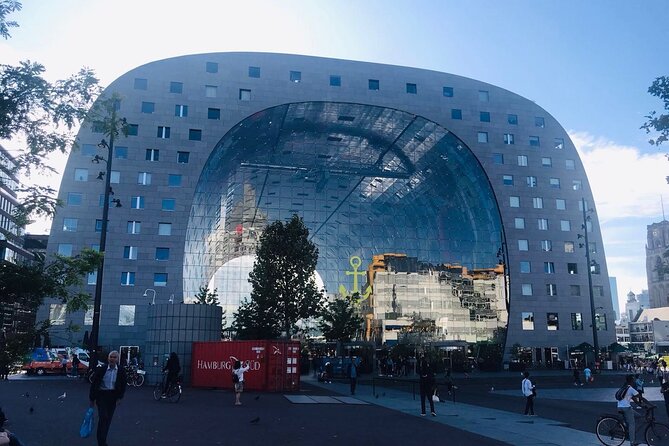
You’ll visit Market Hall (Markthal) first for about 30 minutes. It’s described as the world’s largest and most beautiful fashionable market hall, with nearly 11,000 m² of indoor paintings on the walls. Whether you’re hunting Dutch food or just snapping photos, it’s a fast way to see Rotterdam’s modern identity in one spot.
The practical angle: Markthal is also where you can snack like a local. You’ll find traditional treats such as cheese, haring fish, and stroopwafel. Since lunch isn’t included, this is a smart place to grab something quick and not waste the rest of the day thinking about meals.

Grote of Sint-Laurenskerk: a medieval survivor
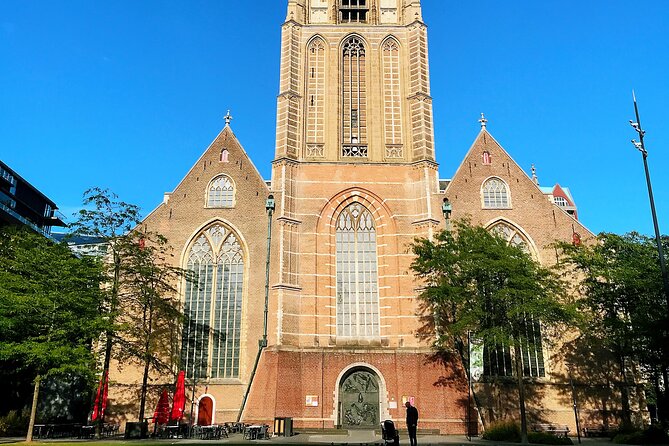
Next up is Grote of Sint-Laurenskerk for about 20 minutes. The key idea here is that it’s the only remnant of the medieval Rotterdam city. It’s also noted as the first all-stone building in Rotterdam. After heavy wartime damage and repairs, it still stands with its current form and now hosts exhibitions and concerts. Even if you don’t go inside for a long period, the context adds meaning to what you’re seeing.
Oude Haven: Rotterdam’s oldest port, now for strolling
Then you’ll head to Oude Haven (about 15 minutes). This old harbor dates to 1350, and the area around it has historical buildings plus modern life—bars and restaurants. You can take a casual walk here, mixing old barges and moored modern yachts. It’s also a nice reset: the day stays energetic, but Oude Haven gives you a calmer moment to breathe and look outward over the water.
Cube houses to the Erasmus Bridge: catching Rotterdam’s design identity
After the older harbor textures, the tour shifts into modern Rotterdam visuals.
Kijk-Kubus (Cube Houses): “living as an urban roof”
You’ll stop at Kijk-Kubus for around 20 minutes. These cube houses rotate the idea of conventional homes by turning the cube 45 degrees and resting it on a hexagon-shaped pylon. The concept is described as high-density living with space at ground level—so the design isn’t just a gimmick. It’s architecture that tries to solve housing constraints, and that’s exactly why it’s worth a photo.
Erasmus Bridge: Rotterdam’s landmark logo
The route then includes Erasmus Bridge for about 15 minutes. It’s a combined cable-stayed and bascule bridge crossing the Nieuwe Maas River, connecting the north and south parts of Rotterdam. It’s even part of Rotterdam’s official logo—so if you’ve seen the bridge in posters or city branding, this is where it becomes real.
In practice, this is a great stop for skyline photos. It’s also a quick place to ask your guide what you’re seeing—because Rotterdam’s engineering style can look like abstract shapes until someone gives you the language for it.
Euromast: tower views and a 1960s expo origin
You’ll also visit Euromast, the observation tower built for the 1960 Floriade Flower Expo, listed as a monument since 2010. The tour info describes it as the highest building of the Netherlands and part of the World Federation of Great Towers.
Even if you don’t spend a long time up top, the value is the perspective. Rotterdam’s story is about rebuilding and reinventing. A tower stop helps you make sense of how the city is laid out across the river.
Delft’s Markt area: churches, city hall, and that blue-pottery gravity
Once you’re done with Rotterdam’s big visuals, Delft feels different—smaller, more walkable, and easy to picture as a day trip even if you’ve never been here before.
You’ll spend about 30 minutes with time for views of the city center and lunch on your own. Then the itinerary focuses on the classic heart of town.
Stadhuis Delft (City Hall): Renaissance on the Markt
You’ll stop at Stadhuis Delft for about 15 minutes. The city hall is Renaissance style, located on the Markt square across from the Nieuwe Kerk. It’s used as the seat of government and is also a popular venue for civic wedding ceremonies. The note that administrative functions moved to an office in the Delft railway station building adds a modern twist: Delft preserves its symbols while shifting daily operations elsewhere.
New Church tower: the skyline marker
Next is the New Church for about 15 minutes. It’s a Protestant church on the Delft Markt opposite the city hall. The church tower was completed in 1872 and is described as the second highest in the Netherlands (after Utrecht’s Domtoren). If you want a “Delft looks like Delft” moment, this helps anchor the city’s scale.
Markt time: shop, snack, and choose your pace
There’s another 15 minutes on the Markt itself—restaurants, bars, shops, and the kind of central square where you can decide what kind of break you want. This is also one of your best chances to adjust your energy level before the next included ticket option.
Royal Delft factory vs Madurodam: your included 45-minute ticket
This is one of the most important choices on the tour. You’ll visit either Royal Delft Blue Porcelain Factory or Madurodam, not both, and the ticket is included in the price.
Royal Delft: live Delft Blue painting
Royal Delft is described as the last remaining factory from the original 32 that were established in Delft during the 17th century. It’s been active for over 360 years, and you can see live painting. If you like crafts, this is the more “hands-on tradition” option. It also fits the Delft theme better than any photo-only stop because it connects the famous blue look to how it’s actually made.
Madurodam: a miniature-city shortcut
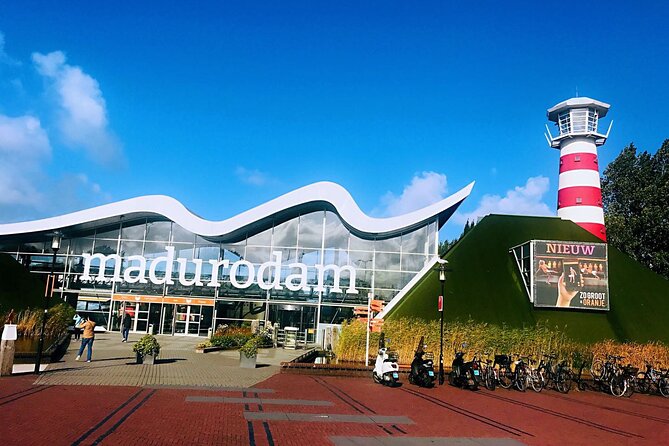
Madurodam is a 1.8 square kilometer miniature park and attraction in The Hague, built around 1:25 scale replicas of famous Dutch landmarks and historical developments. The tour info says it became the smallest city in the world in 1972, and the park groups more than 120 famous buildings and sites.
This option tends to feel great if you want variety without long lines or deeper museum commitment. It’s also a nice way to compress “Dutch landmarks” into one pass before you move into the more serious official buildings of The Hague.
The Hague’s Peace Palace to Binnenhof: why this part feels different
The Hague section is where the tour stops being about pretty streets and starts being about power, law, and decision-making. Even if you’re not a politics person, you’ll leave with clearer context.
Peace Palace: the institutions in plain view
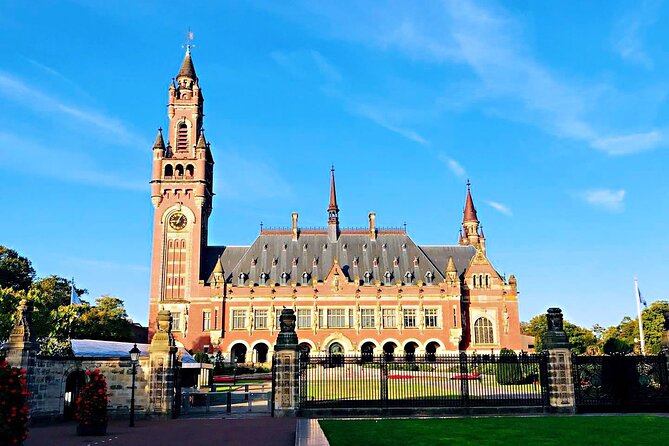
You’ll spend about 20 minutes at the Peace Palace, an international law building that houses the International Court of Justice, the Permanent Court of Arbitration, the Hague Academy of International Law, and the Peace Palace Library. The practical value is that your guide can point out how this building isn’t just ceremonial—it’s connected to real global legal work.
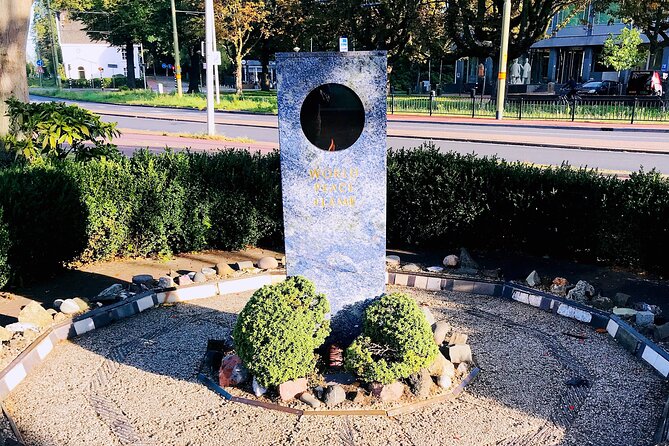
In at least one described experience, Reinier added extra context around the Peace Palace area, including pointing out the World Flame of Peace while explaining the theme of reconciliation.
Noordeinde Palace and royal workplace context
The itinerary also includes Noordeinde Palace, one of the three official royal palaces. It’s been used as the workplace of King Willem-Alexander since 2013. This is the kind of stop where you’ll mainly see the exterior, but it helps you understand how the monarchy fits into modern Dutch governance and daily state life.
House of Representatives and Binnenhof: the oldest parliament use in the world
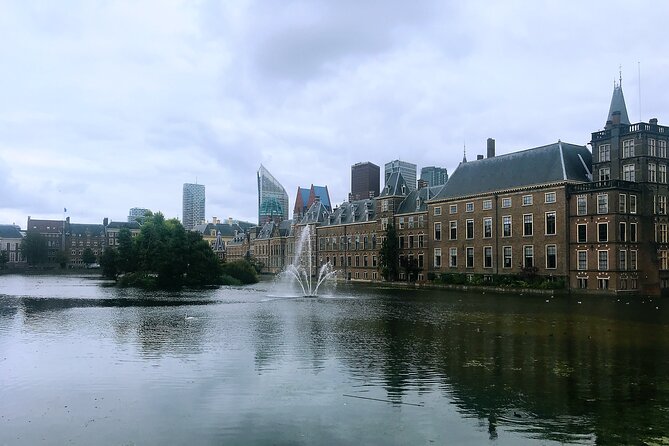
Then you move to political buildings for longer looks. The House of Representatives stop is about 30 minutes. You’ll learn how it drafts laws, monitors the government, and decides whether a cabinet has enough confidence.
Next is Binnenhof & Ridderzaal for about 30 minutes. Binnenhof was built primarily in the 13th century and became the political centre of the Dutch Republic in 1584. It’s described as the oldest Parliament building in the world still in use. That’s a big claim, but the takeaway is simple: you’re standing in a place that has served government purposes for centuries.
Pacing and what to expect on the ground (including walking)
This is a 9 to 10 hour day. The stops are tightly scheduled, with time windows ranging from about 15 minutes at several photo stops to 30 minutes for others, and then 45 minutes for your included ticket option.
That timing creates two experiences at once:
- You get a lot of variety (you’ll likely feel you covered the “main story” of each city).
- You don’t get unlimited wandering in every corner.
A few practical tips based on the way this tour is set up:
- Wear shoes you can walk in for long blocks. Walking is required, and it’s not recommended for slow walkers.
- Plan your lunch strategy early. Markthal is an ideal spot to grab something quick.
- If you’re hard of hearing or sit far back, bring patience. Some people noted the guide could be harder to hear from the back of the van, so it helps to sit where you can see and hear clearly.
Also, don’t expect every landmark to involve entry. Some big sights are described as view-and-photo moments rather than inside stops.
Who should book this tour (and who might feel frustrated)
This tour is best for you if:
- You’re based in Amsterdam and want a one-day South Holland sampler without renting a car.
- You want a balanced mix of modern Rotterdam, historic Delft, and official The Hague.
- You enjoy short guided context that makes photos more meaningful.
You might want to skip or adjust your expectations if:
- You need long museum time at multiple stops. This route is designed for coverage, not deep dives.
- You struggle with walking or standing for extended periods.
- You prefer to enter every site. Some stops are mainly exterior views.
One more point I like: guides can bring the day to life in a human way. Recent experiences include guides like Leidse, Pete, Reinier, Erik, and Simon, with strong comments about keeping the day upbeat, using humor, and staying organized with on-the-day communication.
Should you book this Small-Group Tour to Rotterdam, Delft and The Hague?
Yes, if you want a high-value, structured day that turns three cities into one coherent story. It’s not the cheapest way to “see South Holland,” but the price starts to look fair once you factor in pickup, transportation, and the included major ticket (Royal Delft or Madurodam).
Book it if you like city highlights with guidance, and you’re comfortable with a full schedule and short stop times. Skip it—or plan something separate—if you need slow, in-depth time in one place.
If you do book, my advice is simple: eat smart at Markthal, choose the ticket option that matches your style (crafts vs mini-world), and expect to walk. You’ll leave with a solid picture of Rotterdam’s rebuild energy, Delft’s iconic blue look, and The Hague’s real political weight.
FAQ
What time does the tour start, and when does pickup happen?
The tour starts at 8:00am. Pickup is offered between 7:45am and 8:30am.
What’s the group size?
The group is limited to a maximum of 8 travelers.
Is lunch included?
No. Lunch is not included, so you’ll need to buy your own meal during the free time.
Do I choose between Madurodam and Royal Delft?
Yes. You choose one: Madurodam or the Royal Delft Blue Pottery Factory. You don’t do both.
How much walking is involved?
Walking is required, and the tour isn’t recommended for slow walkers.
Where does hotel pickup happen in Amsterdam?
Pickup is offered for locations in the Highway Ring A10, excluding the north part of the IJ river (Het IJ). If you’re north of that, you can take the free ferry to central station.
What language is the tour in?
The tour is offered in English.
Is the tour affected by weather?
Yes. It requires good weather. If it’s canceled due to poor weather, you’ll be offered a different date or a full refund.
Can I cancel for a full refund?
Yes. You can cancel up to 24 hours in advance for a full refund.