REVIEW · 3-HOUR EXPERIENCES
Rijksmuseum 3h Private Guided Tour & Entry Tickets
Book on Viator →Operated by Tour Up in Europe · Bookable on Viator
A museum this big can feel like a sprint. This private 3-hour Rijksmuseum tour keeps you moving with a personalized route, while also getting you into the right rooms fast to see Rembrandt and Vermeer without getting lost. I especially like the way the guide connects paintings to Dutch history, so it feels less like a checklist. One thing to plan for: you may still hit a line for entry, even with a guide.
With a private guide, the museum stops being one huge building and turns into a set of meaningful scenes. You’ll spend real time with major works like Rembrandt’s The Night Watch and Vermeer’s The Milkmaid, then you’ll pivot to portraits and Golden Age naval power—maps, ship models, and maritime artifacts.
At this price point ($345.51 per person for 3 hours), it’s a great match if you want guidance and structure. If you prefer wandering with zero schedule and don’t mind reading labels slowly, you might get similar art access by going on your own.
In This Review
- Key things to know before you go
- Why a private Rijksmuseum tour makes sense in 3 hours
- Your 3-hour plan: a smart route through Dutch Masters
- Stop 1: Rijksmuseum highlights that set the tone
- Rembrandt’s works: what to watch for beyond the fame
- Vermeer’s light: slowing down for meaning
- Frans Hals and Dutch portraiture: energy in faces
- Golden Age maritime power: maps, ship models, and artifacts
- The Gallery of Honour: iconic paintings in their original setting
- Price and value: when $345.51 per person feels fair
- Timing realities: the entry line you should plan for
- Where you start and how the tour ends
- Who this Rijksmuseum tour fits best
- Should you book this Rijksmuseum private guided tour?
- FAQ
- How long is the Rijksmuseum private guided tour?
- Is the tour private?
- Does the price include admission tickets?
- What language is the guide?
- Where do we meet for the tour?
- Can I get a full refund if I cancel?
Key things to know before you go
- Private guide, private experience: only your group, so you can ask questions and move at your pace.
- Admission tickets included: you arrive knowing entry is already handled.
- English-language tour: focused explanations for art and historical context.
- Route is personalized: you’re not stuck on a one-size-fits-all loop.
- You cover three art pillars: Rembrandt, Vermeer, and Dutch portraiture (Frans Hals).
- Golden Age beyond paintings: expect maritime themes with maps, ship models, and related artifacts.
Why a private Rijksmuseum tour makes sense in 3 hours
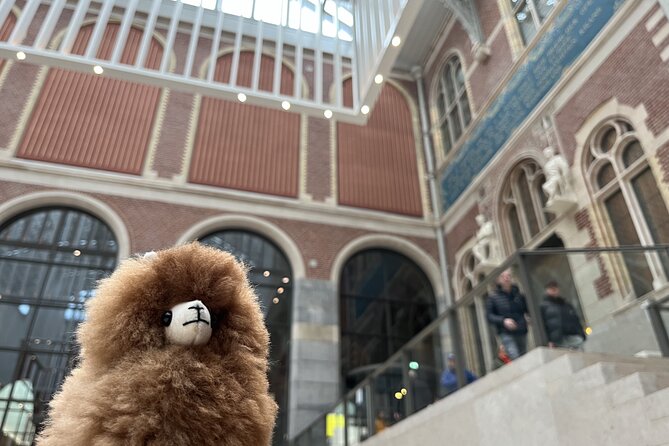
The Rijksmuseum is famous for a reason: it’s loaded. But the downside of that fame is crowd pressure and decision fatigue. You walk in and instantly face a maze—big galleries, tight sightlines, and the temptation to rush past the works you actually came for.
A private guided tour helps you do two things at once. First, you get a route that makes the museum feel manageable in a short visit. Second, you get context while you’re standing in front of the art, which is when it actually lands.
I like that this tour isn’t just about famous names. You’re guided through Dutch art and history with specific stops built around major masterpieces: Rembrandt, Vermeer, Frans Hals, and the Dutch Golden Age. That’s the sweet spot for most first-timers—see the heavy hitters, then understand what they meant.
The one caution I’d give you is time planning at the entrance. Even with the guide and tickets, there can be a wait when you arrive. Build in a little patience at the start so you don’t feel behind for the rest of the tour.
You can also read our reviews of more tours and experiences in Amsterdam



Your 3-hour plan: a smart route through Dutch Masters
This experience is designed around a tight, high-impact flow. You’re at the museum for about 3 hours, and you focus on a set of major art moments instead of trying to cover the whole collection.
That matters because the Rijksmuseum is not the kind of place you can do well by speed-walking. You need time to stand back, step sideways, and actually look. A guide helps you choose where to linger.
Here’s how the tour pacing works in practice: you start with big Dutch art milestones, then you shift into portraiture and Golden Age storytelling. The goal is that by the time you reach the centerpiece display areas, you’ll know what you’re seeing and why it matters.
If you’re the type who loves art but also hates feeling rushed, this timing is usually the right balance. It gives you enough structure to feel confident, while still leaving room to slow down when something grabs you.
Stop 1: Rijksmuseum highlights that set the tone
The tour begins at the Rijksmuseum itself, and the opening approach is key. You’re not just handed a list of paintings. You’re shown how Dutch art evolved during the Golden Age, and how themes like identity, faith, civic life, and maritime power show up in the works you’ll see.
The tour spotlights three major art groups during your visit:
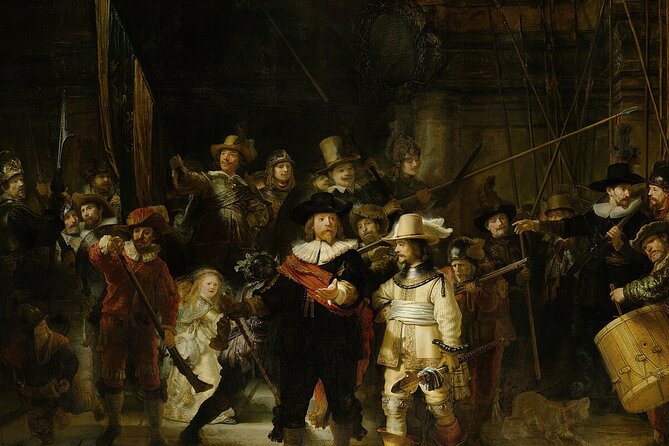
- Rembrandt’s masterpieces (including works such as The Night Watch, The Jewish Bride, and The Syndics of the Drapers’ Guild)
- Vermeer’s light and elegance (including The Milkmaid and Woman Reading a Letter)
- Frans Hals and Dutch portraiture for expressive, lively faces that defined the era
Even if you already recognize some titles, the value here is in how the guide connects them. You start seeing patterns: how artists built stories through faces, clothing, and composition—and how the era’s wealth and values shaped what was painted.
Rembrandt’s works: what to watch for beyond the fame
Rembrandt at the Rijksmuseum is a strong start because he sets the emotional tone of Dutch art. Standing in front of a major canvas, it’s easy to focus only on the obvious: the subject, the drama, the big gestures.
A good guided visit helps you notice the smaller decisions. With Rembrandt, that often means how the light directs your attention and how expressions carry meaning. In this tour, you’re pointed toward key works like The Night Watch alongside portraits such as The Jewish Bride and the group portrait The Syndics of the Drapers’ Guild.
Here’s why those choices work so well together:
- The Night Watch helps you see Rembrandt’s power with movement and scene-building.
- The Jewish Bride gives you a more intimate, personal feel—texture and expression matter more than action.
- The Syndics of the Drapers’ Guild shows how civic life and status are painted into faces, posture, and presence.
This is where I’d expect you to spend real attention time. If you do, you’ll leave with more than a photo memory. You’ll remember what to look for next time you see a Rembrandt.
Vermeer’s light: slowing down for meaning
Vermeer can feel almost unreal at first glance. The scenes look calm, but the details don’t sit still when you’re actually watching them.
On this tour, you’ll focus on works including The Milkmaid and Woman Reading a Letter. The framing is practical: you’re learning how Vermeer’s approach to light and quiet interior life creates a mood, not just a pretty picture.
I like that the tour doesn’t treat Vermeer as a separate sidetrack. It places him after Rembrandt, so you can feel the contrast between dramatic public art and private, everyday moments.
When you’re in front of Vermeer, here’s what you should try to do: slow down enough to look at the light source and how it shapes the room. Then step back mentally and ask what the scene is really about—attention, time, and the weight of ordinary actions.
If you’ve never taken a guided look at Vermeer before, this part is often the most rewarding because it trains your eye. Not with fancy art jargon, but with simple, clear ways to see.
You can also read our reviews of more guided tours in Amsterdam






Frans Hals and Dutch portraiture: energy in faces
Portraiture in the Dutch Golden Age is where you can really feel the personality of the era. Frans Hals is famous for expression, and a guided stop helps you catch what you might otherwise miss when you’re trying to move quickly.
On this tour, you’re guided through Dutch portraiture with Hals included. The payoff is that the portraits don’t just sit there as still images. They feel alive—like you’re catching people mid-thought.
This is a great segment if you enjoy art that feels social. Group portraits, face-forward composition, and strong character work connect to the civic and cultural world behind the paintings.
It also gives you a break from the museum’s grandest spaces. Portraits are easier to approach emotionally and visually. You can stand near them and actually read the human story without needing the full background of the big Golden Age naval and historical themes.
Golden Age maritime power: maps, ship models, and artifacts
Not every art museum tour gets out of the paintings. This one does, and that’s a big reason it works.
You’re set up to explore Dutch Golden Age naval power and exploration, including maps, ship models, and maritime artifacts. That matters because the Netherlands in that era wasn’t just producing artists—it was building an empire of trade, exploration, and ships. Those ambitions shaped wealth and culture, and artists responded to the world they lived in.
I like that this portion broadens your understanding of the museum. Instead of thinking you’re only seeing decoration and portraiture, you start seeing a connected story: power, commerce, exploration, and the way society presented itself.
If you’re the type who likes facts and objects you can point to, this section will feel especially satisfying. Maps and ship models are “hands-on adjacent” even though you’re standing behind glass. They give you tangible shape to the historical themes behind the art.
The Gallery of Honour: iconic paintings in their original setting
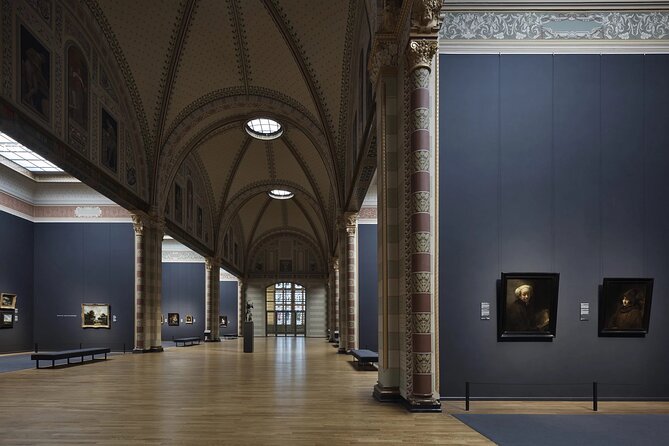
The tour culminates with a visit to the Gallery of Honour, where major works are displayed in their grand, original setting.
This part is important for two reasons. One, you get to see the museum’s showpiece space after you’ve built some context through Rembrandt, Vermeer, and the other themes. Two, it helps you understand scale and placement—how the museum itself choreographs what you see.
Even if you’ve seen photos of the Gallery of Honour, there’s a difference when you’re there. The room changes how you read the works. You’re not only observing an image; you’re observing a curated experience created for how these paintings should be seen together.
This segment is also a nice finish for short tours. You end on impact rather than running out of time before you reach the museum’s most famous area.
Price and value: when $345.51 per person feels fair
Let’s talk money honestly. At $345.51 per person for about 3 hours with a private English guide and entry tickets included, you’re paying for structure, pacing, and interpretation.
So when is it good value?
- If you want to hit the key masterpieces without spending your visit guessing which rooms to start with.
- If you like art explanations that help you look smarter, not just read faster.
- If you’re coming with someone who benefits from live guidance, like a friend who doesn’t want to wade through labels.
When might it feel expensive?
- If you’re comfortable navigating alone and you only want general access to famous works.
- If your group loves independent wandering and you’re happy to spend extra time figuring out your own route.
From a practical traveler standpoint, I think this cost makes sense when you treat it as a time-saver and a meaning-maker. The tickets remove uncertainty. The private guide removes confusion. The route removes the stress of trying to do too much in too little time.
Timing realities: the entry line you should plan for
One real-world note: you should expect some queueing around admission. Even with a guide and your tickets, the museum can have a line.
This doesn’t have to ruin the day. It just means your first 15 to 30 minutes might start with waiting rather than walking straight into the collections. If you’re arriving right at your scheduled time, be mentally ready.
My advice is simple: don’t build your whole day around a perfect minute-by-minute schedule. Keep your next plan flexible. If you’re also doing dinner reservations or another timed activity, leave breathing room.
Where you start and how the tour ends
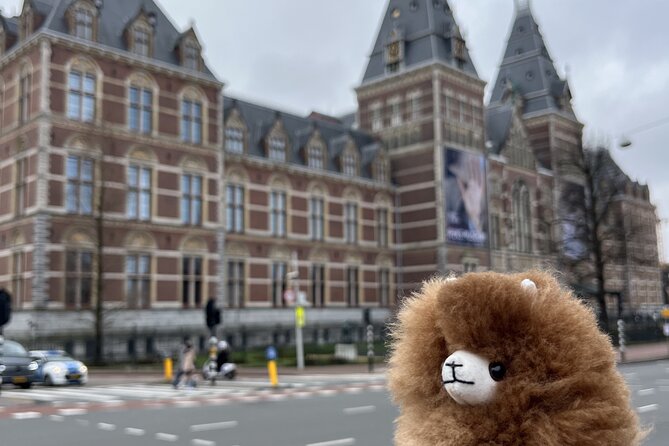
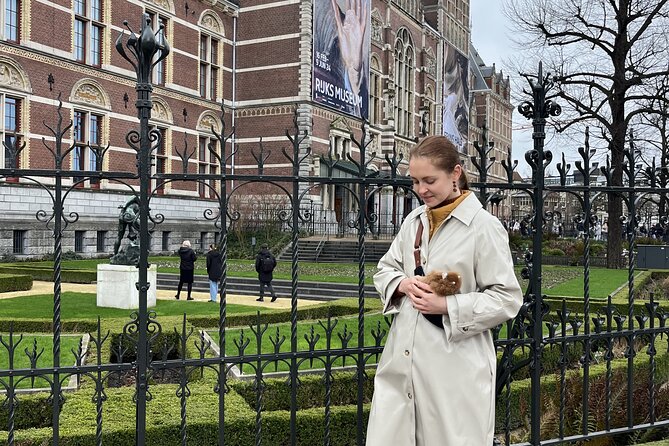
The meeting point is Rijksmuseum, Museumstraat 1, 1071 XX Amsterdam, Netherlands. The tour ends back at the meeting point.
That return-to-start detail is underrated. In Amsterdam, walking can be easy, but it’s also easy to lose time if you end in a different part of town. Staying anchored at the museum keeps your day cleaner.
Also, the location is near public transportation, which is helpful if you’re hopping between museums, neighborhoods, or canal areas. You’ll also appreciate that you’re starting at the actual museum address, not a remote pickup point.
Who this Rijksmuseum tour fits best
This is a strong match if you want:
- A private experience rather than a large group shuffle
- English guidance and a clear plan for a short visit
- A focus on big-name works plus Dutch Golden Age themes like maritime power
- A route designed for your group rather than a fixed script
It can also work well for families, as long as everyone in your group can handle a 3-hour museum visit. The tour says most travelers can participate, so it’s designed for a broad range of visitors.
If you’re traveling with someone who loves art history explanations, this will likely feel like money well spent. If you’re the type who enjoys museums but hates structured pacing, you might prefer a self-guided visit with audio—then add a short paid guide session if needed.
Should you book this Rijksmuseum private guided tour?
Book it if you want your Rijksmuseum visit to feel focused, not chaotic. This is the kind of tour that helps you see the key works—Rembrandt, Vermeer, Frans Hals—and understand what connects them. The added Golden Age maritime story and the Gallery of Honour finish give you a satisfying arc, especially if you only have about half a day in Amsterdam.
Skip or reconsider if you’re on a tight budget, you’re happy doing museums solo, and you don’t need a guide to help you choose where to spend your time. In that case, self-guided visits can work, especially if you love reading labels and wandering slowly.
For most people balancing time, interest, and stress level, this private guided format is a practical upgrade.
FAQ
How long is the Rijksmuseum private guided tour?
It lasts about 3 hours.
Is the tour private?
Yes. It’s a private tour/activity, and only your group participates.
Does the price include admission tickets?
Yes. Entry tickets are included in the tour.
What language is the guide?
The tour is offered in English.
Where do we meet for the tour?
The meeting point is Rijksmuseum, Museumstraat 1, 1071 XX Amsterdam, Netherlands.
Can I get a full refund if I cancel?
Yes. You can cancel for a full refund if you cancel up to 24 hours in advance of the experience start time.