REVIEW · AMSTERDAM
Rembrandt House & Neighborhood Guided Tour Semi-Private 8ppl Max
Book on Viator →Operated by Babylon Tours Amsterdam · Bookable on Viator
A great Rembrandt walk should feel personal. This semi-private tour stitches together Amsterdam’s canals and key Rembrandt-area landmarks, then lands you inside Het Rembrandthuis with time to see the artist’s working life through a guided museum visit.
Two things I like a lot: you get a small-group cap of 8, so the guide can answer your questions instead of sprinting everyone along; and the route mixes big-name views (like the Night Watch bronze at Rembrandtplein) with calmer canal-side streets that help you understand where Rembrandt’s world actually sat in the city.
One consideration: it’s a walking tour with moderate fitness needed, and it is not recommended for wheelchair use or visitors with walking disabilities. Also, Rembrandt’s House can occasionally close; if it slips by more than an hour from the tour start, the operator provides an alternative but says refunds or discounts aren’t available.
In This Review
- Key highlights you’ll feel on the walk
- A 2.5-hour Rembrandt route that blends canals with a real house museum
- Cobra Café start: what a small-group tour means in practice
- Spiegelkwartier and the canal story: Singelgracht to Spiegelgracht
- Keizersgracht: the Emperor’s Canal and why the name matters
- Museum Van Loon: finding Rembrandt’s orbit through Ferdinand Bol
- Bloemenmarkt and Munttoren: flower market plus a medieval gate
- Rembrandtplein and the Night Watch bronze cast: what to look for
- Along the Amstel: Skinny Bridge and the Blue Bridge naming twist
- The Stopera area: city hall and national opera under one complex
- Jodenbuurt walk: arriving at Rembrandt’s house via the preserved neighborhood
- Inside Het Rembrandthuis: what a guided house visit adds
- Price and value: what $159.21 buys you on this route
- Should you book this Rembrandt House & Neighborhood tour?
- FAQ
- How long is the Rembrandt House & Neighborhood guided tour?
- Is the tour private or small-group?
- What language is the tour offered in?
- Are entrance fees included?
- Is this tour suitable for wheelchair users or limited mobility?
- Can I get a full refund if I cancel?
Key highlights you’ll feel on the walk
- Small-group pace (8 max): easier conversations, more time at stops, less crowd pressure.
- Canal connections: you’ll look at the city’s old waterways as part of the story, not just postcard backdrops.
- Night Watch landmark stops: Rembrandtplein’s bronze representation is a strong anchor for the tour.
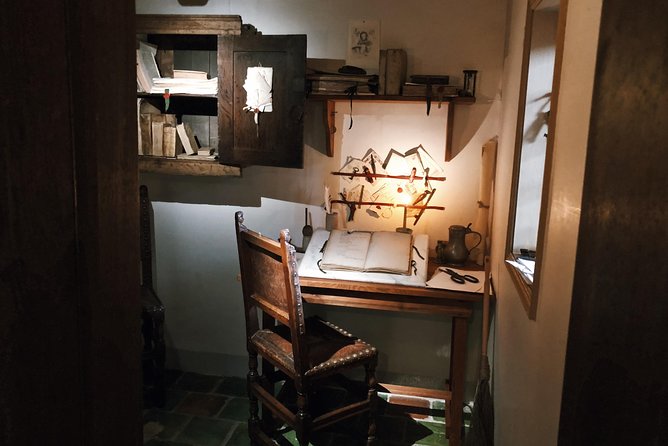
- Real Rembrandt context: you’ll connect landmarks to Rembrandt’s life with a guided visit inside his house museum.
- All entrance fees included: fewer ticket hassles once you’re in Amsterdam.
- Rain or shine: the plan keeps moving even if the weather does its typical Amsterdam thing.
A 2.5-hour Rembrandt route that blends canals with a real house museum
This tour runs about 2 hours 30 minutes, starting at 1:30 pm. The best part is how it balances “outside” sights with an included museum visit inside Rembrandt’s home—so you’re not just looking at famous locations from the sidewalk.
Amsterdam’s canal layout can feel like a maze at first, but this walk is designed to help you get your bearings fast. You’ll move through the center along major canal streets, cross key landmark zones, and end at the Rembrandt House Museum (Het Rembrandthuis) for the longer, included stop.
It’s also a guided experience throughout, not a self-guided loop. That matters in Amsterdam, where names can sound similar and streets run into each other. A good guide turns the city map into something you can actually remember.
You can also read our reviews of more guided tours in Amsterdam



Cobra Café start: what a small-group tour means in practice
You meet at Cobra Café, Hobbemastraat 18 (1071 ZB Amsterdam). That location puts you close to the canal-side core of the city, so you’re not wasting time on transit at the beginning.
Two operational notes that are worth paying attention to:
First, you’ll need a mobile phone number (with country code) for the tour. If you’ve ever had to troubleshoot “I didn’t get the message,” you already know why this matters.
Second, this is semi-private with a professional guide exclusively for your group, capped at 8. In practice, that usually means you’ll get more than a one-line explanation at each stop. The small group also helps with timing—when you move in a pack of 8 instead of 20, you can slow down where questions pop up.
The guide named Jo is mentioned in one of the highest-rated accounts, and the theme is the same: undivided attention and a personable style. That’s exactly what you want on an art-and-history walk, because Rembrandt’s world isn’t just dates—it’s choices, neighborhoods, and daily life.
Spiegelkwartier and the canal story: Singelgracht to Spiegelgracht
Your first zone is Spiegelkwartier, with a walk that starts near the Singelgracht. This canal is described as the waterway that borders Amsterdam’s center and used to form part of the city’s outer defenses. Even if you don’t know the military details, it’s a useful mental picture: Amsterdam’s waterways were practical infrastructure before they became the postcard skyline you see today.
From there you head to Spiegelgracht, a central canal connected to the Canals of Amsterdam UNESCO World Heritage area. Along this stretch, the guide points out the kind of spaces that make the canal belt feel artistic and lived-in—art galleries and antiques are part of what you’ll notice as you walk.
Stop timing here is short (about 10 minutes), but that’s not a bad thing. It’s enough time to understand what you’re looking at, without turning the first half of the tour into one long lecture.
Tip for you: if you’re the type who likes photos, this is a good segment to shoot early, because the canal lines give you clean composition. Just keep an eye on where your group is pausing, so you don’t get left behind at the turn.
Keizersgracht: the Emperor’s Canal and why the name matters
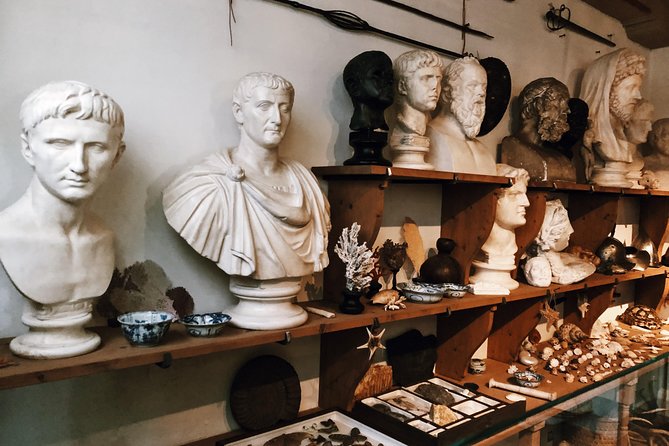
Next comes the Emperor’s Canal (Keizersgracht). You’ll learn the name comes from Emperor Maximillian of Austria, and you’ll also hear a practical “why it matters” detail: it’s the widest of the three main inner-city canals.
That width detail isn’t trivia for trivia’s sake. It helps you read the city. When you stand at the edge of a canal, the scale tells you what kind of place it was. Wider canals often mean larger ambitions in planning and traffic.
Again, the stop time is about 10 minutes, so your goal is to get the visual and the naming logic into your head, then carry it forward.
Museum Van Loon: finding Rembrandt’s orbit through Ferdinand Bol
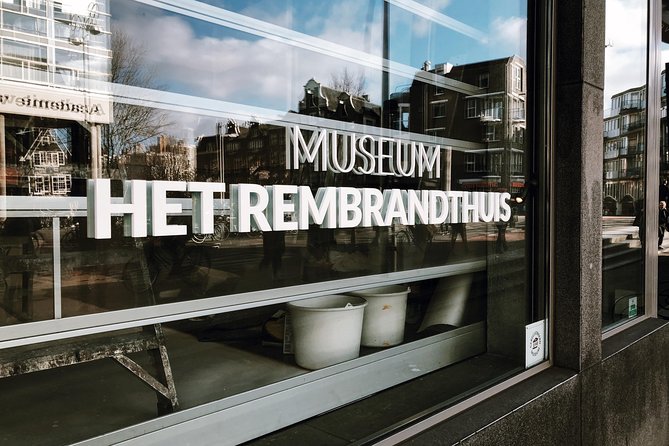
You’ll then walk to Museum Van Loon, a canalside house on the Keizersgracht. This stop matters because it connects Rembrandt’s world to the people around him. The tour description flags it as the house of Ferdinand Bol, described as Rembrandt’s favorite pupil.
You’ll spend around 10 minutes here, and the museum admission isn’t included. That’s a key point: it’s more of a context stop than a deep visit. If you want to go inside, you may need to pay separately when you’re there.
For me, this kind of stop is valuable because it widens the story. Rembrandt wasn’t just one painter in one house. His influence flowed through pupils, workshops, and patron connections. Even a quick canal-side introduction helps you think beyond the main character.
You can also read our reviews of more private tours in Amsterdam






Bloemenmarkt and Munttoren: flower market plus a medieval gate
The tour then goes through the flower market (Bloemenmarkt), where you’ll see the Munttoren, nicknamed the Mind Tower. The key fact you’re given: the tower originally formed part of a main gate in Amsterdam’s medieval city wall.
That’s a neat way to connect three layers of the city: medieval defenses, a modern market street, and the Rembrandt-era neighborhood walk you’re doing today. When you see the tower in your mind as a former gate, it’s easier to imagine Amsterdam as something fortified and strategic, not just scenic.
There’s a small duplication in the stop descriptions in the itinerary details (Munttoren is mentioned more than once), but in a walking route like this, it typically means you’ll pass the landmark while you’re in the area—less about a second “tour” inside the same spot and more about reinforcing what you’re seeing.
Rembrandtplein and the Night Watch bronze cast: what to look for
One of the best-known parts of the route is Rembrandtplein, also called Rembrandt Square. This is where the tour emphasizes a recognizable “anchor” image: a bronze-cast representation of The Night Watch.
The guide ties it to a specific moment: it was displayed during the celebration of Rembrandt’s 400th birthday in 2006. That detail gives the landmark a story beyond the obvious. It’s not only a tribute; it’s also a reminder that Dutch culture keeps reintroducing Rembrandt to new generations.
Stop time is around 10 minutes, so here’s how to use it well:
- Look at the statue enough to picture it once you’re back at the museum.
- Then listen for the guide’s explanation of why this representation sits here in the modern city.
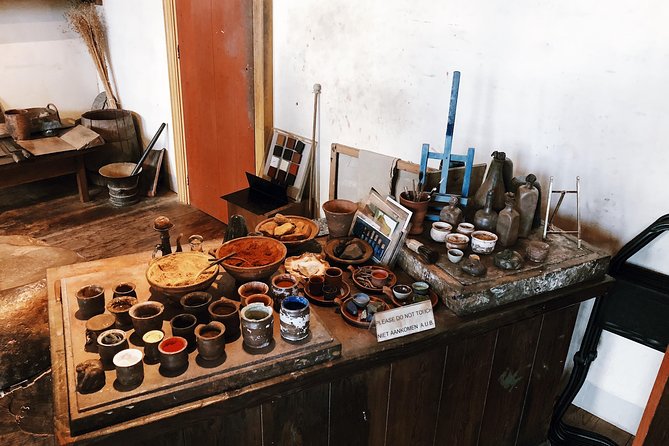
Because later, inside Het Rembrandthuis, you’ll spend time with the man himself—his tools, his work, and the environment that shaped it. The Night Watch bronze is a bridge between street-level recognition and museum-level understanding.
Along the Amstel: Skinny Bridge and the Blue Bridge naming twist
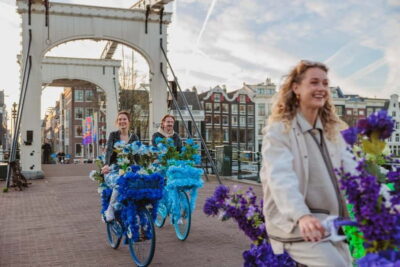
After Rembrandtplein, you walk by the Amstel River, where you’ll see two bridges: the Skinny Bridge and the Blue Bridge.
The tour provides a great name-logic lesson. The Skinny Bridge is described as Amsterdam’s most famous bridge, spanning the Amstel from 1934. The Blue Bridge is a fun “don’t trust the color” detail: it’s not blue. It’s named after a wooden blue bridge that spun across the Amstel in the 17th century.
This is exactly the kind of storytelling that makes a guided tour worth it. Without a guide, you might just see bridges. With one, you learn how Amsterdam’s names keep old details alive.
Keep your pace steady here. This stretch is about movement and orientation, not a long stop to stare.
The Stopera area: city hall and national opera under one complex
You’ll then head to the Stopera (National Opera & Ballet), described as a building complex that houses both city hall and the Dutch National Opera and Ballet. The construction is said to have taken at least 60 years.
That long construction timeline is more meaningful than it sounds. It signals how Amsterdam invests in institutions that serve the arts and governance together. And because this stop comes after you’ve already handled canals, markets, and monuments, it also gives you a sense of how the city’s “public life” evolved around those older neighborhoods.
Admission isn’t included, and stop time is short (about 10 minutes). So focus on seeing how the complex looks in context and listening to the guide’s framing.
Jodenbuurt walk: arriving at Rembrandt’s house via the preserved neighborhood
Next is the Jodenbuurt, described as the former Jewish neighborhood. You’ll learn it contains historically important buildings that are currently preserved and managed by the Jewish Cultural Quarter.
This walk segment (around 10 minutes) matters because it places the museum end-point inside a living neighborhood, not an isolated attraction. Rembrandt’s life and work are the headline, but Amsterdam’s neighborhoods are the setting that makes it believable.
Also, it helps you emotionally reframe what “historic” means here. It’s not only old buildings. It’s neighborhoods with active preservation and community stewardship.
Inside Het Rembrandthuis: what a guided house visit adds
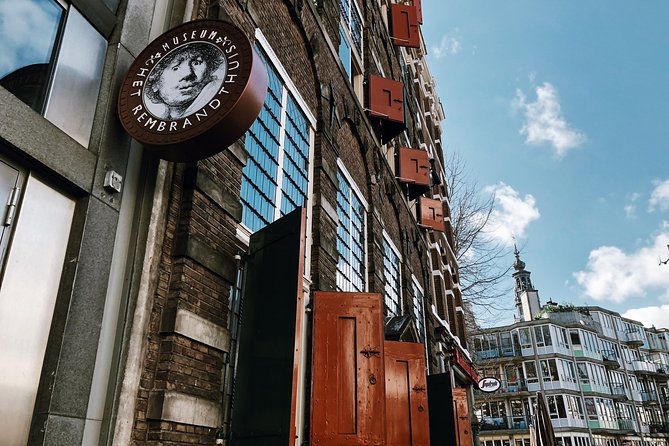
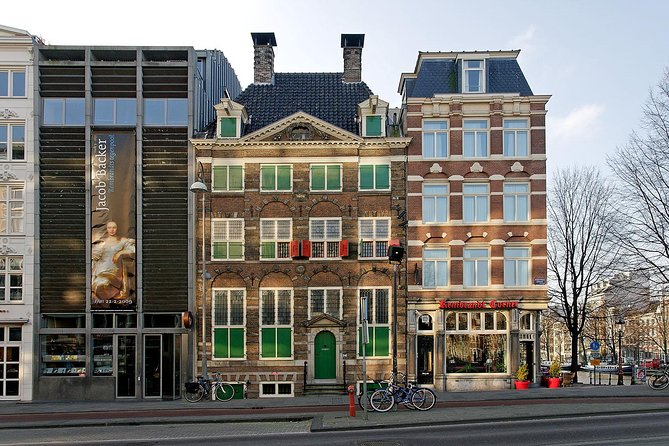
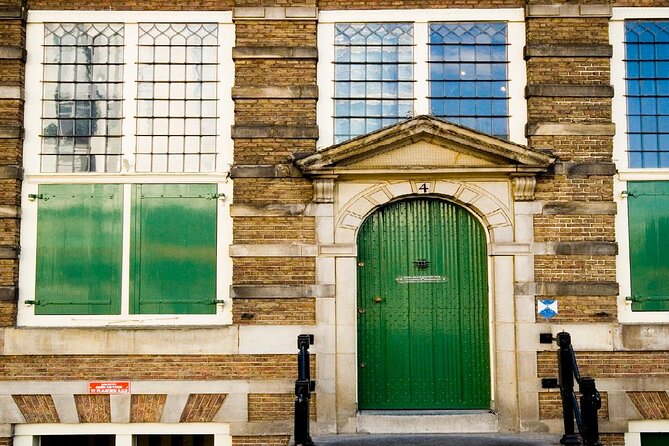
Finally, you enter the Rembrandt House Museum (Het Rembrandthuis) at Jodenbreestraat 4 (1011 NK Amsterdam). This is the big included stop: about 1 hour, and admission is included.
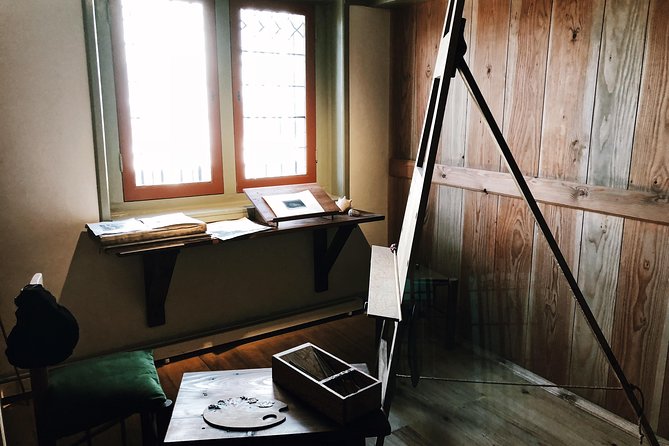
The museum visit is built around Rembrandt’s lived work period: he lived and worked here between 1639 and 1656. The museum collection description you’re given includes Rembrandt’s etchings and paintings of his contemporaries.
That combination is important. Lots of “Rembrandt” experiences focus only on major paintings or famous scenes. Here, you’re steered toward the broader production: drawing and printmaking (etchings) plus paintings of people of his time.
Practical inside-the-museum details you should know before you go:
- No large bags or suitcases inside. Only handbags or small thin bag packs through security.
- Some sites require appropriate dress.
- Security can create lines at many attractions.
- Some rooms inside the museum may be very quiet or restrict speaking. Your guide will explain which rooms before you enter, so you know what to expect and you don’t have to guess.
One more note you should take seriously: Rembrandt’s House may be subject to occasional closures. The operator says they’ll provide an appropriate alternative if the museum opening time is delayed by more than 1 hour from the tour starting time. In those cases, they state they can’t offer refunds or discounts.
For you, that means: if your museum priorities are strict, consider building a little flexibility into your day.
Price and value: what $159.21 buys you on this route
At $159.21 per person, this tour isn’t the cheapest way to see Amsterdam. But it does include key parts that often cost extra if you plan them separately: all entrance fees, a private museum tour plus walking tour, and a professional guide for your group.
The real value here is not just tickets. It’s the way the guide organizes the city into a story you can keep. You’re paying for naming help (Keizersgracht, Munttoren, the canal logic), interpretation (why the Night Watch bronze matters), and a structured visit inside Rembrandt’s house.
Also, with average booking about 53 days in advance, this suggests limited availability. With only up to 8 people per tour, your timing matters if you want a specific day.
Who is this best for?
- Art lovers who want more than a quick museum glance.
- People who like walking but prefer a manageable group size.
- Visitors who want an English guide and would rather not piece together canals, landmarks, and a museum entry alone.
Who should skip it or consider another option:
- If you need wheelchair-friendly routes or you have significant walking limits, it’s not recommended.
- If you hate waiting for security or you dislike short photo stops, you might find the rhythm a little structured.
Should you book this Rembrandt House & Neighborhood tour?
I’d book it if you want the most efficient way to connect canal landmarks to Rembrandt’s real setting, then finish with a guided, included hour inside Het Rembrandthuis. The small-group size is a genuine quality signal, and the tour format makes it easier to remember what you saw afterward.
I’d hesitate only if your mobility is limited or you’re traveling with someone who can’t handle outdoor walking plus museum security rules. Also, if museum closures would ruin your plans, you’ll want a bit of day flexibility given the operator’s closure note.
If you like Amsterdam for its stories—how streets get their names, how neighborhoods change, how art fits into daily life—this is a strong use of your afternoon.
FAQ
How long is the Rembrandt House & Neighborhood guided tour?
The tour runs for about 2 hours 30 minutes.
Is the tour private or small-group?
It’s semi-private with a maximum of 8 travelers, and the guide is exclusively for your group.
What language is the tour offered in?
The tour is offered in English.
Are entrance fees included?
Yes. The tour includes all entrance fees, including admission to Museum Het Rembrandthuis.
Is this tour suitable for wheelchair users or limited mobility?
It is not recommended for those with walking disabilities or using a wheelchair, and you should have a moderate physical fitness level.
Can I get a full refund if I cancel?
Yes. You can cancel up to 24 hours in advance for a full refund. If you cancel less than 24 hours before the start time, the amount paid is not refunded.