REVIEW · RED LIGHT DISTRICT TOURS
Red Light District Tour by Locals, Small Group (approx 4)
Book on Viator →Operated by Those Two Guides · Bookable on Viator
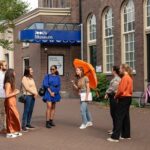
Red Light District tours can feel hit-or-miss. This one is built for a calmer pace and a more insider feel, with a small group capped at about six people and plenty of chances to ask questions. The best part is how the guide threads together what you see on the streets with the area’s social rules and changes over time, without turning the walk into a spectacle.
Two things I genuinely like: the guaranteed small-group size (max six) and the way the tour is designed around respect—you’re shown the sights, but you’re also guided on how to treat the people working there as real adults, not props. You’ll also get an included peepshow entrance when open, which helps you understand the district beyond the street-level myths.
One consideration: the timing matters. If you go in the summer around early evening, some window activity may be limited because it’s still light, so your best “window-viewing” might be less dramatic than you hoped.
In This Review
- Key highlights worth your attention
- Why a small-group Red Light District walk works
- Price and value: what $96.79 buys you (and what it doesn’t)
- Meeting point and how the walk actually flows
- The stop-by-stop route: what each moment teaches you
- 1) The sex theatre icon and why it’s more than a billboard
- 2) A bar where fruit becomes… something else
- 3) The most entertaining loo to relieve yourself
- 4) The color-rich street linking Chinatown and gay bars
- 5) The old city gate and stories you can actually walk into
- 6) The oldest church, and the prostitution zone connection
- 7) One of the oldest coffeeshops (since 1975)
- 8) The famous shop that sells only one product
- 9) Peepshow entrance when open (the “inside” moment)
- Guides who set the tone: respect plus humor
- A respectful way to handle window viewing and adult commerce
- Timing tip: in summer, it may still be light at 8
- Who should book this tour (and who should think twice)
- Should you book this Red Light District tour by locals?
- FAQ
- How long is the Red Light District tour?
- How many people are in the group?
- What does the tour cost?
- Is the tour offered in English?
- What’s included in the ticket?
- What’s not included?
- Where do I meet the guide?
- Who can join the tour?
- What are the cancellation terms?
Key highlights worth your attention
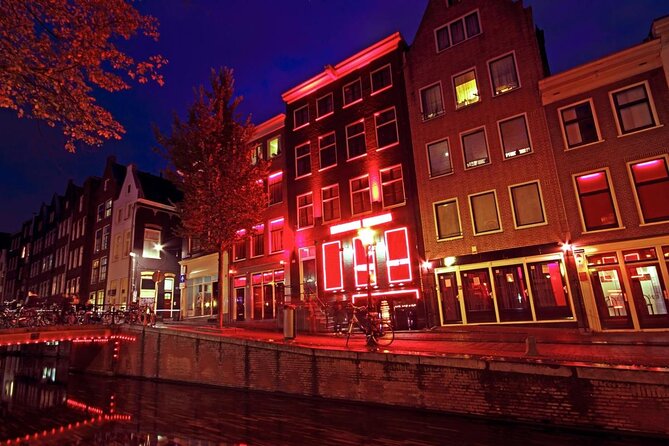
- Max 6 people means more guide time, fewer awkward pauses, and easier questions
- Peepshow entrance when open adds context beyond walking-and-looking
- Respect-first approach keeps the tone balanced and streetwise
- Stop-by-stop variety covers sex culture, storefront history, churches, and coffeeshops
- English guided with local storytelling keeps the walk readable and human
Why a small-group Red Light District walk works
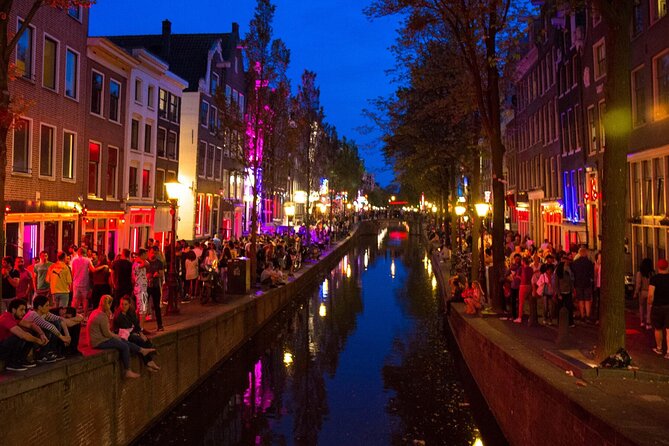
If you’re coming to Amsterdam for the first time, it’s easy to get overwhelmed. The Red Light District can look like one big photo-op zone, but it’s also a living neighborhood with strict boundaries and real livelihoods. A small-group format matters here because you can ask about what you’re seeing right when it comes up, instead of guessing from outside sources.
I like that this tour is explicitly built around an open-minded insider perspective. The guiding style you’ll likely experience (based on guide patterns you’ll see mentioned in real-world feedback) leans professional, a bit witty, and focused on explanations—not just showing you a row of windows and moving on.
You also get a practical kind of safety: guides know how to handle the awkward moments. You’ll be moving through an area where people are working, where emotions can run high, and where “tour mode” needs manners. With a group that stays small, it’s easier for your guide to manage boundaries and keep everyone on the same page.
And yes, you do need to be an adult for this one. Participation is restricted to people over 18, and the tour is designed for adults who want cultural context and street-level understanding.
You can also read our reviews of more tours and experiences in Amsterdam.


Price and value: what $96.79 buys you (and what it doesn’t)
At $96.79 per person, this is not a bargain add-on. But it’s also not just “someone walks with you for 90 minutes.” Your ticket is tied to a private in-person guide and includes a peepshow entrance when open, which is a meaningful chunk of the experience.
That inclusion changes the value equation. Many walking tours talk about the district; fewer get you into an actual adult entertainment format while it’s functioning. When it’s open, you’re not only learning how the district works—you’re seeing one way it operates from the inside, with a guide there to translate what you’re experiencing into context.
What’s not included is also clear: food and drinks, plus tips/gratuity for your guide. If you’re the type who plans to snack during the walk, you’ll want to handle that outside the tour. If you’re hoping the tour includes drinks, there’s an upgrade option that can add drinks (and potentially hotel pickup or even a private guide, depending on what you choose).
My honest take on the price: you’re paying for a careful, guided experience in a sensitive area. For first-timers, that alone can be worth it because it turns embarrassment into understanding—and it turns a chaotic place into a story you can follow.
Meeting point and how the walk actually flows
The meeting point is Beursplein 5, 1012 JW Amsterdam, and the tour ends back at the same place. That “return to start” format is helpful because you don’t have to plan a second leg, and it makes the timing easier to plug into your night.
The tour runs about 1 hour 30 minutes to 2 hours, which is a good length for this kind of area. Long enough to cover real context—short enough that you’re not stuck walking the whole district for hours with adrenaline levels high.
It’s also near public transportation, so you can hop in and out without turning it into a half-day project. And because the group stays small (max six), your guide can adjust pacing if someone needs a slower moment.
One note for planning: the activity is described as walkable for a limit of about 2 hours, and participation is limited to people in healthy condition able to walk that time.
The stop-by-stop route: what each moment teaches you
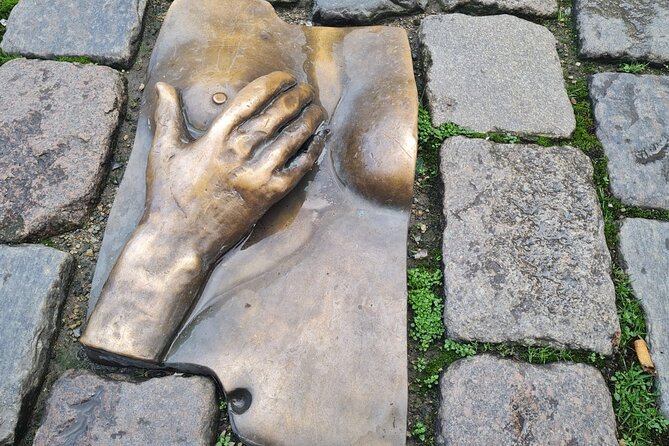
This tour is structured like a guided walk through the district’s layers: entertainment, commerce, architecture, and the social shifts that brought the modern setup into being. Here’s what you can expect, and why each stop matters.
1) The sex theatre icon and why it’s more than a billboard
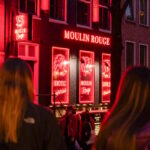
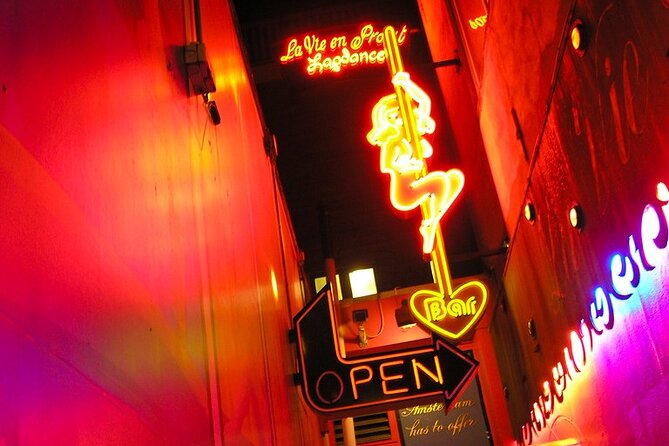
You’ll start with a stop tied to the most famous sex theatre in Amsterdam, described as an icon. In a place like this, the building isn’t only a landmark—it’s a clue to how the district became a recognized part of city life.
What I like about starting here is that it frames your evening before you get lost in window imagery. Your guide can connect public adult entertainment venues to wider cultural attitudes, legal arrangements, and the way Amsterdam talks about sexuality in public spaces.
A possible drawback: if you’re expecting a purely “history lecture,” you may find this part feels more like orientation. But if you want a guided street-level understanding, it’s exactly the right opener.




2) A bar where fruit becomes… something else
Next up is a stop at a bar that offers alternative ways of consuming your daily fruit. It sounds playful on purpose, and that’s part of the district’s rhythm: adult themes often show up with humor, slang, and themed details rather than solemn speeches.
For you, this stop is less about food and more about noticing how commerce adapts to the neighborhood’s identity. You’ll likely get a quick explanation of how these places brand themselves and serve customers in a way that fits the district’s culture.
If you’re not into nightlife, you can treat it as a snapshot of how the area markets to visitors—rather than as a “go drink something” obligation.
3) The most entertaining loo to relieve yourself
Then comes one of the more memorable sidesteps: the most entertaining loo to relief yourself. This is the kind of stop that makes the tour human. Your guide is showing you that the district is not just windows and storefronts—it includes the everyday services that keep the neighborhood functioning.
Practical tip: if you tend to get caught off guard by surprises in adult nightlife areas, this kind of stop helps you recalibrate. You learn the layout, you get your bearings, and you’re not rushing later.
4) The color-rich street linking Chinatown and gay bars
You’ll walk toward the most colorfull street that includes Chinatown and gay bars. This is important because it stops the Red Light District from feeling like a separate planet. Amsterdam’s nightlife and community neighborhoods bleed into each other, and your guide can show you how the district sits within the broader city map.
For me, this is a big value moment. It gives you something to compare: the Red Light District identity next to other parts of Amsterdam’s alternative culture.
5) The old city gate and stories you can actually walk into
Next: the old city gate, described as full of history and stories. This is where the walk turns from “adult neighborhood tour” into “Amsterdam city context.” You see a piece of older infrastructure and connect it to the stories your guide is telling about how this area evolved.
The benefit here is perspective. It’s easier to understand why certain streets became what they are when you can point to physical landmarks and timeframes.
If you’re not a history person, this stop might feel like a pause. But it’s exactly those pauses that make the rest of the evening feel less random.
6) The oldest church, and the prostitution zone connection
Then you’ll reach the oldest church in town, tied to the prostitution zone. Churches in European cities often outlast everything around them, and that makes them powerful anchors for the kind of social history your guide is building.
This stop is likely to help you understand the tension—and the eventual accommodation—between longstanding religious structures and the district’s modern adult economy. The guide tone here matters: you’ll want facts plus explanation, not shock value.
7) One of the oldest coffeeshops (since 1975)
After that, you’ll visit one of the oldest coffeeshops in town (1975). This helps you see how Amsterdam’s adult and counterculture identities coexist in the same neighborhood geography.
You’re not being pushed to buy anything at this stop. The point is understanding the district’s environment: how laws, norms, and customer expectations shaped what businesses survived and how they presented themselves.
8) The famous shop that sells only one product
Finally, you’ll hit the most famous shop selling only one product. This is a great “small detail” stop because it signals specialization—the district’s economy includes niches that serve one purpose extremely well.
For you, this adds texture. It’s the difference between hearing vague stories and realizing how practical the district’s storefront ecosystem can be.
9) Peepshow entrance when open (the “inside” moment)
Along the way, you’ll have an included peepshow entrance when open. This is the part that changes your understanding most. It’s one thing to watch from the street; it’s another to see how adult entertainment is packaged, accessed, and experienced.
When it’s open, you’ll likely walk through with a guide who helps keep the experience respectful and non-awkward. And if you’re going with friends who are nervous, this inside stop can also help level the emotional temperature: you’re doing it with context, not just curiosity.
Guides who set the tone: respect plus humor
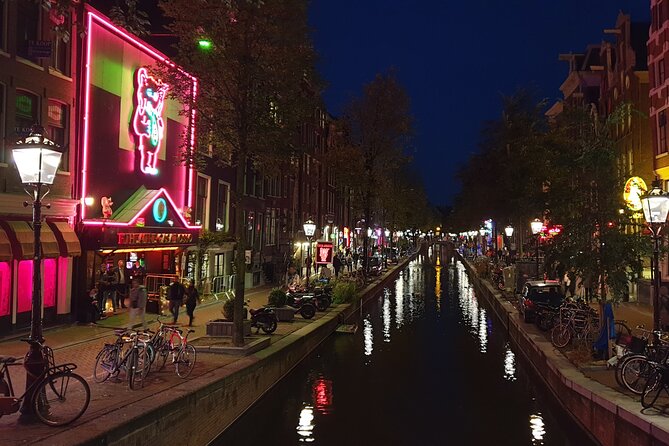
A strong part of this tour is the type of guides who tend to lead it. Names showing up include Ian, Wendy, Paul, Stan, Jan, and Peter—and the pattern is consistent: professional pacing, humor used lightly, and a clear commitment to respectful handling of the district.
I like that guides are described as non-biased and focused on cultural context. That matters because the Red Light District is loaded with stereotypes. A good guide helps you replace assumptions with clear explanations: how legalization shaped the area, how the district impacts society, and how the street environment works day to day.
You’ll also find the tours to be interactive in the sense that your group can ask questions and the guide can tailor the walk. Some feedback points out tours that felt customizable, which is valuable if you have specific questions—history, current rules, or how Amsterdam’s approach differs from what you may know elsewhere.
And in the practical sense: guides help you feel safe. If your goal is to “get it right” in a sensitive area, this kind of guidance is exactly what you need.
A respectful way to handle window viewing and adult commerce
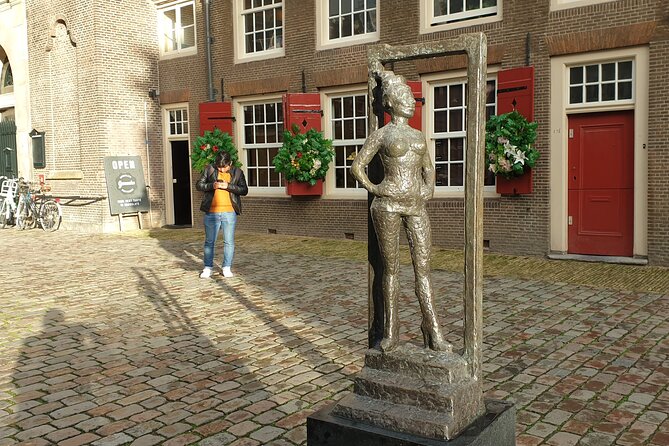
Window viewing is the part most people think about first. But the important skill is how you watch. The district’s workers aren’t a performance for your entertainment; they’re adults earning a living under specific systems. A respectful guide tone helps you understand that difference quickly.
You should also expect that the walk can include the reality of prostitution legalization and its social impact. That’s central to the tour’s purpose. Your guide is there to put the visuals into language and explain the district’s evolution.
One practical comfort point: you’re not meant to be pressured into participation. The tour is structured so you can appreciate the place even if you’re purely observing as a first-time visitor.
Timing tip: in summer, it may still be light at 8
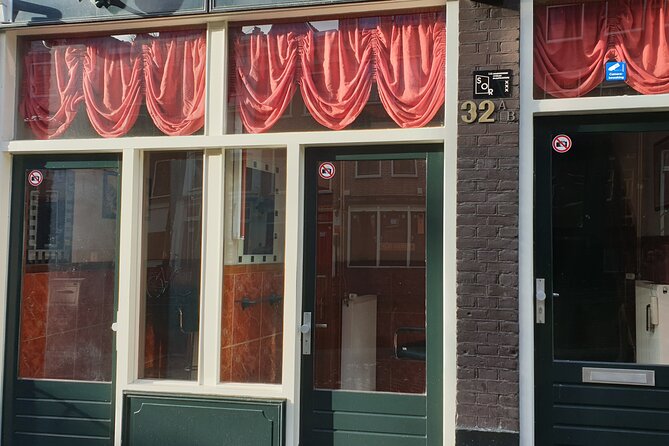
Here’s one real-world consideration I’d plan around: a guide-led tour at around 8:00 in summer may mean it’s still light, which can affect how many window workers are visible. That doesn’t make the tour worse—it just means your expectation for the “lights and windows moment” should be flexible.
If window viewing is your top goal, aim for the later edge of evening if your schedule allows. If not, go anyway and focus on the context stops—the gates, church, coffeeshops, and inside peepshow entrance can carry the experience even if the street scene looks a bit different than postcards.
Who should book this tour (and who should think twice)
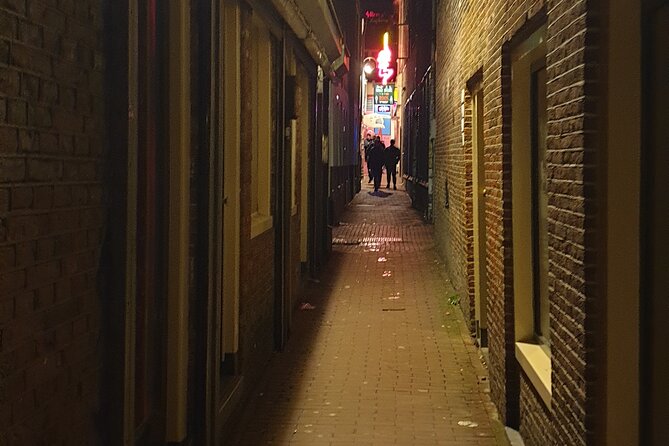
This experience is a strong fit if you:
- Want a history and culture framing instead of only spectacle
- Prefer a small group where you can ask questions easily
- Like guided walks that mix city landmarks with neighborhood stories
- Are comfortable touring an adult area with a respect-first tone
It may not be the best match if you:
- Hate humor or social storytelling in adult contexts
- Want a quick “see it, then move on” photo route with minimal explanation
- Have limited mobility beyond walking about 2 hours (the tour is built around that pace)
If you’re the type who wants a respectful, guided evening that helps you read Amsterdam’s adult district as part of the city—this tour is built for you.
Should you book this Red Light District tour by locals?
Book it if you want the Red Light District explained in plain language, with a small-group setup and a guide who keeps the tone respectful. The included peepshow entrance when open is a real differentiator, and the stop list gives you more than just windows—you get architecture, commerce history, and neighborhood context tied to how the district became what it is.
Skip it (or consider alternatives) if you mainly want a nightlife stroll with minimal talk, or if you’re very sensitive to adult content and prefer a less direct, less guided approach. Also plan your timing so you don’t expect peak window lighting in every season.
If you’re on the fence, I’d treat it like this: you’re paying for clarity, boundaries, and context. In an area where uncertainty is easy, having a guide who knows the streets makes the whole night easier to enjoy.
FAQ
How long is the Red Light District tour?
It runs about 1 hour 30 minutes to 2 hours.
How many people are in the group?
It’s a small group with a maximum of 6 travelers.
What does the tour cost?
The price is $96.79 per person.
Is the tour offered in English?
Yes, it is offered in English.
What’s included in the ticket?
You get an in-person guide, and you also get a peepshow entrance when it’s open.
What’s not included?
Food and drinks are not included, and gratuity for your guide is not included.
Where do I meet the guide?
Meet at Beursplein 5, 1012 JW Amsterdam, Netherlands.
Who can join the tour?
Participants have to be over 18 and able to walk up to about 2 hours in a healthy condition.
What are the cancellation terms?
Free cancellation is available up to 24 hours in advance for a full refund. If you cancel within 24 hours of the start time, the amount paid is not refunded.