Five countryside stops outshine Amsterdam traffic. This 8.5-hour tour takes you out of the city and into Dutch country settings you won’t see on a typical canal-only day, with a small-group ride and an English-speaking guide like Simon, Adrian, or Jan. I like that the group stays tight (max seven travelers), so questions land and explanations make sense.
It’s also a strong mix of everyday Dutch life and offbeat sights. I love the Franeker planetarium (the oldest working model of its kind) and the mummy crypt at Wieuwerd, both included in the price. The main drawback to consider: it’s not recommended if you have limited physical movement, since you’ll be walking through village streets and visiting indoor sites with stairs and crypt areas.
In This Review
- Key points I’d circle before you book
- From De Ruijterkade to five Dutch water stories
- Meeting point, timing, and how the day is paced
- De Rijp: golden-age town shapes and a bridge worth slowing down for
- Schermerhorn windmill: top-to-bottom engineering in a quieter setting
- Franeker planetarium: a solar-system model suspended in a canal house
- Wieuwerd mummy crypt: the church’s strange, centuries-old secret
- Afsluitdijk: standing between the Wadden Sea and IJsselmeer
- Price and value: what $155 buys you (and what it doesn’t)
- Who should book this 5-stop countryside day trip
- Should you book this 5-stop day trip from Amsterdam?
- FAQ
- How much does the tour cost?
- How long is the Hidden Gems Tour?
- What language is the tour offered in?
- What’s the group size?
- Where does the tour start?
- What time does the tour start?
- Is lunch included?
- Are entrance fees included?
- Is the tour suitable for people with limited physical movement?
- Is cancellation free?
Key points I’d circle before you book
- Small group (up to seven): easier pacing, more time for questions, less waiting around.
- Five very different stops: canalside town, windmill engineering, historic planetarium, church crypt, and Dutch waterworks.
- Included admissions for the paid highlights: Schermerhorn mill, Franeker planetarium, and the Wieuwerd mummy crypt.
- Air-conditioned vehicle plus a snack pack, so long driving hours feel less painful.
- Weather-dependent day: plan for changes if conditions are poor.
From De Ruijterkade to five Dutch water stories
This tour works because it connects themes you’ll keep noticing across the day: water management, land reclaimed from sea, and the people who built the Netherlands to make daily life possible. You start in Amsterdam, then the driving does what it’s supposed to do—take you far enough that the scenery changes, but keep it within a single long day.
The format also makes it feel like a guided conversation, not a checklist. With a max group size of seven, you get real explanations as you go—how windmills drained land, why dikes matter, and how local culture shaped buildings and routines.
And yes, the sights are a bit unusual in the best way. A living-room planetarium and a church crypt with mummified remains aren’t what you expect from an Amsterdam day trip. That surprise factor is part of the value.
You can also read our reviews of more tours and experiences in Amsterdam.
Meeting point, timing, and how the day is paced
You meet at the Italian Chamber, De Ruijterkade 5 (right near 1013 AA). The tour starts at 9:00 am and returns to the same meeting point at the end. That rhythm is helpful: you get a full day outdoors and sightseeing, but you’re not juggling transfers across multiple towns on your own.
The vehicle is air-conditioned, which matters when you’re spending a good chunk of the day traveling. You’ll also get a snack pack (included), so you’re not stuck hungry between stops—just don’t count on a full lunch being provided.
The pacing is built around short-to-medium visits: about an hour here, around 45 minutes there, then a slightly longer window at the planetarium. If you prefer steady movement and don’t want to sit in a bus for hours without breaks, this setup fits well.
De Rijp: golden-age town shapes and a bridge worth slowing down for
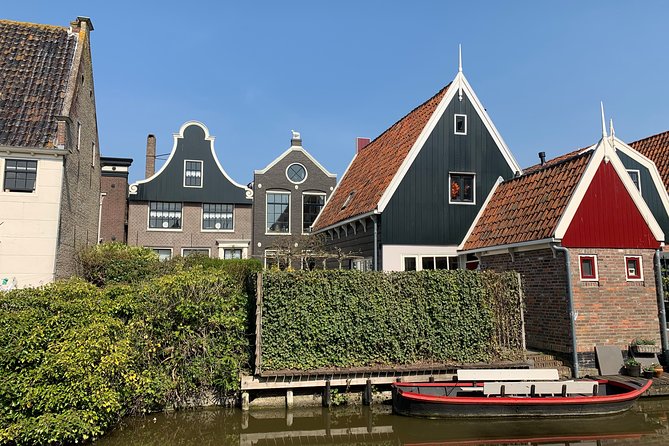
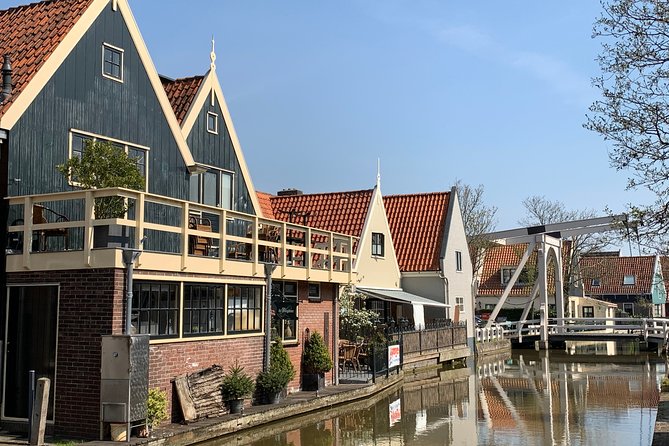
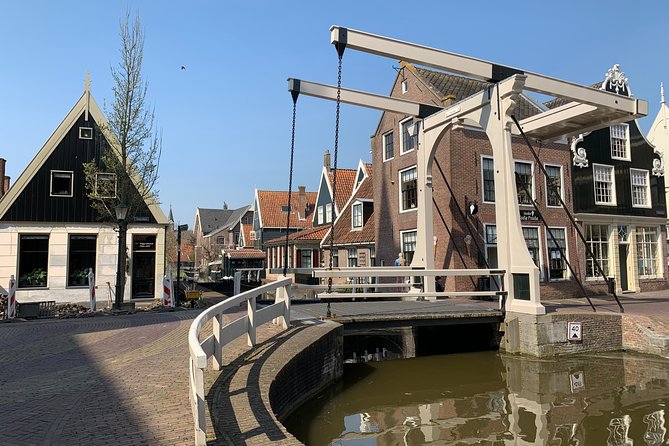
De Rijp feels like it’s been preserved with care. You’ll walk through a village that looks like an open-air set—wooden houses with red rooftops, plus water-side views that make the town feel calm even when you’re in the middle of it.
Two details make De Rijp especially fun. First, the old white bridge over the water gives you a strong visual anchor for photos and for simply orienting yourself. Second, there’s a town hall tied to the Dutch Golden Age—an architectural reminder that this wasn’t just a farming dot on the map. It’s the kind of place where you start noticing how wealth and water control shaped what got built.
This stop is free and clocks in at about an hour. That’s enough time to stroll without feeling rushed, but not so long that the energy drops. If you like walking at a relaxed pace, it’s one of the best first impressions you’ll have.
Schermerhorn windmill: top-to-bottom engineering in a quieter setting
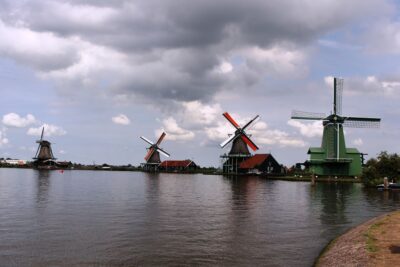
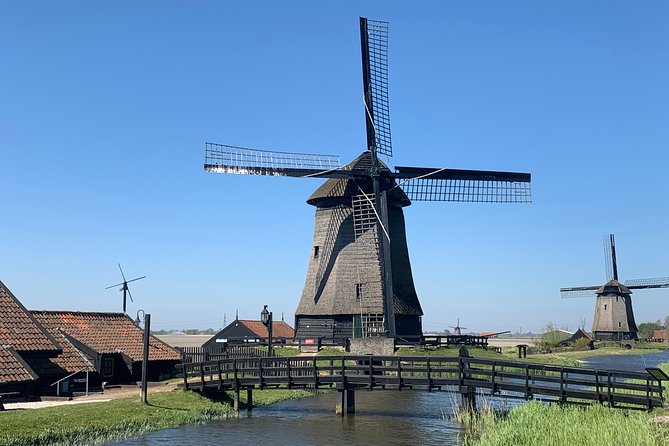
After De Rijp, the day shifts into “how the Netherlands works” mode. In the Dutch Golden Age, this region used wind power to drain land—historically, 52 windmills for drainage. Here, you’ll visit one of the remaining examples.
What I like about Schermerhorn is that it doesn’t feel like the most obvious tourist stop. You get a similar kind of impact to bigger, more famous windmill areas, but with a calmer feel. And the best part is practical: you can explore the windmill from top to bottom. That’s a huge difference from seeing something behind a fence.
You also get time to look out over the surrounding countryside and water. Even when you’re not staring at a map, you’ll understand the logic: you’re seeing reclaimed terrain shaped by wind, water, and constant effort.
This visit runs about 45 minutes, and the mill admission is included. It’s a quick but meaningful stop—like a hands-on lesson.
Franeker planetarium: a solar-system model suspended in a canal house
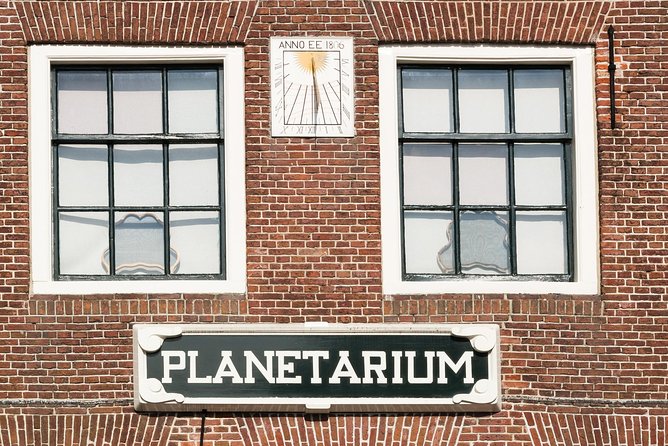
Now for the out-of-this-world moment. You drive on to Friesland, specifically Franeker, and visit the Koninklijk Eise Eisinga Planetarium. The standout detail here is the “oldest working planetarium in the world” claim, and it’s not just a label. You’ll see the solar system as a moving model built between 1774 and 1781.
One detail that really sticks: the model was created by a Frisian wool comber. That’s such a Dutch story—practical craft turning into scientific wonder. The planetarium is also suspended from the ceiling of a canal house living room, which makes it feel intimate rather than museum-like.
You’ll have about 1 hour 30 minutes here, and the admission is included. That time matters, because you’re not just looking at objects—you’re taking in how the mechanism works and how the building setting becomes part of the experience.
If you enjoy history but also like hands-on visuals, this is often the emotional peak of the day. Even if astronomy isn’t your main interest, it’s a rare “you have to see it” place.



Wieuwerd mummy crypt: the church’s strange, centuries-old secret
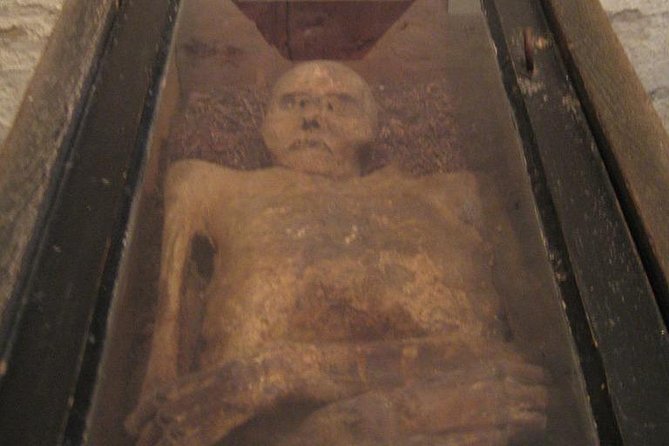
Next comes a stop that sounds like a horror movie, but stays grounded in a real, physical location. In Wieuwerd, you visit the mummie kelder in the Hervormde Kerk. Inside the church crypt, four mummified people were found, and they’ve been there for more than three centuries.
This is the kind of site where atmosphere matters. The setting is a church with a crypt—so it’s quieter and more still than a typical museum room. You’ll want to move slowly and listen to your guide’s context, because the meaning is tied to the discovery and the way the remains were kept.
You’ll spend about 45 minutes here, and admission is included. If you’re sensitive to unusual human remains, it’s smart to know this stop is part of the core plan, not optional sightseeing.
Afsluitdijk: standing between the Wadden Sea and IJsselmeer
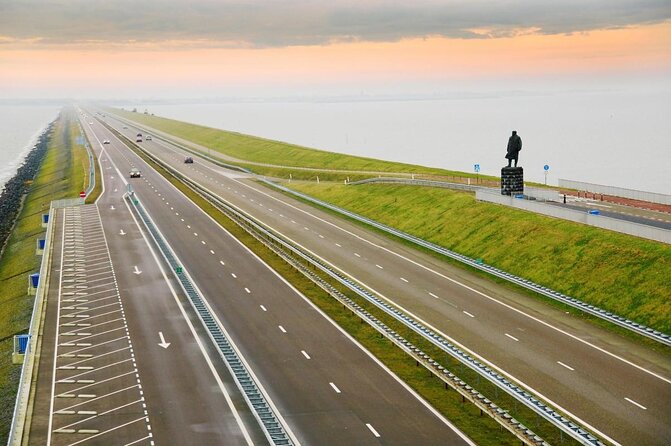
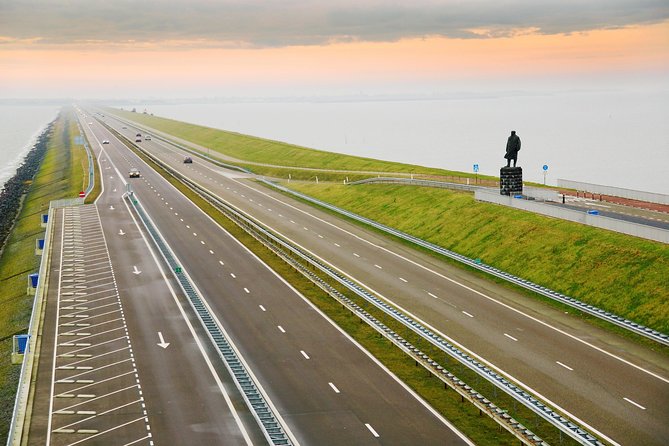
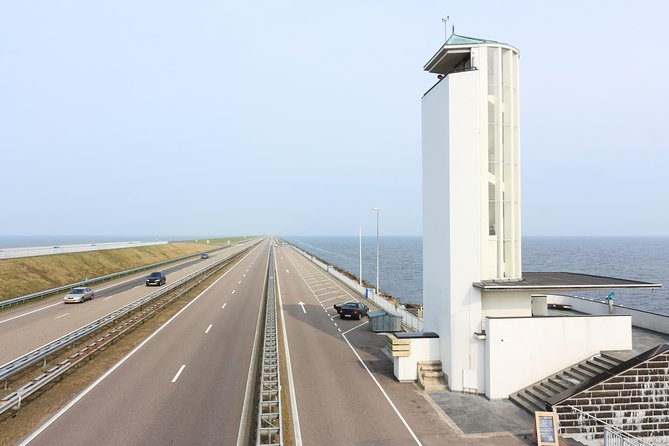
On the way back toward Amsterdam, you stop at Afsluitdijk, one of the most impressive examples of Dutch water management. This 32-kilometer dyke connects Noord Holland and Friesland, and construction began about a hundred years ago.
The reason this final stop lands well is the viewpoint. At the watchtower, you can look out with the ‘wadden sea’ on one side and the ‘Ijsselmeer lake’ on the other. That split is what makes the engineering feel real—you’re seeing how one barrier reshaped daily geography and water flow.
This part of the day lasts about 30 minutes. It’s not a long stop, but it gives you closure. After windmills, a planetarium, and a crypt, the dyke helps you tie everything back to the Netherlands’ big picture: water management is not a niche topic here—it’s the backbone of how land and life connect.
Price and value: what $155 buys you (and what it doesn’t)
At $155 per person, this tour isn’t the cheapest option from Amsterdam. But the price starts to make sense when you look at what’s included.
You get:
- Air-conditioned transport for the full 8 hours 30 minutes
- Snack pack included
- All admission fees for the paid highlights: the mill in Schermerhorn, the planetarium in Franeker, and the mummy crypt
Some stops are free anyway (De Rijp and Afsluitdijk), but the paid admissions cover a big chunk of the cost. You’re also buying the guide’s interpretation—connecting windmills, dikes, and the way Dutch towns were built—rather than just paying entrance fees one by one.
What’s not included is lunch and additional food/drinks beyond the snack pack. That means you should plan to eat before the morning or bring cash/a card for lunch near a stop if you need it (the tour doesn’t promise a meal). The trade-off is you’re not sitting through a long lunch break; you’re out seeing places.
One extra value note: the tour can book up, with an average booking window around 56 days in advance. If your dates are fixed, it’s smart to reserve sooner rather than later.
Who should book this 5-stop countryside day trip
This tour fits best if you like variety and you want a day outside the usual Amsterdam pattern. I think it’s a great choice if you’re curious about Dutch engineering (windmills and dikes), but you also enjoy a strange, memorable stop like the planetarium and the mummy crypt.
It’s also a good option for couples, friends, and small groups who appreciate a slower, more conversational pace in a small vehicle. The max group size keeps the day from feeling like a factory line.
Avoid it if you have limited physical movement. Between village walking and indoor sites (including a crypt), it’s not designed as an easy-access outing.
Should you book this 5-stop day trip from Amsterdam?
I’d book it if you want one ticket to cover five distinct worlds—Dutch Golden Age villages, working windmill engineering, the oldest working planetarium model in its original setting, a church crypt with centuries-old mummified remains, and a major waterwork that you can actually stand at and look across.
I’d skip it if you need a very low-walking, fully accessible day, or if you prefer to stay strictly within Amsterdam for your entire trip. Also, go in knowing lunch isn’t included, so eat smart before you start.
If you’re looking for a day that feels different from the obvious Amsterdam checklist, this one delivers.
FAQ
How much does the tour cost?
The tour costs $155.00 per person.
How long is the Hidden Gems Tour?
It lasts about 8 hours 30 minutes.
What language is the tour offered in?
The tour is offered in English.
What’s the group size?
It has a maximum of 7 travelers.
Where does the tour start?
The meeting point is Italian Chamber, De Ruijterkade 5, 1013 AA Amsterdam.
What time does the tour start?
The start time is 9:00 am.
Is lunch included?
No. Lunch, food, and beverages are not included (beyond the free snack-pack).
Are entrance fees included?
Yes for the paid attractions: the mill in Schermerhorn, the Planetarium in Franeker, and the mummie-crypt in Wieuwerd.
Is the tour suitable for people with limited physical movement?
It is not recommended for travelers with limited physical movement.
Is cancellation free?
Yes. You can cancel up to 24 hours in advance for a full refund. The tour also requires good weather, and you’ll be offered a different date or a full refund if canceled due to poor weather.