REVIEW · RED LIGHT DISTRICT TOURS
Exclusive small-group Amsterdam Red Light District tour
Book on Viator →Operated by Trigger Tours · Bookable on Viator
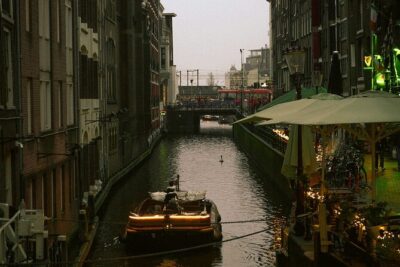
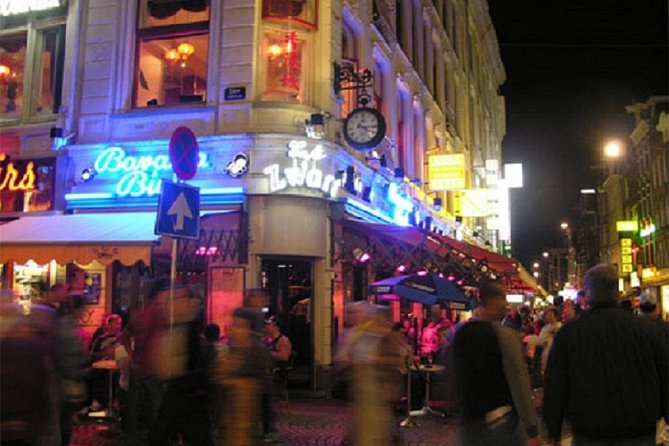
Neon windows, wooden poles, and quick context. This 2-hour walk through De Wallen gives you a local way to understand what the area is and how it got this way, not just the myths. I especially liked the stop-by-stop look at Old Town sites like Pub The Ape and the Waag, plus the chance to ask questions in a small group. The main consideration: this is an adult district, so expect frank, sex-work related talk and some uncomfortable topics.
I also like that the pace is practical. You get to cover a lot of ground in a short time, with multiple start times and a return to the meeting point, so it fits real sightseeing days. The tour runs with a maximum of 32 people, which keeps it from feeling like a lecture in a crowd.
If you’re thinking you can do it “casually,” plan for narrow streets and standing/walking the whole time. It’s not recommended for travelers with limited mobility, even though it’s near public transportation.
In This Review
- Key Things to Know Before You Go
- Why De Wallen Feels Different When You Walk It with a Local Story
- The 2-Hour Route: What You’ll See and How Each Stop Fits
- Stop 1: De Wallen and Old Town Through a Local Lens
- Amsterdam’s Dam-area Soil and the Wooden-Pole Foundation Story
- Oldest-Part-of-Town Context: Why This Area Holds So Much Past
- Pub The Ape and Amsterdam’s Surviving Wooden Buildings
- The Waag: From City Gate to Guild Headquarters
- Smallest House of Amsterdam: VOC Storage to Long-Term Living
- The Condom Shop Since 1987: Modern Details in an Old District
- Price and Value: Is $63.67 Worth It for 2 Hours?
- Logistics That Actually Help: Meeting Point, Transit, and Pace
- Who This Tour Is Best For (and Who Should Skip It)
- Should You Book This Red Light District Walking Tour?
- FAQ
- How long is the Amsterdam Red Light District walking tour?
- What does the tour cost?
- Where do I meet for the tour?
- How big is the group?
- Are there multiple start times?
- Is the tour accessible for people with limited mobility?
- What is the cancellation policy?
Key Things to Know Before You Go
- Local perspective on De Wallen: Learn how Amsterdam frames the district and its role in the city.
- Small group size (max 32): Easier Q&A and more back-and-forth with the guide.
- Old Town landmarks included: You’ll connect the area to older Amsterdam sites like the Waag and Pub The Ape.
- Amsterdam’s wooden-pole building story: You’ll hear how houses were built on piles down about 11 meters.
- Adult-industry context in walking form: Expect direct discussion of sex work and related culture.
- Short, flexible timing: About 2 hours with different start times so you can match your schedule.
Why De Wallen Feels Different When You Walk It with a Local Story
De Wallen is one of those places where the internet usually shows you extremes. On this tour, you get a steadier view, told with local context and grounded in the city’s layout. The guide approach keeps the focus on what the district is, how it functions inside Amsterdam, and what people often misunderstand.
Two things really made it work for me. First, the walking format helps you notice details you’d otherwise miss, especially in narrow lanes where the scale feels different. Second, the tour doesn’t treat the district as a stand-alone attraction; it ties it to Amsterdam’s older streets and buildings, including sites linked to early city gates and guild life.
The vibe is also less “tourist theater” and more “city explanation.” Guides like Adam (who was described as very entertaining and informative) and Aarre (accommodating and easy to work with) show up prepared to answer questions, not just read a script. That Q&A time matters because De Wallen is full of loaded assumptions, and you’ll want a real voice to separate fact from hype.
You can also read our reviews of more tours and experiences in Amsterdam.



The 2-Hour Route: What You’ll See and How Each Stop Fits
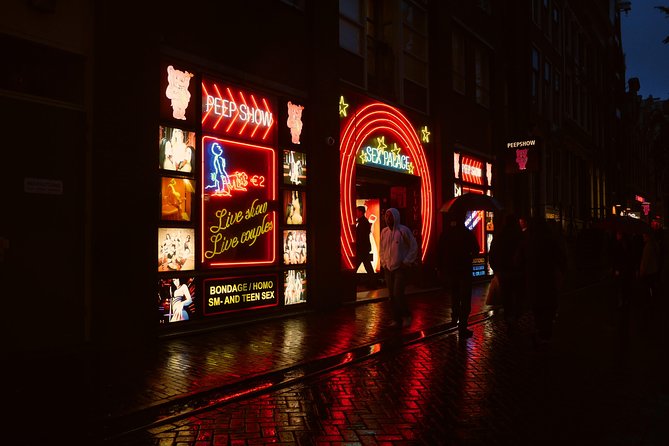
This walk is about 2 hours, so you won’t get a slow, museum-style experience. You’ll move at a steady sightseeing pace through De Wallen and the nearby Old Town area. That’s a plus if you’re pressed for time, but it also means you should be ready to keep walking and listening.
Here’s how the stops connect, and what each one is for:
Stop 1: De Wallen and Old Town Through a Local Lens
The tour starts by orienting you to the Red Light District as part of Amsterdam’s broader story. You’ll walk the narrow streets of De Wallen and hear how the guide connects coffeeshop culture and the sex work industry to the way Amsterdam organizes public life.
This opening matters because it sets expectations. If you come in expecting only sensational headlines, you’ll leave with a framework for how the district fits into the city and why it looks the way it does. It’s also where you can ask your first round of questions, which helps you adjust your attention for the rest of the walk.
Amsterdam’s Dam-area Soil and the Wooden-Pole Foundation Story
At one point, the tour shifts into a very Amsterdam detail: how the city’s ground shaped its buildings. The guide explains that Amsterdam’s soil includes a thick layer of fen and clay, so many buildings sit on wooden poles driven deep—about 11 meters—down toward solid sand.
This is more than trivia. When you understand the foundation logic, you start to read the city differently. You realize the city didn’t just “happen”; it was engineered around a tricky natural setting, and that’s why so many older neighborhoods have a distinct feel.
Oldest-Part-of-Town Context: Why This Area Holds So Much Past
The walk also places the area in an “oldest part of the city” context. The guide frames the district as tied to Old Town, which is why you’ll see layered history as you move from one landmark to another.
For you, that means the district isn’t treated as a modern “entertainment zone.” Instead, it becomes a place built atop earlier Amsterdam, where the city’s growth and rules over centuries show up in the street plan.





Pub The Ape and Amsterdam’s Surviving Wooden Buildings
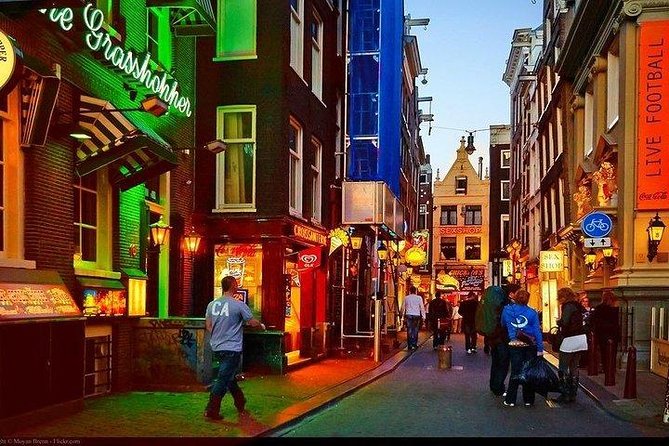
Pub The Ape—also called Int Aepjen—is one of the most memorable stops because it’s a literal time capsule. The building dates to around 1540, and it’s described as one of only two remaining wooden buildings left in Amsterdam.
The historical logic here is key. After a big fire in 1452, the government shifted to brick facades. So when you stand in front of a surviving wooden structure, you’re not just seeing a quirky old pub. You’re seeing evidence of how fire risk, government policy, and building materials shaped the look of Amsterdam over time.
What I like about this stop is that it gives you something concrete to visualize while you’re also thinking about De Wallen. It keeps the tour from becoming “all adult topic, all the time.” You get a break where the city’s physical survival story is the main event.
The Waag: From City Gate to Guild Headquarters
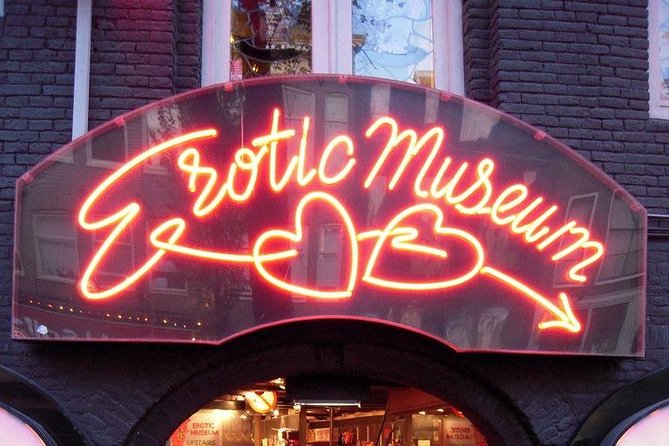
Next comes the Waag, built around the 1400s and described as the second oldest building of Amsterdam. The Waag originally functioned as one of the city’s gates and part of the defensive wall.
Later, its job changed. The tour explains that the Waag became a place where guilds and craftsman’s organizations set up, with those groups also active around the square.
This stop gives you a useful mental image: the same area that once served defense later supported trade and organized work. For understanding De Wallen, that matters because it shows how Amsterdam repurposes important spaces over time. The city isn’t one era frozen in place; it’s a chain of uses layered onto the same streets.
Smallest House of Amsterdam: VOC Storage to Long-Term Living
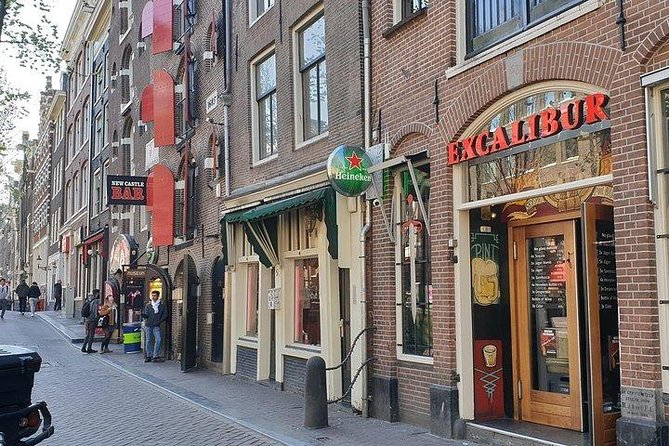
The tour also points out the smallest house in Amsterdam, built around the 1700s. The guide explains it started as storage for the VOC trading company, and later people lived there for a long time.
This stop is fascinating because it pairs commerce with daily life. The VOC connection tells you Amsterdam’s global trading links were practical, not abstract. And the “small house used as living space” part shows how those economic realities trickled down into the way people actually lived.
If you like your city stories grounded in buildings, this is a good one. You’ll walk away with a clearer sense of how space, trade, and housing pressure shaped Old Town.
The Condom Shop Since 1987: Modern Details in an Old District
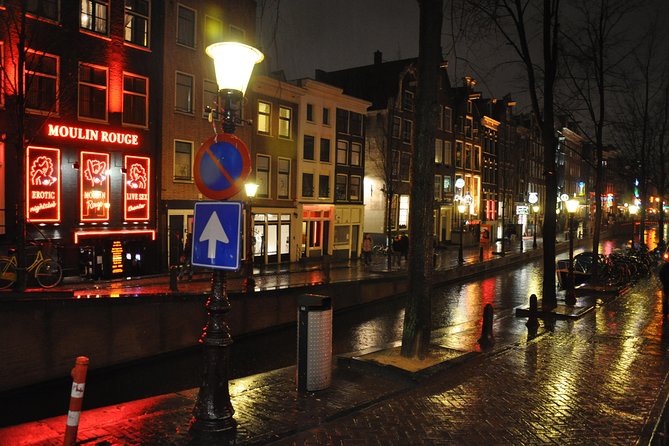
One of the more direct, contemporary stops is the world’s first condom shop dedicated to condoms, located since 1987. The guide notes that you can get size-customized condoms and other special condoms.
It can feel jarring at first, because this shop is talking about something intensely practical while you’re still thinking about history. But that contrast is exactly why it helps. De Wallen isn’t only about the past, and the district isn’t only about secrecy. It’s also about visible, serviced reality—businesses, commerce, and how Amsterdam frames public interaction.
This stop also helps you understand a key point: Amsterdam’s approach to certain topics can be more matter-of-fact than you might expect. A quick storefront example makes that idea easier to hold than another abstract explanation.
Price and Value: Is $63.67 Worth It for 2 Hours?
The cost is $63.67 per person for about 2 hours. That’s not “cheap,” but you’re paying for something more specific than a generic city stroll. This is a specialized walk focused on De Wallen and its local context, with a small maximum group size of 32 people.
For value, the timing matters. Because it’s short and has multiple start times, you can fit it into a day when you might otherwise have to choose between long tours. If you want De Wallen context without losing half a day, this format is efficient.
The mobile ticket also makes it easy to manage on the day. You’re not juggling printed paperwork. And because it’s offered as a guided walking experience with admission ticket-free for the listed parts, you’re mostly paying for the guide’s storytelling and the on-foot street access.
Logistics That Actually Help: Meeting Point, Transit, and Pace
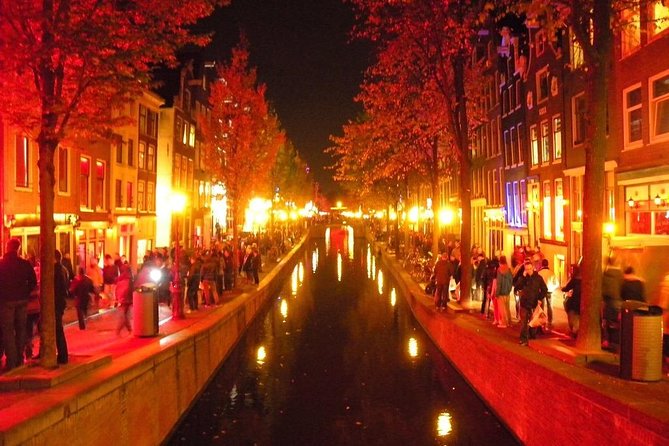
You meet at Geldersekade 2HS, 1012 BH Amsterdam, and the tour ends back at the meeting point. That “back to start” style is convenient because Amsterdam walking can be confusing, especially if you’re bouncing between neighborhoods.
It’s near public transportation, which helps if you don’t want to commit to a long walk from your hotel. Service animals are allowed, and most people can participate.
One caution: it’s not recommended for travelers with limited mobility. Even if you’re mobile enough for normal city walking, the district’s narrow streets and continuous walking can be tough. If that’s your situation, consider another kind of Amsterdam tour that’s easier on movement.
Timing-wise, confirmation happens at booking. And the tour is commonly booked about 37 days in advance on average, which suggests it’s a popular slot to plan around.
Who This Tour Is Best For (and Who Should Skip It)
This tour works best if you want more than surface-level viewing. If you like your city guides to connect buildings, institutions, and neighborhoods, you’ll enjoy the way the walk brings in Old Town landmarks like the Waag and Pub The Ape while staying anchored in De Wallen.
It’s also a good choice if you’re the kind of person who likes to ask questions mid-walk. The guide format is set up for that, and the best moments for many people come when you can steer the conversation toward what you’re really wondering about.
The adult-topic nature is the deciding factor. If you’re uncomfortable with frank discussion of sex work and related culture, you might find the experience stressful instead of educational. Also, if you want a “light and funny” tour, this one isn’t built for that. It’s more about context and city function than comedy.
Should You Book This Red Light District Walking Tour?
Book it if you want a short, focused way to understand De Wallen through local context, and you’re happy to pair adult-district storytelling with real Old Town landmarks. The guide-led structure—plus the small group size—helps you get answers instead of relying on secondhand stories.
Consider skipping or substituting another option if you need a tour with limited walking, or if adult subject matter will put you on edge. In that case, you might prefer a different Amsterdam theme that keeps the tone more comfortable for you.
If you do book, go in with one mindset: you’re not just looking at a district; you’re learning how Amsterdam tells its own story.
FAQ
How long is the Amsterdam Red Light District walking tour?
The tour is about 2 hours.
What does the tour cost?
The price is $63.67 per person.
Where do I meet for the tour?
The meeting point is Geldersekade 2HS, 1012 BH Amsterdam, Netherlands.
How big is the group?
This activity has a maximum of 32 travelers.
Are there multiple start times?
Yes, you can choose from multiple start times to suit your schedule.
Is the tour accessible for people with limited mobility?
It is near public transportation, service animals are allowed, but it is not recommended for travelers with limited mobility.
What is the cancellation policy?
You can cancel for free up to 24 hours in advance for a full refund.