REVIEW · CITY TOURS
Amsterdam Urban Legend Scavenger City Game
Book on Viator →Operated by Urban Legends City Quest · Bookable on Viator
Can you solve Amsterdam’s spooky canal mystery? This 2.5-hour scavenger game turns an Amstel-area legend into puzzle stations and story-driven clues you’ll work through around the city center. The plot centers on a box allegedly left beneath the floorboards of a historic canal house, linked to mayor Coenraad van Beuningen and the nickname The House with the Bloodstains.
I really like how the game mixes realistic city wandering with brainy challenges, so you’re not just walking from sight to sight. One possible drawback: it’s an outdoor walk, so rain or dim weather can slow you down and make clues harder to spot.
In This Review
- Quick take: what makes this Amsterdam game worth your time
- Urban Legend Premise: The Amstel Canal House Chest
- How the City Quest Works: Clues, Puzzles, and Hints That Keep You Moving
- Your 2.5-Hour Route: What the Walk Feels Like in Amsterdam
- Stop-by-stop style flow (what you’ll do along the way)
- Puzzle Variety: Inkblots, Lock-Picking Style Tasks, and Chemistry-Themed Fun
- The Real-Life Legend Angle: Why the Story Feels Worth Following
- Price and Value: Is $29.50 Worth It?
- Who This Game Suits Best (and Who Might Want to Skip)
- Family note (stroller friendliness)
- Weather, Pace, and Comfort: Practical Amsterdam Realities
- Getting There and Starting Smart at Amstel
- Final Decision: Should You Book This Amsterdam Urban Legend Game?
- FAQ
- Where does the Amsterdam Urban Legend Scavenger City Game start?
- How long does the scavenger game take?
- What is the price per person?
- Do I need to bring a paper ticket?
- Is the experience a private group activity?
- Is service animal access allowed?
- Do I need to be very fit to join?
- Is it easy to reach using public transportation?
- What is the cancellation policy?
Quick take: what makes this Amsterdam game worth your time

- Urban legend meets street-level puzzles, anchored to the House with the Bloodstains story
- Hands-on challenge variety, with puzzles that can include inkblots, lock-picking style tasks, and chemistry-themed activities
- A guided experience without constant lecturing, so you can think, try, and ask for hints when needed
- Flexible pace for groups, with a format that works well for first-timers who want something different than the usual Amsterdam route
- Manageable walking for many people, with at least one family using a buggy and still finding it doable
Urban Legend Premise: The Amstel Canal House Chest
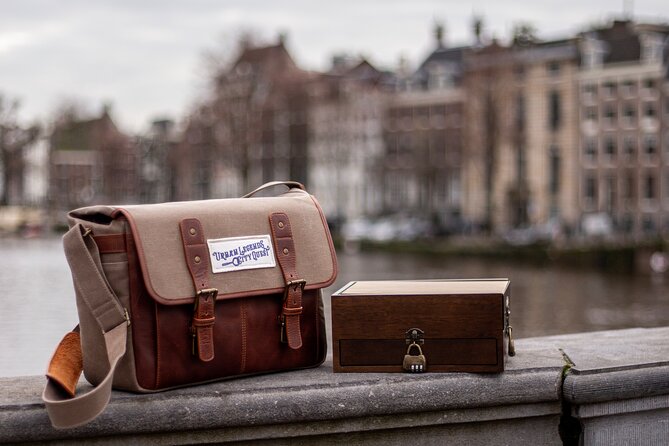
The whole experience starts with a juicy setup that feels very Dutch: a mysterious box hidden under the floorboards of a historic canal house along the Amstel river. The included letter points to mayor Coenraad van Beuningen, and the building’s ominous nickname, The House with the Bloodstains, comes from the way the mayor’s final days played out.
That story hook matters because it gives your sightseeing walk a direction. Instead of “go here, see that,” you’re hunting for answers tied to a specific place and a specific rumor. It also means you’re learning Amsterdam through narrative, not through a checklist.
I also like the fact that the game aims to stay close to urban legends and myths, then adds its own extra flavor. You get that sweet spot where it feels fun and slightly spooky, but not like pure fiction.
You can also read our reviews of more city tours in Amsterdam



How the City Quest Works: Clues, Puzzles, and Hints That Keep You Moving
This is not a passive tour. It’s a puzzle-based scavenger hunt where you solve tasks to move the story forward. You’ll go out with your group and follow a route that’s designed around checkpoints, so the walking has a purpose.
You can think of it as an escape-room mindset, but outdoors. The games are hands-on and physical in the sense that you’re actively doing things, not just reading questions. One big advantage for you is that it’s built for people who like puzzle-solving, including those who may have done escape rooms before and want a new format.
You’ll also get a host who keeps the game flowing and can provide hints. That’s important in a city game, because one stuck moment can otherwise turn your afternoon into a frustration spiral. The hints let you keep momentum while still letting you feel smart when it clicks.
And since it’s a private booking for only your group, you’re not competing with strangers for attention or for time at a puzzle station. That is a quiet quality-of-life upgrade, especially in a busy city center.
Your 2.5-Hour Route: What the Walk Feels Like in Amsterdam
The listed duration is about 2 hours 30 minutes, and in practice you should plan a bit of flexibility. One of the best things about this format is that you can finish with a sense of accomplishment without it turning into your whole day.
You start at Amstel in Amsterdam, and the activity ends back at the meeting point. That loop matters: you’re not left wondering how to get home or where you are in the city when you’re done. It also helps you plan your afternoon—fit it in after a morning of museums, or before dinner when the canals look especially good.
Along the way, you’ll move through city-center streets and stumble on the kind of Amsterdam details you’d normally miss while rushing between landmarks. Expect the experience to feel like a guided wander, with puzzles acting like milestones. Reviews of the experience consistently point out that it works as both a quest and a sightseeing walk, which is exactly what you want in a place like Amsterdam.
Stop-by-stop style flow (what you’ll do along the way)
Because the exact addresses of every puzzle checkpoint aren’t spelled out here, it’s best to picture the journey as phases rather than a fixed list of named locations:
- Start at Amstel, get oriented, then launch.
You’ll receive the story setup and begin solving right away. This is also where your host sets the tone, so you know what kind of thinking the game expects.
- Early puzzle checkpoints to warm up your brain.
These are the tasks that get you past the mindset of just sightseeing. You’ll be reading clues carefully and trying practical problem-solving steps.
- Mid-game puzzle stations with variety.
This is where the game leans into the more memorable stuff: tasks that involve inkblots and pattern logic, plus challenges that feel more hands-on than a typical city scavenger hunt.
- Later puzzles that build toward the final resolution.
Near the end, you’re typically putting together earlier story hints and figuring out what the legend is trying to point you toward.
- Return to the starting area when the story closes.
Finishing back where you began keeps things clean and easy.
Puzzle Variety: Inkblots, Lock-Picking Style Tasks, and Chemistry-Themed Fun
One of the most praised parts of this game is the puzzle mix. You’re not just solving word riddles. You’re doing different kinds of challenges, which keeps the experience from going stale halfway through.
Here are a few puzzle types that show up in the experience description and feedback:
- Inkblots puzzle station
This one is a great example of why the game works for more than just puzzle geeks. It’s challenging in a good way, and once you see the pattern, it feels very satisfying.
- Lock-picking style challenge
This gives you that escape-room vibe, but on a city street. It’s the kind of task that feels like a prop-driven puzzle, not just brainwork.
- Chemistry-themed task
The game description and feedback point to chemical-reaction style elements. That matters because Amsterdam is a city of canals and history, but the puzzle activities bring it into the present moment with hands-on problem solving.
I like puzzle variety because it helps you even if you’re not great at one type of thinking. You might struggle at one station and then shine at another. That gives the group an easy way to share roles without anyone feeling left behind.





The Real-Life Legend Angle: Why the Story Feels Worth Following
Amsterdam is full of stories, but this game chooses one specific legend thread: the House with the Bloodstains and the mayor behind it, Coenraad van Beuningen. Even if you arrive already knowing some Amsterdam lore, you’ll likely learn something new about how the myth got attached to that canal-house image.
The value here is not that you get a lecture. It’s that the story gives context to why you’re solving what you’re solving. You’re not just moving forward because the rules say so; you’re moving forward because the narrative is nudging you.
Also, the game says it does research into urban legends and myths, then adds an imaginative twist. That approach tends to work well for you because it keeps things grounded enough to feel believable, but playful enough to feel like a game, not a homework assignment.
And that legend focus is the main reason this stands apart from generic scavenger hunts. Generic hunts can feel like they could happen in any city. This one is anchored to Amsterdam’s canal-house atmosphere and a specific local-ish character.
Price and Value: Is $29.50 Worth It?
At $29.50 per person for about 2.5 hours, you’re paying for a guided, story-driven puzzle walk with physical tasks and a host who can provide hints. On paper, it’s not “cheap,” but it’s also not priced like a private tour guide with constant narration.
What makes it feel like good value is the combination:
- You get a built-in route so you don’t have to plan a scavenger-style afternoon yourself.
- You get multiple puzzle types, which tends to keep entertainment and engagement high.
- You get a host, which matters in puzzle games because it reduces the time wasted being stuck.
You also get small extras that can tilt the value in your favor: mobile ticket convenience and group discounts. And since it’s a private tour/activity, your group experience stays focused.
If you love escape rooms but want something more “Amsterdam” than a room, this pricing structure makes sense. You’re basically trading part of your museum budget for an active, interactive city afternoon.
Who This Game Suits Best (and Who Might Want to Skip)
This is a strong fit if you want a different Amsterdam experience than just canals, bikes, and museums. It’s especially good for people who like:
- escape-room style thinking
- puzzle-solving outdoors
- learning through stories instead of facts-only tours
It also works for first-timers because the experience does what a good city activity should do: it gives you a reason to walk around the center and notice details while staying structured.
It may be less ideal if you:
- dislike walking as an activity (even if it’s not described as extreme)
- need a totally calm, quiet tour format
- get frustrated easily by hands-on puzzles without much guidance
Family note (stroller friendliness)
One feedback point that surprised me in a good way: someone did it with an almost 2-year-old in a buggy. They also mentioned that even with crappy weather, it stayed fun and puzzle setup felt orderly. That doesn’t mean it’s designed as a toddler activity, but it suggests the walking pace and structure are realistic for families with the right expectations.
Weather, Pace, and Comfort: Practical Amsterdam Realities
Since this is an outdoor activity, you should plan like it’s Amsterdam: expect quick weather changes. Rain can make streets slick and clues harder to see, and cold wind can make you want to rush. Bring a light layer and assume you might need it.
On walking pace: the experience includes a city-center route with multiple stations, so it’s not just a quick stroll. That said, the fact that at least one family used a buggy and still had a good time suggests it’s not engineered like a long-distance hike.
Also, the listing asks for moderate physical fitness, which is a helpful clue for you. That usually means you can handle uneven sidewalks and a steady walking rhythm, but it’s not for everyone who needs fully flat or minimal movement.
If you’re bringing service animals, the experience explicitly allows service animals.
Getting There and Starting Smart at Amstel
The start is at Amstel, Amsterdam, and public transport access is described as convenient. That’s great because it means you won’t waste your puzzle time figuring out transit.
A practical tip: arrive a few minutes early so you’re not stressed when the game starts. In puzzle games, calm beats speed. Once you’re launched, you’ll do better if you’ve got your bearings and your group is ready to work together.
You’ll also receive confirmation at booking, and you’ll have a mobile ticket. For a city activity, that’s one less thing to manage—no paper hunt, no last-minute printouts.
Final Decision: Should You Book This Amsterdam Urban Legend Game?
I think you should book it if you want an afternoon that mixes Amsterdam atmosphere with hands-on problem solving. The legend premise (Coenraad van Beuningen, The House with the Bloodstains, and a hidden chest) gives the walk a reason to exist, not just a place to stand. And the puzzle variety—inkblots, lock-picking style tasks, and chemistry-themed challenges—keeps the experience from turning into one long, repetitive worksheet.
Skip it if you want pure sightseeing with minimal effort, or if you know you hate puzzle-solving in groups. Also consider the outdoor nature: if you’re traveling in bad weather and hate scrambling for clues, you might want a more indoor-focused plan.
If your idea of a great Amsterdam day includes canals, storytelling, and the feeling of solving something real at the street level, this one is easy to recommend.
FAQ
Where does the Amsterdam Urban Legend Scavenger City Game start?
It starts at Amstel, Amsterdam, Netherlands, and ends back at the same meeting point.
How long does the scavenger game take?
The experience lasts about 2 hours 30 minutes.
What is the price per person?
The price is $29.50 per person.
Do I need to bring a paper ticket?
No. You’ll have a mobile ticket.
Is the experience a private group activity?
Yes. It’s a private tour/activity, and only your group participates.
Is service animal access allowed?
Yes. Service animals are allowed.
Do I need to be very fit to join?
Travelers should have a moderate physical fitness level.
Is it easy to reach using public transportation?
Yes. It is near public transportation.
What is the cancellation policy?
Free cancellation is available. You can cancel up to 24 hours in advance for a full refund. Cancellation within 24 hours of the start time is not refundable.