
REVIEW · AMSTERDAM
Amsterdam Treasure Hunt: The Mystery of a Secret Sender
Book on Viator →Operated by Mystery City Games · Bookable on Viator
Canal-side puzzles turn Amsterdam into a game. You’ll get pulled into the Order of the Rosy Cross mystery and follow clues through Golden Age Amsterdam to uncover the identity of a historic figure known as A Secret Sender.
I love that it’s a self-paced scavenger hunt + walking route. It’s also built for real interaction, so it tends to work well for teens as well as adults—one family even packed it into a 7-hour layover and still had time for lunch nearby. The one thing to consider is the walking: it’s about 3 km, so comfy shoes matter and the route can feel longer if you stop often to read every clue.
In This Review
- Key Takeaways Before You Go
- How the Order of the Rosy Cross Mystery Plays Out
- Price and Value: What $30.25 Covers in Real Time
- Where You Start: Zwanenburgwal 178 and Getting Set Up Fast
- Stop 1: Oude Kerk as Your First Puzzle Anchor
- Stop 2: Nieuwmarkt and the Best Place to Catch Your Rhythm
- Stop 3: Westerkerk and the Moment the Walk Gets Interesting
- Stop 4: Torensluis and Staying Engaged Without Rushing
- Stop 5: Amsterdam Museum as the End-Point Finish
- Self-Guided But Not Aimless: How to Plan Your Start Time
- Who This Works Best For (and Who Might Want a Different Plan)
- Practical Tips That Make the Difference
- Should You Book the Amsterdam Treasure Hunt?
- FAQ
- How long is the Amsterdam Treasure Hunt?
- How far will we walk?
- Is this self-guided or does a guide lead the whole time?
- Where does the tour start and where does it end?
- What languages are available?
- Is this a private experience?
- Is free cancellation available?
Key Takeaways Before You Go
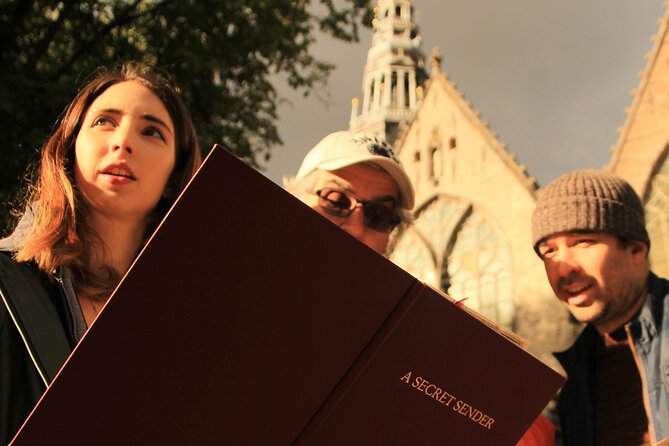
- A Secret Sender mystery: puzzles tied to what you see as you walk.
- 3 km route through central Amsterdam with a clear, logical flow.
- Self-guided play: you move at your own pace instead of being rushed.
- Choose your start time to match your schedule.
- Teen-friendly format with plenty of hands-on problem solving.
- Mobile ticket + multiple languages including English.
How the Order of the Rosy Cross Mystery Plays Out
This experience is built like a story you solve in motion. The Order of the Rosy Cross is recruiting new members, and your mission is to prove you’re worthy by cracking a series of cryptic puzzles. The big goal: uncover the identity of a historic member known only to you as A Secret Sender.
Instead of sitting through a lecture, you’re out in Amsterdam looking at buildings and monuments for clues. The clues are tied to architecture and local history themes, which is why this works so well for groups that like to talk, compare notes, and figure things out together. You’ll solve puzzles along the way with your friends, which makes the walk feel like a game rather than just sightseeing.
The key detail for your planning: it’s designed for around 2 hours of play time on a 3 km city-center route. That usually gives you enough momentum to stay engaged, but it’s also short enough to not wreck your day if you have plans before or after.
You can also read our reviews of more tours and experiences in Amsterdam.



Price and Value: What $30.25 Covers in Real Time
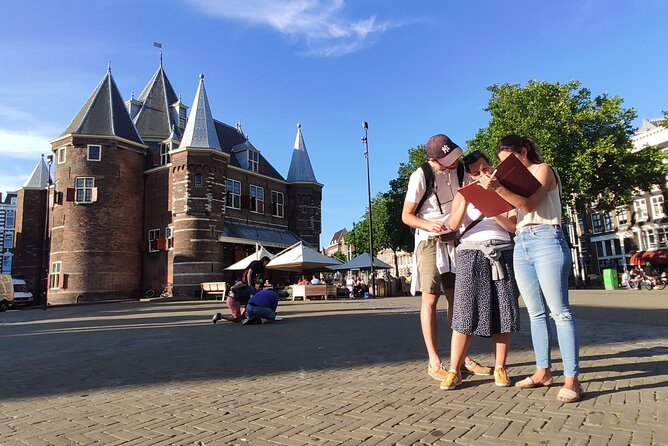
At $30.25 per person for about two hours, you’re paying for more than “entry” or “a stroll.” You’re buying structure: a route, a narrative mission, and puzzle content that gets you looking closely at Amsterdam as you go.
I like this pricing model because it can replace the usual time cost of a guided tour plus the effort cost of planning your own route. With self-guided play, you’re not just consuming information—you’re actively doing something every few minutes. That’s where the value tends to show up, especially if you’re traveling with teens or you want a date-night activity that isn’t strictly sitting indoors.
One more value angle: the private format means it’s just your group. You’re not negotiating loud pacing changes from strangers, and that helps if you want to work as a team on puzzles at your own speed.
Where You Start: Zwanenburgwal 178 and Getting Set Up Fast
You’ll begin at Zwanenburgwal 178, 1011 JH Amsterdam, and the activity ends back at the starting point. The “back where you started” part matters more than it sounds. It means you can line up transport, meet up with people, or grab a snack without having to figure out how to get back across the city afterward.
You’ll also get a mobile ticket, which is convenient if you’re the kind of person who hates hunting for paperwork in your bag. When you arrive, the process is straightforward: you’re set up to start walking and solving.
This is one of those activities where the first few minutes matter. If you take your time at the beginning to get oriented, you’ll save time later because you won’t be constantly re-checking where you’re supposed to look next.
Stop 1: Oude Kerk as Your First Puzzle Anchor
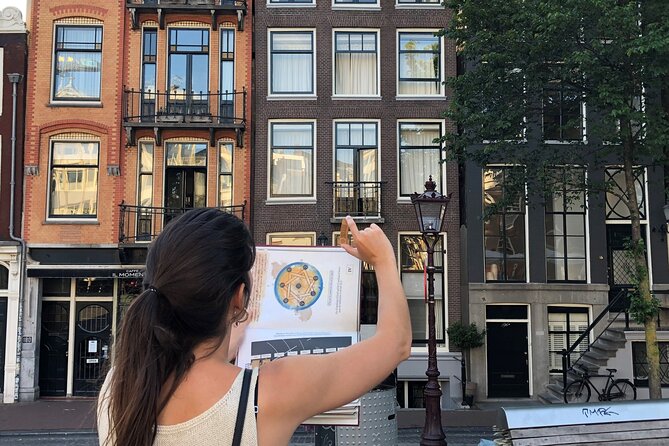
Your route starts at Oude Kerk, and this is where the hunt gets its legs. Early stops are important in a puzzle walk because you’re learning the game’s rhythm: how the clues connect to what you see, how the questions are phrased, and how quickly you need to move to keep the story moving.
Expect the first part to feel like a warm-up. You’ll be looking at the kind of details the puzzles are asking for—things related to architecture and historic references—so you can get used to the idea that you’re not just walking past landmarks. You’re reading them.
A practical consideration here: Oude Kerk is a meaningful landmark, and that can mean it’s a place where you’ll want clear sightlines for the clue moments. Wear shoes you can walk in comfortably, because you’ll likely be standing and reading for short bursts as you work through the first tasks.
Stop 2: Nieuwmarkt and the Best Place to Catch Your Rhythm
Next up is Nieuwmarkt. This is a smart second stop because it gives you a chance to settle into the game. By now, your group should be working together better: splitting clue reading, checking answers, and deciding who wants to look around while others focus on the puzzle text.
Nieuwmarkt is also a good location for real-life travel pacing. If you need a quick pause for photos, water, or bathroom access, you’re in an area where it’s easier to handle those breaks without throwing off your whole day. Even if you don’t take a break, the setting helps keep the experience from feeling monotonous.
One tip that can save you time: if your group tends to wander during puzzle hunts, set a small rule for yourselves. For example, agree on a “look first, question second” rhythm. It makes the experience smoother and helps you avoid backtracking.





Stop 3: Westerkerk and the Moment the Walk Gets Interesting
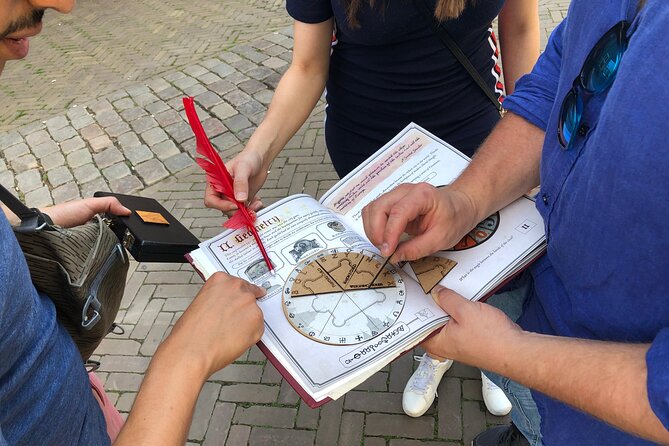
At Westerkerk, the route keeps building. This is often the point where the activity starts to feel more like real Amsterdam exploration and less like pure puzzle solving.
The experience is designed around searching the city’s history and architecture for clues. That means you’ll likely slow down here to notice the kind of details the puzzles are pointing out. If you enjoy looking at facades, monuments, and how places evolved, this is where you’ll feel it most.
One drawback to flag: Westerkerk is a stop where groups can spread out while trying to find the exact clue angle. If you’re traveling with a larger group, it can get trickier to keep everyone on the same page and avoid arguing about answers. For small groups, this usually feels like a fun teamwork test.
Stop 4: Torensluis and Staying Engaged Without Rushing
Torensluis is your next landmark on the route, and it plays a useful role in the pacing. It’s the kind of stop where you can keep momentum without it feeling like you’re moving nonstop from one major sight to the next.
This part of the hunt is where you’ll really want to pay attention to how the puzzles connect the story. You’re moving through Golden Age Amsterdam and using architectural and historic cues to solve questions, so you’re not just collecting facts—you’re using them.
If your group tends to get stuck, Torensluis is a good place to regroup quickly. Don’t spend forever on one puzzle clue; try re-reading the prompt together, then shift your focus to what the game is asking you to notice visually.
Stop 5: Amsterdam Museum as the End-Point Finish
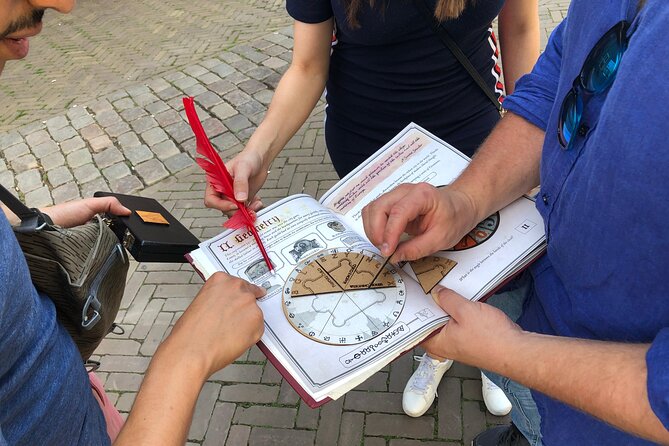
Your final stop is Amsterdam Museum, and this is where the mystery-solving payoff happens. By the time you reach the museum area, you’ve usually accumulated enough clues that your group can make stronger connections and actually push toward the final answer.
This end-point structure is part of why the tour works well. You get a full “arc” to the experience rather than a route that ends abruptly. And since the tour returns to the meeting point, it’s easy to transition back to the rest of your day.
If you’re planning to eat afterward, this is also an easy moment to decide what’s next. Since the walk is only about 3 km total, you won’t be wiped out, which makes it realistic to keep exploring afterward if you have energy.
Self-Guided But Not Aimless: How to Plan Your Start Time
One of the best things about this activity is the flexibility. You can choose a start time that fits your party, and because it’s self-guided, you control your speed.
My practical advice: start earlier in the day if you can. Even though the play time is about two hours, people naturally slow down when they’re enjoying the puzzle parts, photographing details, and comparing answers. A later start can still work, but it can compress your post-tour plans.
Also think about group dynamics. If you’re with kids or teens, agree on a teamwork approach from the start. The game is more fun when roles are clear: one person reads prompts, one person checks the visual clue, and everyone participates in the decision at the end.
Who This Works Best For (and Who Might Want a Different Plan)
This is a strong choice if you want something interactive in Amsterdam that doesn’t rely on a live guide narrating every detail. It’s especially good for:
- Families and teens who enjoy problem solving
- Couples who want an activity that feels like an adventure, not just a walk
- Friends who like teamwork and light competition while sightseeing
- Anyone who wants a short route that still teaches you something real about the city’s past themes
From the experience design, most people can participate, and it’s a private activity—so it’s built to be your group’s experience. If you’re someone who gets stressed when you have to solve puzzles, you might find the experience less relaxing than a standard walking tour, but you’ll still likely enjoy the city exploration component.
Practical Tips That Make the Difference
Here are a few things that help you enjoy the hunt instead of fighting it:
- Bring comfortable walking shoes. The route is about 3 km and includes enough stopping to read clues.
- Keep your phone charged. It’s a mobile-ticket experience, and you’ll be using your device while playing.
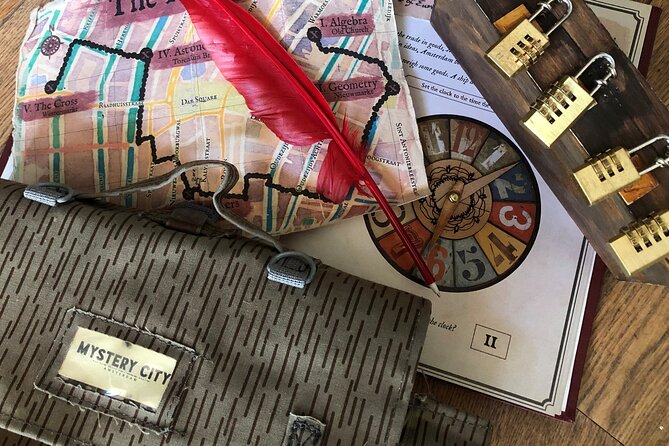
- Don’t over-pack. One of the reviews mentioned a backpack provided as part of the experience, but the buckle/unbuckle setup wasn’t always easy, so pack-light if you can.
- If your group is mixed ages, set expectations early: this is a game with walking, not a museum-style shuffle.
- Use pauses strategically. If you take breaks too often, the 2-hour play time can stretch.
Should You Book the Amsterdam Treasure Hunt?
I’d book this if you want a fun, structured way to explore Amsterdam that works like a scavenger hunt instead of a passive tour. At this price, you’re paying for story, puzzles, and a route that keeps you moving through key central stops without requiring you to plan the logic yourself.
Book it especially if you’re traveling with teens, because the format is built to keep them engaged while adults get plenty of enjoyment from the architecture-and-history clue theme. Skip it only if your group really hates puzzles or you’re looking for a low-walking, sit-down experience.
FAQ
How long is the Amsterdam Treasure Hunt?
It lasts about 2 hours, with roughly 2 hours of play time.
How far will we walk?
The route is about 3 km through the city center.
Is this self-guided or does a guide lead the whole time?
It’s self-paced/self-guided. You solve puzzles and explore at your own speed.
Where does the tour start and where does it end?
It starts at Zwanenburgwal 178, 1011 JH Amsterdam, Netherlands, and it ends back at the meeting point.
What languages are available?
It’s offered in English, Dutch, French, German, Spanish, and Italian.
Is this a private experience?
Yes. It’s listed as a private tour/activity, so only your group participates.
Is free cancellation available?
Yes. You can cancel for a full refund up to 24 hours before the experience’s start time.