REVIEW · FOOD
Amsterdam: Self-Guided Food Tour in De Pijp Neighbourhood
Book on GetYourGuide →Operated by Who Is Amsterdam Tours · Bookable on GetYourGuide
One small walk turns into a full-on food circuit in De Pijp. This self-guided Amsterdam street food tour blends family-owned bites with stops around the Albert Cuyp outdoor market, so you can snack your way through classic Dutch favorites and international dishes. The big caution: some locations may close earlier than you expect, and a plan that works on a perfect day can feel short on a sketchy one.
What I like most is that you’re not trapped on a rigid group schedule. You get a PDF guide with map links and a simple order of operations, starting at FEBO on Ferdinand Bolstraat. I also love that the tour is built around storytelling and local food heroes, so each bite feels connected to the neighborhood rather than random curbside chaos.
In This Review
- Key things to know before you go
- Starting in De Pijp: FEBO on Ferdinand Bolstraat and how the PDF keeps you moving
- Market Moment at Albert Cuyp: eating your way through a huge outdoor scene
- Croquettes to Suriname Pom: Dutch comfort meets Paramaribo flavor
- Israel on a bun: smoked brisket, chicken roulade, and pickled sides
- Fish Stall Favorites: fresh herring and kibbeling
- Sweet Stops You Can Time: poffertjes and 45-year stroopwafel craft
- Takoyaki in Amsterdam: Osaka-style balls plus Tokyo ramen energy
- Patatje Oorlog Fries Finale: award-winning hand-cut fries and the Dutch sauce combo
- Timing, open doors, and why some days feel short
- Price vs value: the $15 tour fee plus about 20 euros for food
- Vegetarian friendly, not vegan, and gluten needs care
- Who this self-guided food walk fits best in De Pijp
- Should you book this Amsterdam street food route?
- FAQ
- Where does the tour start?
- Is this a guided tour?
- How many stops are there?
- Do I get tastings and discounts?
- Is the tour vegetarian friendly?
- Is it gluten-free friendly?
- How much should I budget for food?
- What do I need to bring?
- Do I need to use the PDF on my phone?
- What extra trip planning do I get?
Key things to know before you go
- Self-guided, smartphone-powered: the PDF guide is what keeps you on track and eligible for discounts and tastings.
- 7 out of 8 stops include exclusive deals: you’re meant to pay attention to the exact locations, not just the general area.
- Albert Cuyp Market is part of the route: it’s Amsterdam’s outdoor day-market energy, not a sit-down restaurant detour.
- Classic Dutch sweet meets serious savory: poffertjes, Goudse stroopwafels, and the salty finale of patatje oorlog fries.
- Vegetarian options exist, but vegan and gluten-free aren’t supported: plan accordingly before you get hungry.
- Timing matters more than you’d think: you can end up with fewer stops if openings don’t match your day.
Starting in De Pijp: FEBO on Ferdinand Bolstraat and how the PDF keeps you moving
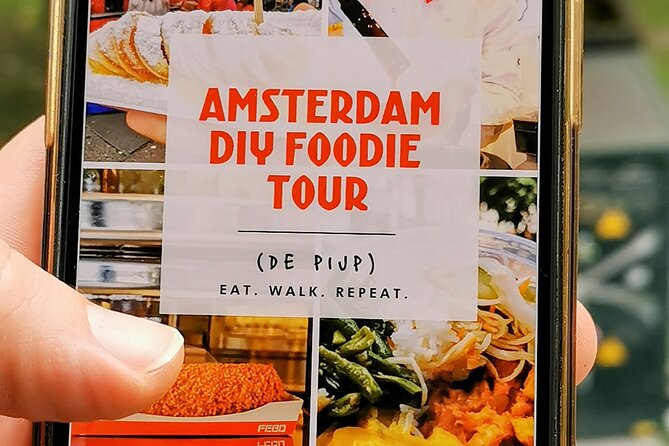
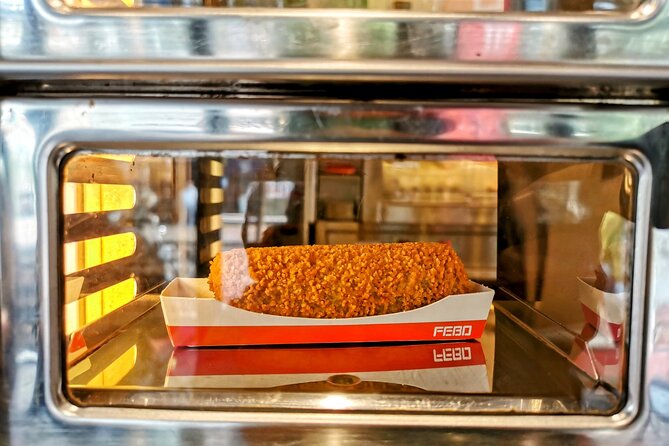
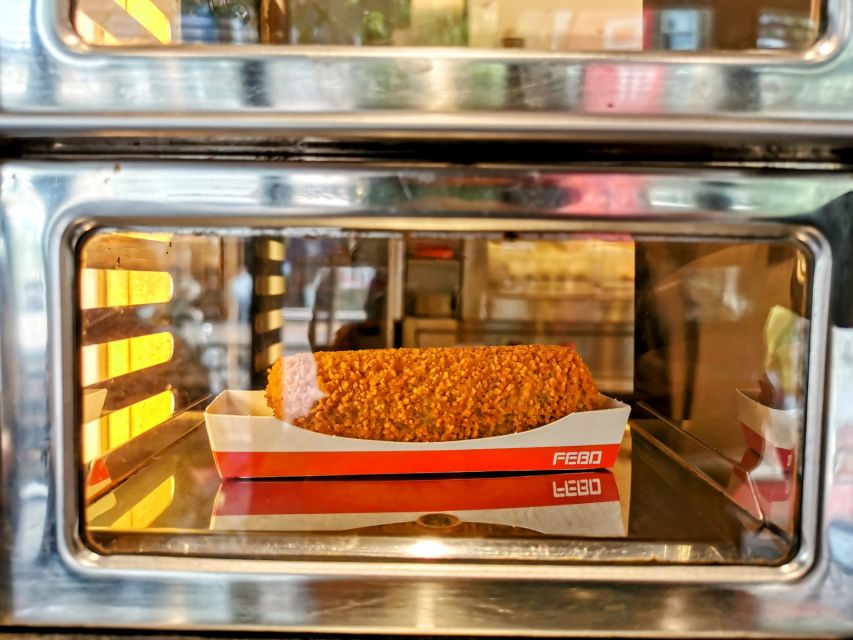
Your tour kicks off at FEBO on Ferdinand Bolstraat, which is a handy starting point because it’s easy to find in De Pijp and it sets the tone: this is quick, snack-style Amsterdam food. From there, you follow the route on your phone using the included PDF guide with Google Map links to the next stop.
This matters because the experience is self-guided. There’s no live guide herding you along. Instead, you’re guided by the order of stops and what each place is known for—plus the promise of exclusive discounts and tastings at 7 of the 8 stops. To actually use the discounts, each person in your party must have their own copy of the PDF on their smartphone (not just one phone shared).
Bring what you’ll realistically need on a walk:
- a charged smartphone with internet access
- cash and/or a credit card
This is a street-food route, and while discounts help, you’ll still be buying food. The tour estimates about 20 euros per person for total food.
Practical tip: since you’re navigating multiple short stops, you’ll want to read the next location info before you leave a shop. That reduces the “wait, where is it?” moments that can eat up your day.
You can also read our reviews of more food & drink experiences in Amsterdam

Market Moment at Albert Cuyp: eating your way through a huge outdoor scene
The highlight here isn’t just eating; it’s also the environment. One stop on the route includes Albert Cuyp Market, described as Europe’s biggest outdoor day market. This is where you get the big-market atmosphere—lots of stalls, lots of foot traffic, and a neighborhood vibe that feels more lived-in than staged.
Because the tour is self-guided, you’re not locked into one stall for an hour. You can use the market stop to:
- grab something quick that fits the route
- orient yourself in De Pijp while you’re in the right zone
- keep your pace as you move between specialty shops
Just keep your expectations realistic: markets can be fast-moving, and you’ll likely be making choices on the fly depending on what’s available. The tour’s structure helps, but Albert Cuyp is still a working market.
Croquettes to Suriname Pom: Dutch comfort meets Paramaribo flavor
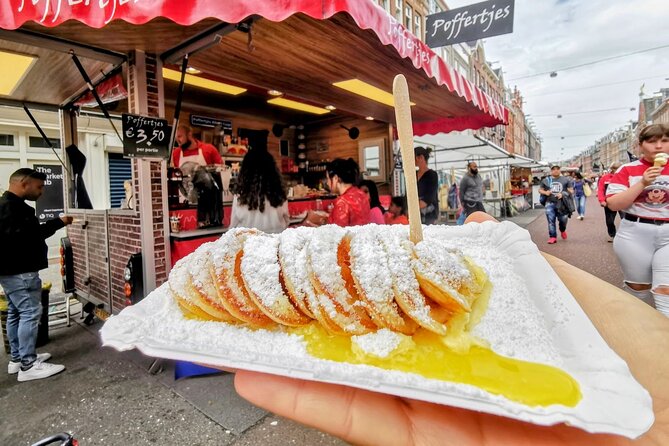
The first bite you’re guided toward is classic Dutch comfort: a traditional croquette to get you rolling. It’s the kind of snack that instantly makes sense in Amsterdam—crispy outside, hot and savory inside—so you start with something familiar before the route starts branching out.
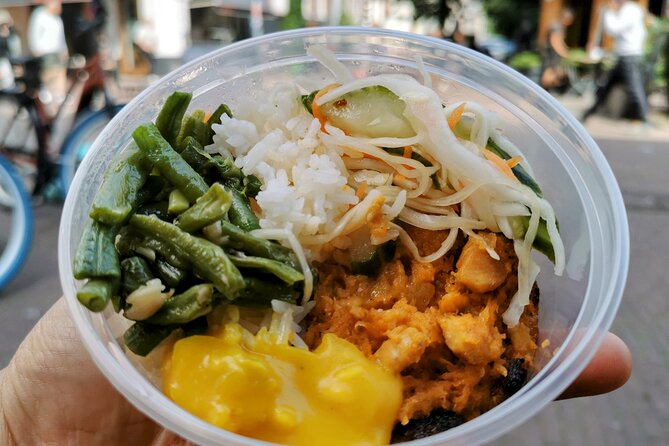
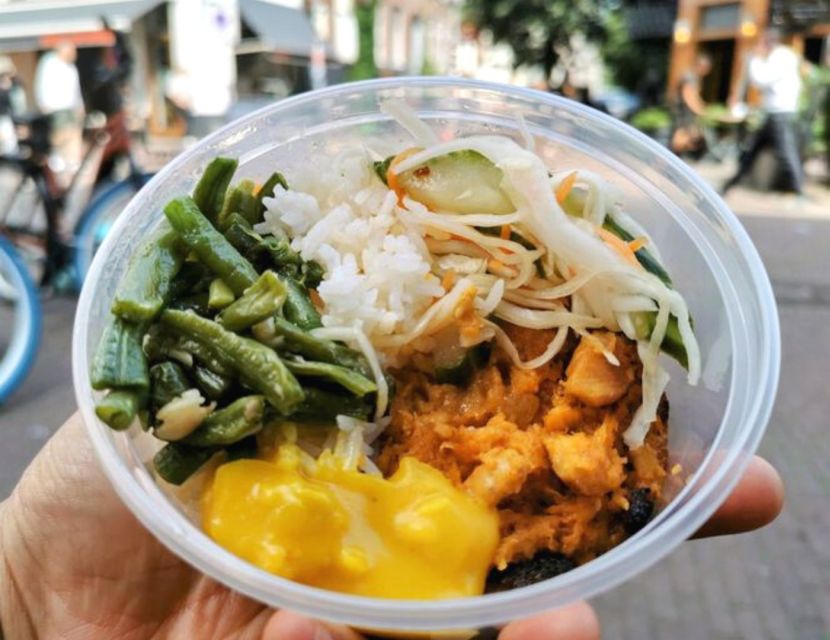
Then comes a big flavor leap to Suriname at a beloved local spot known for pom, Suriname’s national dish. Here’s the key idea: you’re not just tasting a word on a menu. You’re trying a full plate concept that’s built around ingredients and texture:
- pom (an oven-baked root plant with chicken)
- long beans and rice
- homemade pickles
- hot sauce
If you like food that feels like it has a story behind it, this stop is the one that does the most cultural work. It also tends to be substantial, so pace yourself. Street food tours often trick you into thinking everything is a small bite—this one can land like a meal.
Israel on a bun: smoked brisket, chicken roulade, and pickled sides
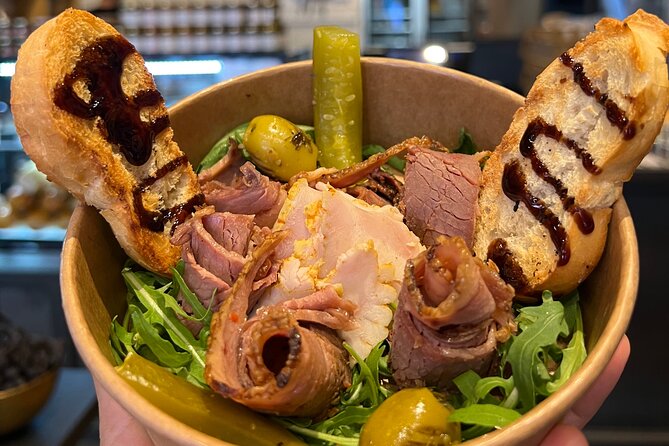
Next, you shift again: Israel-inspired flavors from a boutique deli. The menu-style description here points to hearty, savory items:
- smoked beef brisket
- chicken roulade
- served alongside Israeli pickle, olives, and bread
- finished with balsamic vinaigrette
This is the kind of stop that balances the earlier crispy Dutch snack with something deeper and saucier. Also, the pickles and olives matter. They’re not garnish; they’re part of the flavor contrast that keeps the brisket and chicken from feeling heavy.
If you’re the type who likes to understand why things taste the way they do, this stop makes it easy: you get a clear set of components—smoke, tender chicken, briny sides, and tangy sauce.
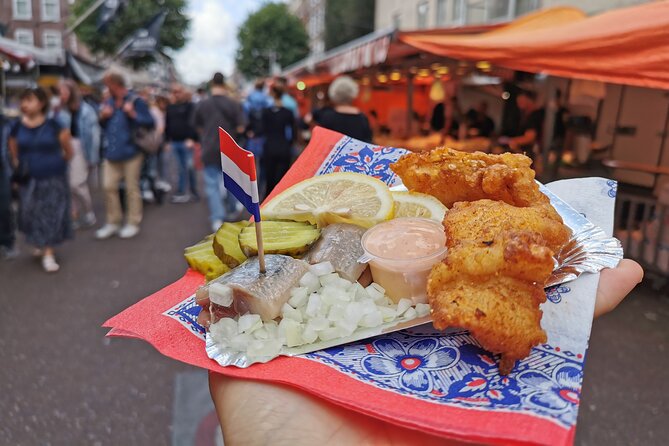
Fish Stall Favorites: fresh herring and kibbeling
Now you’re back to Amsterdam’s seafood street-food identity. The route includes a family-owned fish stall where you’ll find:
- fresh herring
- kibbeling, which is fried cod
Fish plus fried bits is a classic combo, and it’s a good move mid-route because it breaks up the earlier sweets-and-starches rhythm.
One heads-up: this segment is likely to be very “snackable,” but it still adds calories and salt. If you’ve been eating everything as-is at every stop, you might find you’re ready for sweet sooner than planned.
You can also read our reviews of more tours and experiences in Amsterdam



Sweet Stops You Can Time: poffertjes and 45-year stroopwafel craft
After savory comes one of the tour’s sweetest strengths: poffertjes and Goudse stroopwafels.
You’ll get to try poffertjes, described as tiny pancakes that bubble as they cook. Watching the batter transform is half the fun here. It also gives you a timing checkpoint—if you’re close to finishing savory, this is where you can reset your brain and mouth.
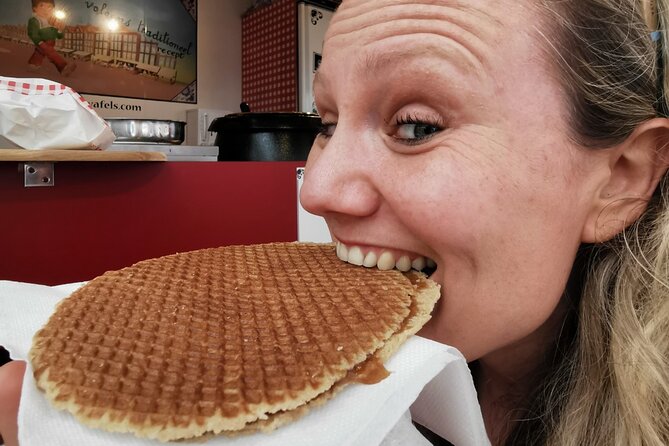
Then you reach a very specific Dutch sweet: Goudse stroopwafels made by a family that’s been making them for more than 45 years. That long craft timeline is the point. Stroopwafel isn’t a generic caramel cookie. It’s a thin waffle with syrup in the center, and good ones have that caramelized depth and chewy bite.
Practical advice: these sweets can be deceptively filling. If you’re doing this solo, you may want to consider splitting or planning a “one dessert, one savory snack” rhythm. If you’re traveling with someone, sharing helps you avoid the point where you’re too full to enjoy the finale.
Takoyaki in Amsterdam: Osaka-style balls plus Tokyo ramen energy
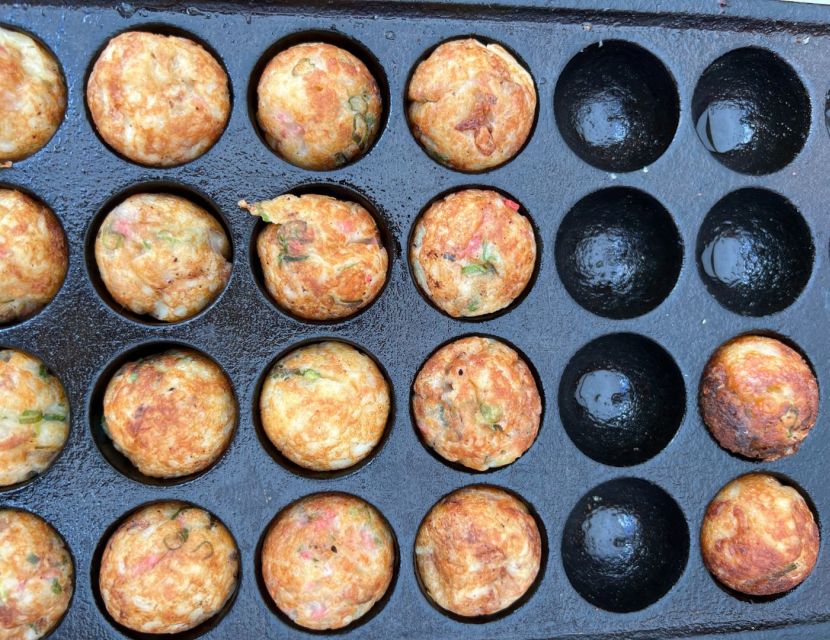
Not every stop stays within Europe. You’ll also sample authentic takoyaki balls at a place made by a takoyaki chef from Osaka, who worked with a ramen specialist from Tokyo.
Why this matters is the crossover. Takoyaki is a very specific street snack—little octopus-ball bites with a crispy outside and a soft interior. Pairing that with someone from the ramen world suggests you’re getting a chef-led approach rather than a random “Japanese snack counter.”
If you’ve been missing East Asian street-food flavors in your Amsterdam plan, this stop does the job. It’s also a good pivot before you roll into the classic Dutch fry finale.
Patatje Oorlog Fries Finale: award-winning hand-cut fries and the Dutch sauce combo
You end with a big, satisfying Amsterdam finish: hand-cut fries with the sauce combination known as patatje oorlog—peanut sauce, mayonnaise, and onions—plus the note that the fries are award-winning.
This is a smart closer. It ties the tour back to a very Dutch comfort food tradition while giving you bold flavors through the peanut-and-mayo pairing. It’s salty, creamy, and tangy from the onions, so even if you’ve had a sweet-heavy day, this finale can feel like a reset.
Portion reality check: this is often the kind of food that makes you forget you also had stroopwafel and poffertjes. So if you’ve shared earlier, keep that strategy here too. The goal is to finish happy, not wobbling.
Timing, open doors, and why some days feel short
Here’s the honest part: this is a rain-or-shine self-guided route, but street food hours aren’t controlled by the tour. The tour notes that not every stop is open daily, though it says at least 6 will always be open.
That “at least” phrase is important. You can absolutely have a great day—especially if you start early and keep moving—but you can also hit a spot that closes earlier than expected, or have a stop that runs slower than planned. If you show up mid-afternoon with a phone battery dying and your next destination is closed, the value drops fast.
My advice for getting maximum value:
- Do the more filling savory stops earlier in the day
- Don’t stack your sweets right at the end unless you’re sure you still have room
- Keep your PDF open to the next stop so you can shift quickly if one place is down
Also, the route includes stories and local-food context. That works best when you have time to slow down. If you speed-run it, you lose some of the meaning and end up treating it like a checklist.
Price vs value: the $15 tour fee plus about 20 euros for food
The tour price is low (listed at $15), and that’s part of the pitch: you’re paying for a guided route that’s designed to save time and money compared with piecing everything together yourself. But the real cost is your appetite.
The tour estimates about 20 euros per person for total food. That’s reasonable for a route that includes multiple items—croquette, pom, Israeli savory, fish, poffertjes, stroopwafel, takoyaki, and hand-cut fries—with discounts at 7 of the 8 stops.
So the value equation depends on your day:
- If most stops are open and you use the discounts, you’ll feel like the route paid for itself.
- If multiple stops close early, you’ll still eat, but you’ll lose the “designed for this itinerary” savings and variety.
One more mismatch to watch: the tour is positioned as a street food tour with tastings, but in practice some stops may feel like smaller snack portions rather than full tasting menus. Don’t plan your budget like you’ll get a whole meal for free at every stop.
Vegetarian friendly, not vegan, and gluten needs care
This route offers vegetarian options at 7 stops, which is a strong sign if you eat vegetarian most of the time. But the tour is also clearly marked as not suitable for vegans and for people with gluten intolerance.
That means you shouldn’t count on substitutions. For the safe side, treat the route as best for:
- vegetarians who are okay with non-vegan ingredients
- people without gluten intolerance needs
If you’re traveling with allergies or strict dietary requirements, you’ll want to be cautious and plan extra flexibility. The tour’s focus is street food variety, and street food often uses breading, sauces, and shared prep.
Who this self-guided food walk fits best in De Pijp
This is a great fit if you:
- like eating on your own schedule without a group guide
- want a route that mixes Dutch classics with international street-food flavors
- prefer a neighborhood walk where you can dip in and out without overplanning every minute
It’s less ideal if you:
- hate navigating on your phone
- need a strict timetable and guaranteed opening hours
- need vegan or gluten-free coverage (it’s not built for that)
Also, sharing helps. One bit of real-world advice: plan to share items if you’re with friends or family, because the stops can come fast and the total food adds up quickly.
Should you book this Amsterdam street food route?
Book it if you want a low-cost, high-variety food plan in De Pijp, and you’re willing to be flexible with opening hours. The mix of Dutch classics (croquette, poffertjes, stroopwafel, patatje oorlog fries) plus international hits (Suriname pom, Israeli savory, takoyaki) is exactly the kind of “Amsterdam isn’t just museums” experience that makes the city feel real.
Skip it or reconsider if timing stress would ruin your day. Because this is self-guided, your value depends on what’s actually open when you arrive. If you’re the kind of traveler who needs certainty, you might end up wishing you had a guided option with fixed durations.
Finally, if you do book, do it with the right mindset: use the PDF, follow the order, and don’t try to conquer every stop at full speed. You’ll get more enjoyment out of it, and you’ll leave De Pijp smiling instead of stuffed.
FAQ
Where does the tour start?
The self-guided tour starts at FEBO on Ferdinand Bolstraat.
Is this a guided tour?
No. It’s self-guided, so you follow the route using the provided PDF guide and map links.
How many stops are there?
The experience includes stops at 6 to 8 family-owned businesses.
Do I get tastings and discounts?
You get exclusive discounts and tastings at 7 out of the 8 locations included in the route.
Is the tour vegetarian friendly?
Yes. Vegetarian options are available at 7 stops. However, it’s marked as not suitable for vegans.
Is it gluten-free friendly?
No. The tour is not suitable for people with gluten intolerance.
How much should I budget for food?
The tour estimates the total cost of food is around 20 euros per person.
What do I need to bring?
You should bring a charged smartphone, cash, and/or a credit card, plus internet access.
Do I need to use the PDF on my phone?
Yes. Each person joining must have their own copy of the PDF guide on their phone to be eligible for discounts and special tastings.
What extra trip planning do I get?
You receive a free 3-day Amsterdam itinerary and restaurant recommendations along with the guide.