REVIEW · CITY TOURS
Amsterdam private city walking experience with a local
Book on Viator →Operated by Guidance Travel · Bookable on Viator
Follow the city’s clues, block by block.
This private Amsterdam walking experience connects major landmarks with the stories behind them, from the city’s early economic roots to what Amsterdam became in the 17th century. I especially like that you’ll be walking with Manouk, a guide who blends history with real-life context so you finish the tour with a clearer sense of how Amsterdam works.
Two things I love about it: the route is built around both famous squares and calmer courtyards, so you see contrast fast. And you’re not stuck in one-note sightseeing—Manouk is known for adapting the walk to your interests, and for staying friendly and easy even if you’re traveling solo.
One possible drawback: this is still a true walking tour. Plan for about 2 to 2.5 hours on your feet, mostly outdoors, so pack comfy shoes and dress for quick weather swings.
In This Review
- Key highlights you’ll care about
- Starting at Beursplein: the city’s commercial origins, not just postcards
- Dam Square and the Royal Palace: public power and wartime memory
- Begijnhof: a quiet courtyard that teaches tolerance
- The House on the Three Canals and the bicycle bridge story
- Nieuwmarkt: Waag, guilds, and dancing houses
- Zeedijk and Chinatown: from 1970s danger to a favorite local street
- Centraal Station: the architecture-and-transport symbol finish
- Private walking with Manouk: why the guide matters as much as the route
- Price and value: what $180.62 per group really means
- Logistics that make the walk easier than it sounds
- Who this Amsterdam private walk suits best
- Should you book this Amsterdam private walking tour?
- FAQ
- How long is the Amsterdam private city walking experience?
- What is the price for this private tour?
- Is this tour private?
- What language is the tour offered in?
- Where do we meet, and where does the tour end?
- Is there admission or tickets needed at the stops?
Key highlights you’ll care about
- Private by default: only your group goes, so you can ask questions without waiting.
- Stop-by-stop context: each place ties into a bigger story of Amsterdam’s past and present.
- Begijnhof and canal-area details: you get pointed, specific ideas to look for, not just names.
- Guilds, gates, and quirky houses: Waag, dancing houses, and a few surprising architectural moments.
- A guide who brings tools: maps and pictures help you connect what you see to what you’re hearing.
- Snack and food tips: small edible treats and local food suggestions can turn the walk into a full senses experience.
Starting at Beursplein: the city’s commercial origins, not just postcards
The walk kicks off at Beursplein. This area matters because it sits at the crossroads of Amsterdam’s rise: a place where trade and money helped transform a much smaller world into a global player. You’ll learn how the city evolved from a fishing village into a center of international finance during the 17th century—and why even the street names feel like they’re pointing back to that transformation.
What makes this opening useful is that it gives you a framework. Instead of treating Amsterdam as a set of pretty buildings, you start reading it like a working city—where canals, commerce, and power influenced where people lived and what they built. I also like that the stop is short enough that you don’t lose momentum. You’re getting orientation, then you’re out walking.
A practical tip: since you’ll be hearing a lot of story in a compact area, hang onto your questions. If something clicks, ask right then. Early in the walk is when the guide can best connect the dots for you.
You can also read our reviews of more city tours in Amsterdam



Dam Square and the Royal Palace: public power and wartime memory
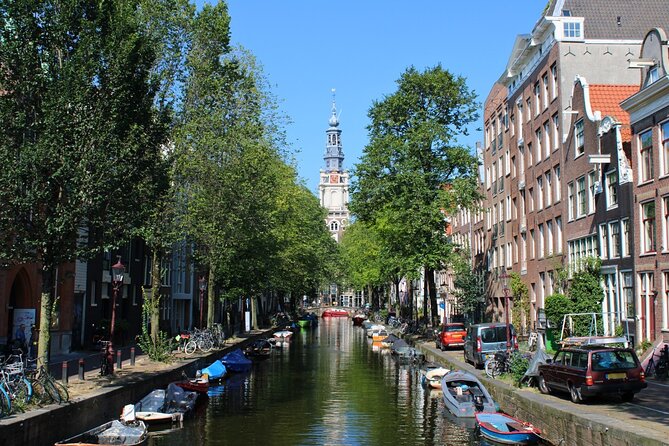
Next comes Dam Square, Amsterdam’s central stage. Here, the tour focuses on what the square means in the city’s formation and identity—then it brings you into the more serious chapter: the role Dam Square played during the Second World War.
You’ll also spend time looking at the Royal Palace on the Dam. Even if you’re not going inside (this is a walking experience), the outside view is still part of the story. You’re meant to notice scale and placement—because in cities like Amsterdam, who had control of public space often shaped how the city operated.
A small consideration: Dam Square can feel crowded, depending on the day and time. But that’s exactly why this stop works on a walking tour. You see how history holds up under everyday life, not when a museum-only crowd is around.
Begijnhof: a quiet courtyard that teaches tolerance
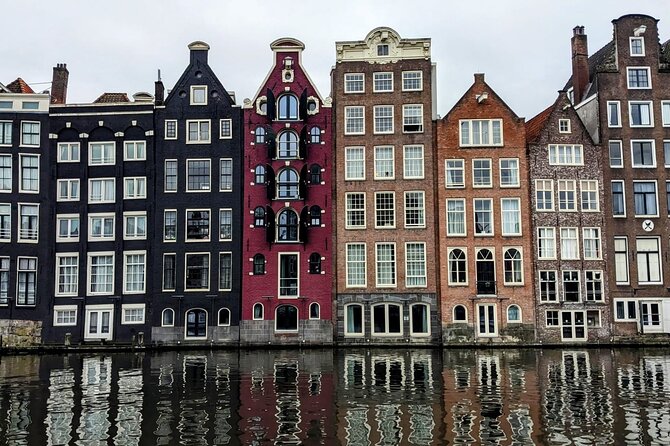
Then the walk slows down—in the best way. You’ll reach Begijnhof, a serene courtyard that feels like a breather after the big, open squares. This stop is built around religious history and what the place reveals about Amsterdam’s reputation for tolerance.
The guide also points out architectural and historical details that make Begijnhof more than a pretty photo stop. You’ll see one of the oldest houses in Amsterdam, including one of the two wooden cottages—small details, but they give you a tangible sense of age and survival.
This is one of my favorite kinds of stops: the kind where you learn how a city can hold contradictions. Amsterdam is known for big commerce and trade, but here you’re seeing a quieter pocket where community rules mattered. It also helps you understand why Amsterdam’s tolerance isn’t just a slogan—it’s written into places.
Drawback to consider: courtyard visits can feel slightly more restrictive if you’re traveling with strollers or if your group moves slowly. If your walking pace is flexible, it’s still a calm moment that balances the rest of the route.
The House on the Three Canals and the bicycle bridge story
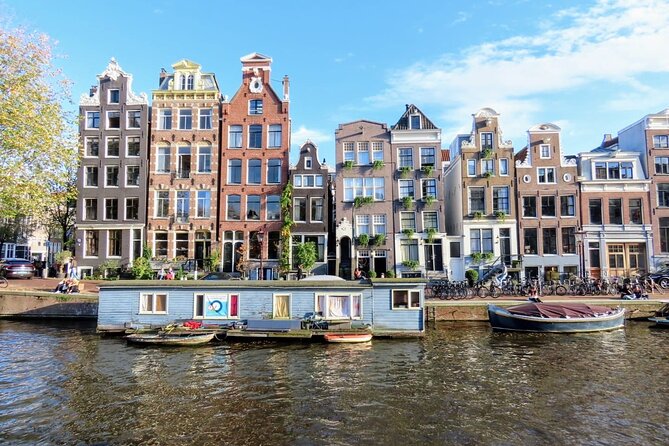
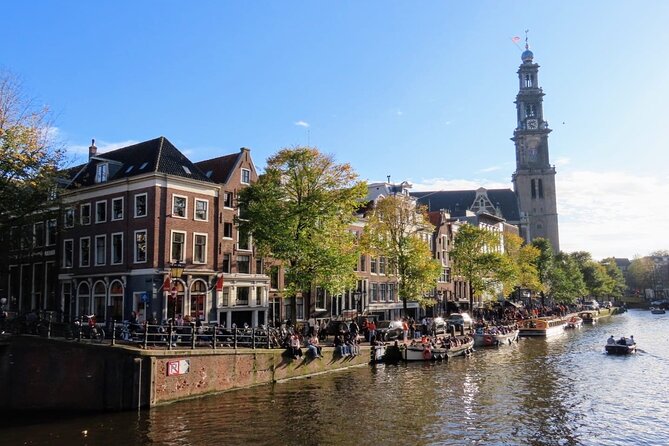
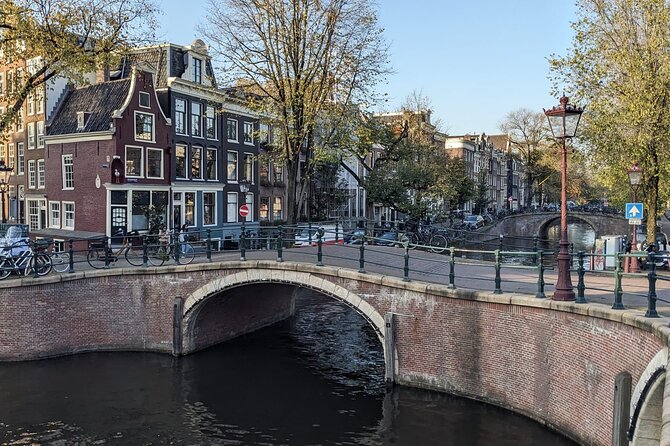
From Begijnhof, you move toward one of the canal-area highlights: the House on the Three Canals. This is a fascinating visual puzzle. You’ll hear about how one house connects with three canals—then the tour zooms in on the story behind the bicycle bridge.
What I like about this segment is that it turns Amsterdam’s canal scenery into something you can interpret. Once you understand how people moved (and where bicycles fit into the city’s design), the canals stop being just scenery and start becoming a transportation system. The bicycle bridge detail is exactly the kind of practical explanation that helps you later when you’re navigating on your own.
If you’re not obsessed with architecture, don’t worry. The guide frames it in everyday terms, so it’s accessible. And because the time here is short, it works as a clean, memorable break in the middle of a longer walk.
Nieuwmarkt: Waag, guilds, and dancing houses
At Nieuwmarkt, you get a stronger dose of city mechanics: how the old economy worked and who held power. The spotlight here is the Waag, originally an old city gate that later became a guild hall. The stop explains why guilds mattered in Amsterdam—because guilds weren’t just clubs. They influenced trade rules, training, and who was allowed to practice certain crafts.
Then you’ll look at the famous dancing houses. These buildings are a fun way to connect architecture to local identity. The name sounds playful, but the effect is practical: it helps you remember the area and gives you a visual marker when you’re later exploring the city on your own.
This stop is also a good place to ask questions, because guilds and trade can feel abstract unless someone anchors them to real spaces. If you’re someone who loves history but hates long lectures, this is a nice middle ground. You get context without getting stuck.
Small caution: Nieuwmarkt is a lively area. Expect foot traffic. It’s still worth it, but don’t plan to take 20-minute photos without moving along.
You can also read our reviews of more private tours in Amsterdam





Zeedijk and Chinatown: from 1970s danger to a favorite local street
Next is Zeedijk, where the tour shifts from architecture to social change. You’ll learn about Chinatown here and its reputation in the 1970s, when the street was described as the most dangerous place in Amsterdam. Then you’ll hear how and why that situation changed—ending up with Zeedijk today as a go-to spot for many Amsterdammers.
I like that the walk doesn’t sugarcoat the past. It’s easy to visit a city and only hear the pretty parts. This stop reminds you that neighborhoods change over time, and street reputation is often tied to broader social forces. Understanding that makes modern Amsterdam feel more real, not just curated.
If you’re a foodie, this is also the kind of moment where the guide’s street-level tips can matter. Even if you don’t change your plan right now, the information helps you decide where to eat later and why certain areas attract crowds.
Consideration: because Zeedijk is active, it can be harder to hear explanations if you’re standing at the edge of the group. Try to keep close to the guide and you’ll get the full story.
Centraal Station: the architecture-and-transport symbol finish
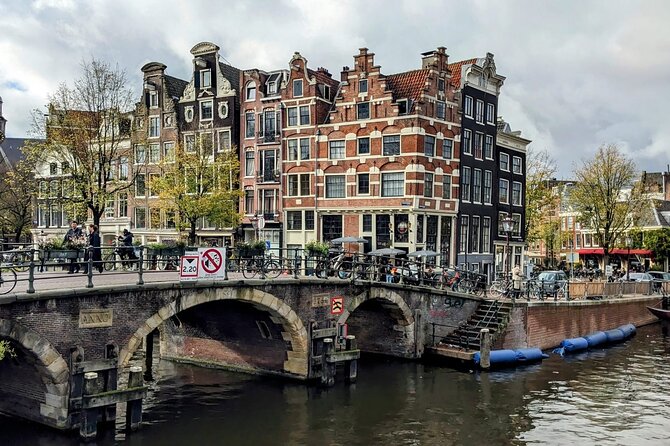
The tour ends at Centraal Station, one of Amsterdam’s most stunning buildings. Here, the explanation isn’t just about looks. You’ll learn why the station’s location has played a crucial role for centuries—as a transportation hub and as a historical symbol of connection and prosperity.
This is a smart way to close the experience. You start at a commercial planning point (Beursplein), then you move through places shaped by power, religion, trade, and neighborhood identity, and finally you land at the city’s major gateway. It gives you a clean mental loop.
Also, this makes a difference for real trip planning. Once you understand Centraal Station as more than a transit stop, you’re more confident using it as your anchor—whether you’re taking trains, planning day trips, or just using it to navigate back to your base.
Tip: if you want to keep momentum, arrive at Centraal Station with your phone charged and ready to map. The tour ends back at the meeting point area, and you’ll likely want to continue wandering right after.
Private walking with Manouk: why the guide matters as much as the route
The biggest reason people rave about this walk isn’t only the landmarks. It’s the way the guide runs the experience.
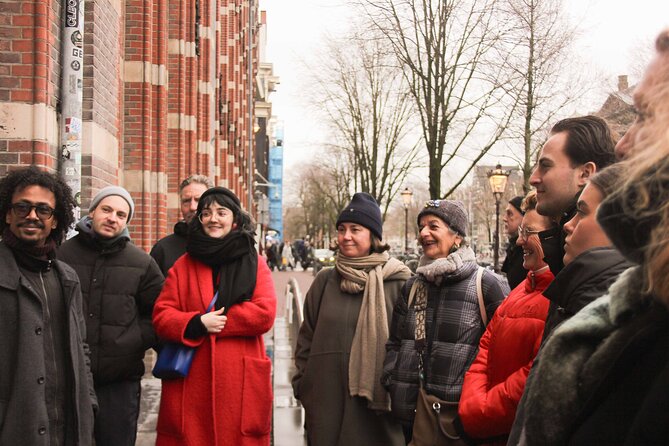
Manouk is described as friendly and welcoming, and that shows up in how the tour flows. If you’re traveling with a partner, family, or a group of friends, you’ll get a chance to ask questions without the usual group-walk awkwardness. If you’re solo, it’s also the kind of setup where you can talk naturally and not feel like you’re waiting your turn.
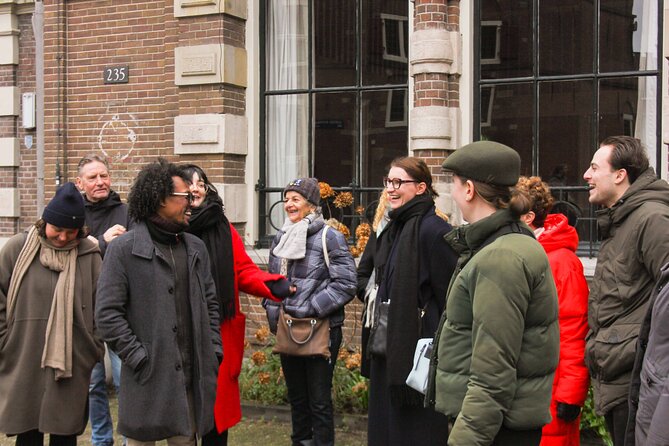
Several reviews highlight that Manouk brings maps and pictures to support the explanations. That helps you follow along with what you can actually see outside. You’re not stuck imagining; you’re connecting story to street layout.
Another practical touch: food. One reviewer noted little local edible treats, and more than one mentioned tips for where to eat. Even if you already have restaurant plans, those suggestions are often the difference between guessing and choosing.
The other thing I appreciate is flexibility. The tour is designed to cover key stops, but the guide can adapt to interests like history and architecture. If you’re the type who loves details, you’ll have room to go deeper. If you just want the big picture, it stays organized and on track.
Price and value: what $180.62 per group really means
The price listed is $180.62 per group for up to 12 people, with an approximate 2-hour duration. That pricing structure can be a win if you’re traveling as a small group, because you’re essentially paying for access to one guide rather than per person.
Here’s how to think about value:
- If you’re 2 people, you’re paying more per head than a larger group would—but you still get the benefits of a private pace, tailored questions, and a guided route that helps you avoid wandering in circles.
- If you’re 6 to 12 people, the price becomes more compelling fast, and it turns into a great family option or a friends outing where everyone wants something slightly different.
Also note that the planned stops are presented with free admission at each location. That matters because you’re not stuck paying entry fees on top of the tour cost. You’re paying for the guide’s direction and interpretation—the part that turns landmarks into understanding.
Finally, timing helps. The average booking window is about 46 days in advance, which suggests it’s popular enough that planning ahead is smart. Private walking experiences can sell out, especially around peak travel weeks.
Logistics that make the walk easier than it sounds
This experience includes a mobile ticket and is offered in English. The meeting point is at Beursplein, 1012 JW Amsterdam, and it ends back at the starting area, which is handy if you’re using a transit route back to your hotel.
It’s also marked as near public transportation. That’s useful if you’re building Amsterdam days around trains or trams. And service animals are allowed, which is good to know for visitors who need that support.
Comfort matters here. You should be prepared for a mostly outdoor walk and cover the full route within the 2–2.5 hour timeframe. If your group has mobility constraints, this is still described as suitable for most travelers, but your comfort level with sustained walking will be the deciding factor.
A quick note on flexibility: the experience includes free cancellation up to 24 hours before start time, which gives you a little breathing room if your schedule shifts.
Who this Amsterdam private walk suits best
This is ideal if you want Amsterdam with interpretation, not just sightlines. I’d point you toward it if:
- You want a guided storyline that connects canals, squares, and neighborhood change.
- You like architecture details but still want explanations in plain language.
- You want a private setting where questions are welcome and the pace can flex to your interests.
It’s also a good option if you’re not sure how to organize your first day. The route gives you a strong overview from central hubs to calmer pockets, then closes at Centraal Station so you can continue your day with confidence.
If you’re the type who only wants museums, indoor stops, and tickets, this might feel more like a walking lecture than a hands-on experience. But if you enjoy the streets and want to see Amsterdam in a way you can keep using later, you’ll probably love it.
Should you book this Amsterdam private walking tour?
I’d book it if you want a personal, well-run city story with a friendly local guide and a route that mixes big-name places with calmer corners. The fact that it’s private, in English, and structured around key themes like commerce, power, tolerance, guilds, and neighborhood transformation makes it more than a generic highlights walk.
Skip it only if you strongly dislike walking for two-plus hours outdoors or if you already have a very dense plan that doesn’t allow time to slow down and absorb.
If you want Amsterdam to make sense fast—and you’d like your guide to point out what to notice as you go—this is a solid choice.
FAQ
How long is the Amsterdam private city walking experience?
It lasts about 2 hours, with a typical range of 2 to 2.5 hours.
What is the price for this private tour?
The price is $180.62 per group, for up to 12 people.
Is this tour private?
Yes. It’s a private tour, so only your group participates.
What language is the tour offered in?
The tour is offered in English.
Where do we meet, and where does the tour end?
You meet at Beursplein, 1012 JW Amsterdam, Netherlands, and the tour ends back at the meeting point.
Is there admission or tickets needed at the stops?
The stops listed for the tour are marked as admission ticket free, and the tour includes a mobile ticket.