REVIEW · CANAL CRUISES
Amsterdam: Luxury Saloon Boat Cruise with Cocktails & Waffle
Book on Viator →Operated by Friendship Amsterdam · Bookable on Viator
Canals plus a cocktail vibe sounds simple, then history slides in fast. This Amsterdam open boat cruise blends captain-led narration with iconic sights like Magere Brug and the Old Church as you drift through the city. I like how easy it is to pick a departure time, since boats run all day and into the night.
I really enjoyed the captain narration and what it adds to the photos. I also liked the small-group feel (up to 24 people) and the practical comfort touch: blankets for when the evening cools off.
One thing to watch: your ticket price covers the cruise and guiding, but drinks are not included (and snacks are also listed as not included), so confirm what your ticket actually includes if you planned for cocktails and waffle.
In This Review
- Key things to know before you go
- Starting at Krasnapolsky: Find your dock fast
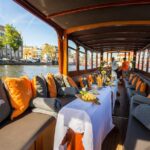
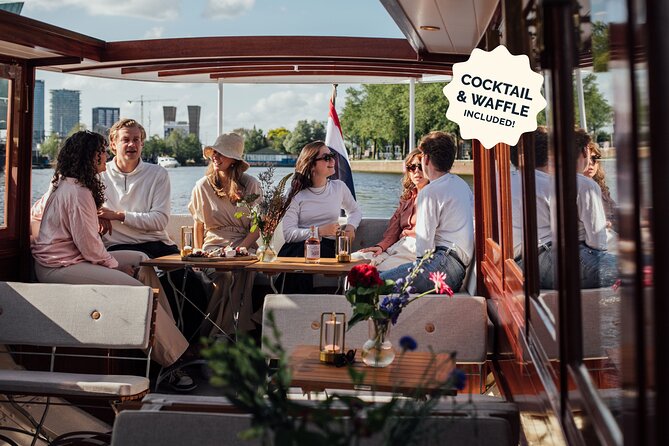
- The boat ride: what the saloon setup feels like
- The hour that moves: what the captain covers
- Passing the big sights: your cruise-by highlights
- Red Light District area: neon lights and legal boundaries
- Magere Brug: the classic bridge you’ll recognize right away
- Old Church: the city’s older bones
- Our Lord in the Attic: a hidden Catholic story in plain sight
- Kolksluice and the water-control story
- Amsterdam Central Station: the building that looks like a landmark
- Weepers Tower: fact versus myth
- Shipping house area: when commerce turned into hospitality
- Science Center and Maritime Museum zones
- The Amstel River vibe and the “night on the water” feel
- Cocktails and the real cost: how the bar works
- Timing strategy: all day and into the night
- How to make the hour more enjoyable
- Who this cruise fits best
- Should you book this Amsterdam canal cruise?
- FAQ
- How long is the Amsterdam canal cruise?
- Where do I meet for the cruise?
- What language is the narration in?
- Are drinks and snacks included in the price?
- Are blankets provided?
- How many people are on the boat?
- Do cruises run at multiple times during the day?
- How often do boats depart?
- What if the weather is bad?
- Is there free cancellation?
Key things to know before you go
- Krasnapolsky dock start: You check in at the NH Grand Hotel Krasnapolsky area and return to the same point.
- Captain talks as you glide: Expect narrative on buildings, canals, and people, not just scenic floating.
- Multiple departures: Cruises run all day and into the night with boats cycling roughly every 30 minutes.
- Blankets are provided: Good news for chilly evenings on an open-air style boat.
- Small group size: Maximum of 24 travelers, which helps the experience feel relaxed.
- Alcohol is a purchase: Even if your marketing mentions cocktails, it’s a cash-bar setup unless your specific option says otherwise.
Starting at Krasnapolsky: Find your dock fast
Your cruise begins near the NH Grand Hotel Krasnapolsky dock area, and you’ll use your voucher to cash in before boarding. The listed meeting point is Oudezijds Voorburgwal 230, 1012 GJ Amsterdam, which is close enough that you can also plan your arrival using nearby public transit.
This matters because Amsterdam can feel like a maze when you’re hunting for a specific canal dock. If you’re arriving on foot, give yourself extra time to walk the last few blocks and get to the line before the boat departs.
You can also read our reviews of more boat tours in Amsterdam

The boat ride: what the saloon setup feels like

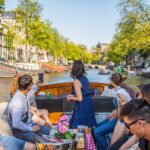
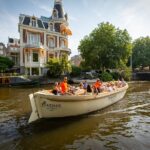
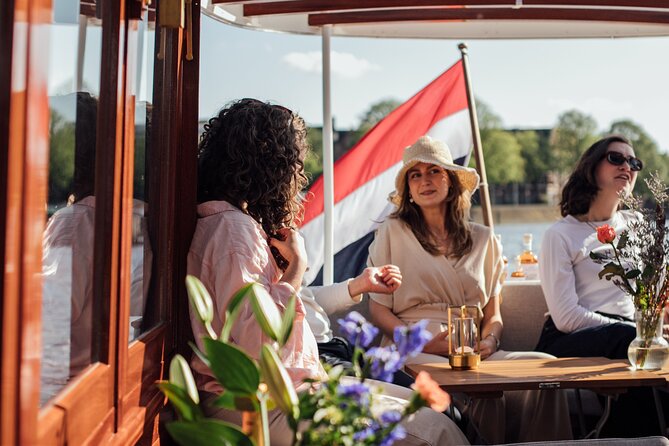
This is an open boat canal cruise, so you get real river air and real canal views. The upside is that it feels lively and less boxed-in than many canal boats. The trade-off is weather comfort, which is why they provide blankets and some boats have been paired with extras like umbrellas in cooler months.
You’ll board with a captain and a host/hostess handling safety and keeping the ride smooth. Since the maximum group size is 24, you’re not fighting for elbow space the whole time, but you should still expect tighter seating than a big sightseeing theater.
Sound can be the make-or-break detail on canal boats. One passenger noted they had trouble hearing the guide, so I’d aim to sit where you have a clear view toward whoever is speaking.
The hour that moves: what the captain covers
The cruise is about one hour, and it’s paced so you can see a lot without exhausting yourself. The captain delivers narration focused on Amsterdam’s history, culture, and people, with a running explanation of what you’re passing—especially architecture along the canals.
This is the part I appreciate most because Amsterdam’s canals are beautiful, but they can also blur together if no one explains what you’re looking at. On this ride, you get context for key landmarks and street corners, so the city stops being random scenery and starts feeling readable.
Passing the big sights: your cruise-by highlights
You don’t need to get off the boat to enjoy this. The captain’s narration guides you past landmark areas while you enjoy the water-level views that most walking routes can’t match.
Red Light District area: neon lights and legal boundaries
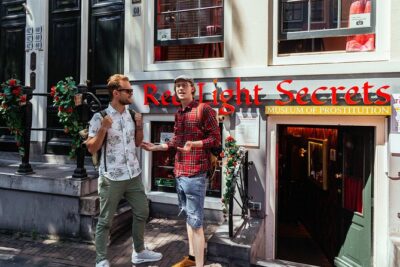
As you glide through this area, the narration connects the neighborhood’s name to the red neon lighting on windows where sex work happens. You may also hear about the cluster of related businesses—like sex shops, peep shows, sex theaters, and Dutch brown cafés—plus cultural spots such as an eroticism museum and a prostitution museum.
A practical consideration: if this topic makes you uncomfortable, you should know it’s part of the route because the captain covers it as part of Amsterdam’s cultural reality, not as a sensational detour.
You can also read our reviews of more tours and experiences in Amsterdam



Magere Brug: the classic bridge you’ll recognize right away
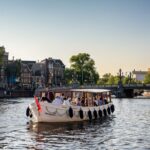
Magere Brug is the kind of bridge you instantly associate with Amsterdam. Even from the canal, you get that postcard angle, and the narration gives you more than just a name. If you’re doing this early in your trip, this is a great moment to anchor your mental map.
Old Church: the city’s older bones
You’ll pass by the Old Church, often described as the oldest church in Amsterdam. It’s one of those places where the building’s age is part of the impact, and it helps the rest of the sights click into place.
This is also a good stop for anyone who likes architecture details, because the captain tends to connect what you see to the way the city grew.
Our Lord in the Attic: a hidden Catholic story in plain sight
One of the more intriguing stops on the route is Our Lord in the Attic, a clandestine Catholic church built on top of a 17th-century merchant house. The story goes back to Protestant times, when Catholics had to worship in secret.
What I find useful here is the specificity they include: furnishings from the original period, typical Dutch wooden furniture, table clocks, and two kitchens with delft blue tiles. They also mention that it draws over 80,000 visitors a year, which tells you this “hidden” piece of Amsterdam still matters today.
Kolksluice and the water-control story
You’ll also hear about a canal section tied to Kolksluice, described as the oldest steam gate in Amsterdam and in operation since the Middle Ages. The narration explains how the sluicing works: during high tide the lock is closed to prevent flooding; when the tide is low it opens so water flows back into the sea. The point, as explained, is that the water movement helps keep water clean.
If you think of Amsterdam as a city that just happens to have canals, this is a reminder that those canals are engineered and maintained. It’s not just pretty water; it’s city infrastructure.
Amsterdam Central Station: the building that looks like a landmark
You’ll pass Amsterdam Central Station, which is the main station of the city. The story includes that it was designed by Pierre Cuypers (also known for the Rijksmuseum) and opened in 1889, with Gothic and Renaissance elements.
They also mention how many people move through the station daily. Even if you’ve never been there, hearing that number gives you a sense of scale for Amsterdam’s daily rhythm.
Weepers Tower: fact versus myth
Another highlight is Weepers Tower, tied to a story about women who waited and wept for husbands who left for war. The narration notes that many retellings treat parts of the story as myth, but it also points to evidence: a memorial stone inside the tower dating back to 1566.
This is one of those moments where the captain’s tone helps you separate dramatic storytelling from documented history.
Shipping house area: when commerce turned into hospitality
The route also connects to the shipping house on Prins Hendrikkade, originally the headquarters for major Dutch shipping companies. Today, it’s used as a 5-star hotel, and the captain highlights features like the elaborate central staircase and a boardroom on corner floors.
It’s a good reminder that Amsterdam’s canal-side buildings often changed roles instead of being erased.
Science Center and Maritime Museum zones
Depending on the exact path of your departure, you may pass by areas tied to the science and maritime sides of Amsterdam.
They point out the science center with multiple floors of experiments and exhibitions, plus a small cafeteria and gift shop. You’ll also hear about the Maritime Museum’s focus on Dutch maritime history, including a replica ship fronting the museum: an 18th-century vessel called The Amsterdam, described as built between 1985 and 1990.
This helps if you’re the type of traveler who wants to know what to do on land later. Even without stopping, you’ll know what those buildings are when you spot them again.
The Amstel River vibe and the “night on the water” feel
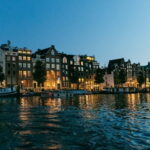
As you move along the Amstel River, the narration shifts from specific buildings to the feel of the river and the city’s relationship to it. This is the part that tends to work well for photos, especially if your timing lands during softer evening light.
Cocktails and the real cost: how the bar works

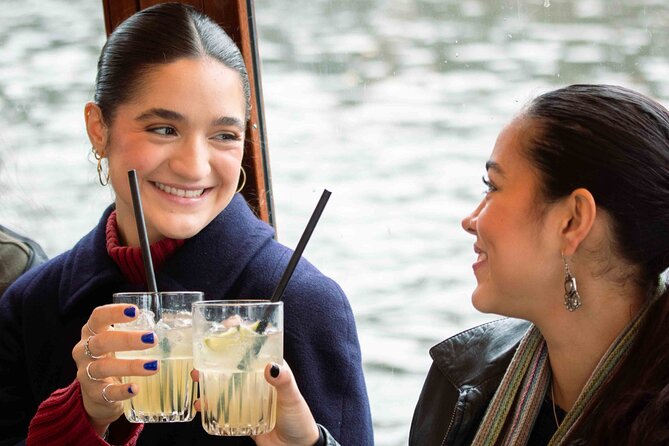
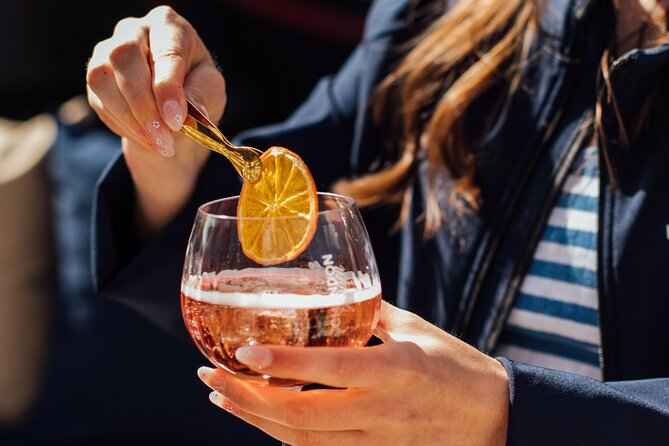
The ride includes a bar setup, but drinks are not included in the base offering. That means you should treat alcohol and non-alcoholic beverages as an add-on you’ll pay directly on the boat.
That said, some passengers have booked options marketed as unlimited cocktails, and they describe glasses being topped up and the experience staying drink-forward for the full hour. The best move is to verify your specific ticket option before you board, so you know whether you’re getting unlimited pours or just purchasing as you go.
Either way, I’d plan a budget for drinks if cocktails are your main reason for booking. At this price point for the cruise itself, it can still be good value, but only if you’re clear on what’s included.
Timing strategy: all day and into the night
One big advantage is that cruises run all day and into the night, with departure times you can choose to match your schedule. Boats appear to cycle roughly every 30 minutes, so you’re not locked into one fixed slot.
If you want calmer water and less crowding at the start, aim for a weekday or earlier time. If you want the classic Amsterdam vibe, go later and lean into the cooler air with the provided blankets.
How to make the hour more enjoyable
A few practical habits can make a big difference on a one-hour canal cruise.
- Wear layers even in mild weather. It’s an open-air style ride, and the river cools you fast.
- Sit where you can hear the captain. If sound is weak from your seat, adjust when safe or choose a better position next time.
- Check drink rules before you order. If you paid for unlimited in your booking, know what counts as included so there’s no surprise.
- Bring a small weather plan. Blankets help, but a light waterproof layer can save the day if it drizzles.
- Keep expectations realistic about food. Drinks are available for purchase, and snacks are listed as not included. If waffle is a must, confirm what your ticket covers.
Who this cruise fits best
This is a strong pick if you want a low-effort way to connect Amsterdam’s landmarks with actual stories. It works especially well for first-timers, couples, and solo travelers who like guided context and don’t want a full day of museum planning.
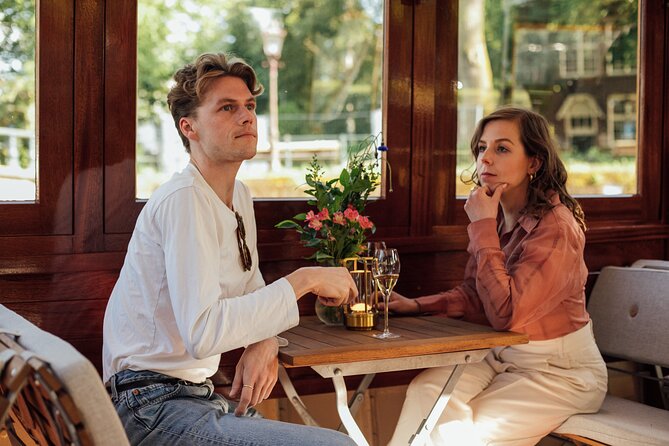
It can also fit a “date night” vibe because you get the romance of the canals plus the option to add cocktails. The boat-host energy is part of the appeal, and some guides have been named by passengers as hosts on past cruises, including people like Aigiz, Nuno, René, Adriana, Neils, Cody, Maria, Sigrid, and Kyan.
If you’re sensitive to the topics covered in the Red Light District area, consider whether you’re comfortable with that portion of Amsterdam being included in the narration.
Should you book this Amsterdam canal cruise?
If you want an easy, guided Amsterdam canal experience with captain storytelling and you’re okay paying for drinks, this is usually a smart value move. The combination of a one-hour timeline, a small group cap, provided blankets, and pass-by views of major sights makes it efficient.
Before you click confirm, do two quick checks:
1) whether your specific ticket includes unlimited cocktails or is cash bar, and
2) whether snacks and the waffle promise are actually part of your purchase.
If you’re clear on those details, you’re likely to end up with exactly what you want: Amsterdam seen from the water, with enough context to make the city feel less random and more yours.
FAQ
How long is the Amsterdam canal cruise?
It runs for about 1 hour.
Where do I meet for the cruise?
You’ll start at the dock area near NH Grand Hotel Krasnapolsky. The meeting point listed is Oudezijds Voorburgwal 230, 1012 GJ Amsterdam, Netherlands. The tour ends back at the same meeting point.
What language is the narration in?
The tour is offered in English.
Are drinks and snacks included in the price?
No. Drinks are available for purchase, and snacks are listed as not included.
Are blankets provided?
Yes. Blankets are provided, which helps on an open-air style canal boat.
How many people are on the boat?
There is a maximum of 24 travelers.
Do cruises run at multiple times during the day?
Yes. Cruises run all day and into the night, with multiple departure times.
How often do boats depart?
Boats stop at the dock approximately every 30 minutes, so you can pick a convenient time.
What if the weather is bad?
This experience requires good weather. If it’s canceled due to poor weather, you’ll be offered a different date or a full refund.
Is there free cancellation?
Yes. You can cancel up to 24 hours in advance for a full refund. After that point, the amount you paid is not refunded.