REVIEW · CANAL CRUISES
Amsterdam Canal Tour by Open Boat – 90 min Small Group Experience
Book on Viator →Operated by Amsterdam Boat Adventures · Bookable on Viator
Amsterdam’s canals are the main show. This 90-minute open-boat cruise keeps things human-sized, with a small group and a live English guide pointing out what you’re seeing from the water.
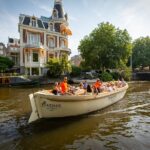
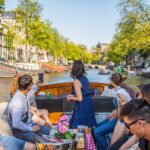
What I like most is the small group cap (12 people), which makes it easier to ask questions and actually hear the answers. The second big win is comfort: blankets are included, plus a rain canopy on wet days, so you’re not white-knuckling the wind the whole time. One thing to consider: it’s an open-air style experience, so bring layers even if the forecast looks fine.
You start and end at Amsterdam Boat Adventures on Nieuwe Keizersgracht, and from there you glide through a mix of postcard scenes and lesser-seen canal corners—especially the tighter stretches where big boats can’t reach.
In This Review
- Key highlights worth marking on your mental map
- Price and what you’re really paying for (not just the number)
- Where you meet and how to start the cruise without stress
- Small open boat comfort: blankets, rain cover, and why it changes everything
- The guide factor: live stories beat recorded spiels
- Stop-by-stop: from the Amstel side to the Skinny Bridge
- Amstel River side: dancing houses and leaning building stories
- A glimpse of small Amsterdam: tight views and calm pacing
- Munt Tower area: iconic silhouette from the water
- De Wallen border canal: a short window into Amsterdam’s contrasts
- Zuiderkerk and another dancing house sightline
- Oudezijds Voorburgwal: oldest-area context and famous street layers
- Amsterdam’s oldest church area: proof of staying power
- Kolksluis: a medieval lock that’s still doing work
- Geldersekade canal corridor: old boundary to modern life
- de Waag: a 15th-century structure with multiple lives
- Tiny canal segments and medieval defense tower
- V.O.C. ship The Amsterdam: Dutch East India Company era
- Modern architecture stretch and Amsterdam’s park edges
- Botanical Gardens and the Herengracht gentleman canal
- Reguliersgracht: the Seven Bridges Canal viewpoint
- Prinsen canal and houseboat contrast
- Finish on the Amstel under the Skinny Bridge
- Best time to go (and what weather really changes)
- Who this tour is best for (and who should choose something else)
- Should you book the Amsterdam Canal Tour by Open Boat?
- FAQ
- How long is the canal cruise?
- What is the price per person?
- How many people are on the boat?
- Where do I meet the tour?
- Is the guide English-speaking?
- Is it an open boat, and do I get rain protection?
- What comfort items are included?
- Can I buy drinks or bring my own?
- What drinks cost onboard?
- What if the weather is poor?
Key highlights worth marking on your mental map
- Up to 12 people means better sightlines and a calmer pace than the big-boat circuit
- Included blankets + rain canopy help you stay comfortable when the weather flips
- Drink options on board (or bring your own refreshments) make it easy to set your vibe
- Route includes De Wallen borders and canal-belt architecture you usually only see up close
- Captains with strong commentary (names you may meet include Gus, Aaron, Eddie, João, and Attilah)
Price and what you’re really paying for (not just the number)
At $36.28 per person for about 1 hour 30 minutes, this is priced in the “worth it if you’re short on time” zone. The value is not only the route—it’s what’s built into the experience: you get a live English guide, blankets, and a rain canopy on rainy days. That reduces the common Amsterdam canal-tour problem: paying for a ride you can’t enjoy because you’re freezing or distracted.
Also, you’re not stuck with the mega-boat feel. With a maximum of 12 travelers, the tour tends to move at a pace where the guide can actually keep everyone connected to what’s outside the hull, not just recite facts into the crowd. That’s why people rate this so highly: it feels practical and personal, not rushed.
One note on costs onboard: alcohol and drinks cost extra (small beer €3, wine €4, and soda/water €2.50). If you plan to drink, factor that in. If you don’t, you’ll still be fine—this isn’t a forced-purchase setup.
You can also read our reviews of more boat tours in Amsterdam

Where you meet and how to start the cruise without stress
You meet at Amsterdam Boat Adventures at Nieuwe Keizersgracht 1, 1018 DS Amsterdam. Your ticket is mobile, and the tour ends back at the same meeting point. That matters more than it sounds—Amsterdam can be a maze on foot, and returning to the original dock saves time when you’re lining up dinner or another stop afterward.
This is also near public transportation. So if you’re juggling museum time, dinner reservations, or a late-night walk afterward, the logistics are simple: show up, board, and let the city come to you.
Small open boat comfort: blankets, rain cover, and why it changes everything
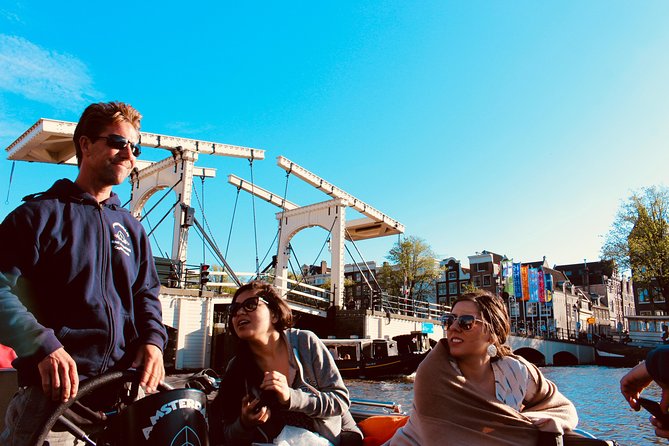
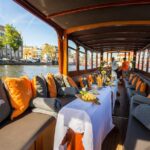
This is an open-boat style cruise, so your comfort depends on weather and timing. The good news is that the operator includes a blanket as part of your ticket. Many rides also feel cozy thanks to things like warm seat touches mentioned by past riders, and that makes a noticeable difference when the canal wind starts doing its own thing.
On rainy days, there’s a rain canopy. That doesn’t magically erase the weather, but it helps you keep the cruise enjoyable instead of turning it into a sprint to stay dry.
If you’re the type who gets cold fast, dress for wind. Layers beat one bulky coat. And if you want extra flotation reassurance, life vests are available upon request.
The guide factor: live stories beat recorded spiels
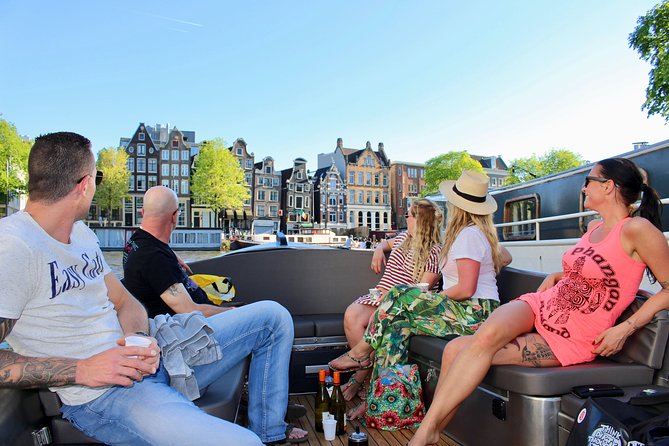
A big reason this tour earns near-perfect ratings is the human element: you’re with a captain/guide who talks through what you’re seeing, and you can ask questions. Names that come up often include Captain Gus, Captain Aaron, Captain Eddie, Captain João, and Captain Attilah—and the common thread is a relaxed, upbeat tone.
I like tours where the information has rhythm. This route supports that because the sights are varied—architecture, locks, canal history, city boundaries, and specific landmarks—so the guide can keep matching the story to what’s outside in real time.
There’s also room for quiet moments. That’s underrated. Sometimes the best “history lesson” is looking at a bridge, then watching how the canal bends around old buildings.
Stop-by-stop: from the Amstel side to the Skinny Bridge
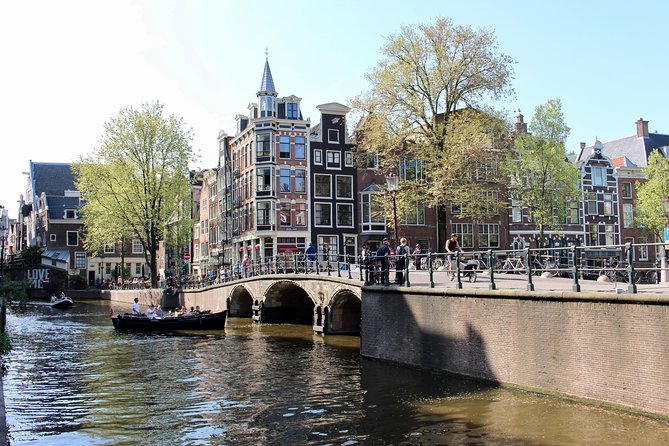
Here’s what you can expect as the cruise moves through Amsterdam. I’ll also point out what’s special about each section and where you might want to stand or pay attention.

Amstel River side: dancing houses and leaning building stories
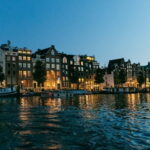
You start exploring the city side of the Amstel River, and the guide points out the famous dancing houses and talks through the story of the leaning buildings. These structures are a perfect start because they set the theme of Amsterdam: clever design, tricky ground, and a city that builds while adjusting to reality.
From the water, the angles make the “why” easier to see than from a street viewpoint. You’re also far enough away from the main pedestrian crush that you can actually look, not just shuffle.
A glimpse of small Amsterdam: tight views and calm pacing
Next you cruise into a more intimate part of the canal system. The route is designed to give you those tight, framed views where you can see how the canal pulls the city together—buildings, water, and bridges all in one shot.
This is where the small-boat advantage shows. You don’t feel herded, and you can settle into the pace.
Munt Tower area: iconic silhouette from the water
You pass by the Munt Tower, and it’s one of those landmarks that looks more dramatic when you’re level with the canal. Even if you’ve seen it in photos, watching it slide past is different—the tower becomes part of the canal perspective, not just a background object.
De Wallen border canal: a short window into Amsterdam’s contrasts
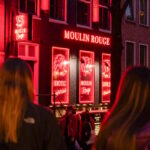
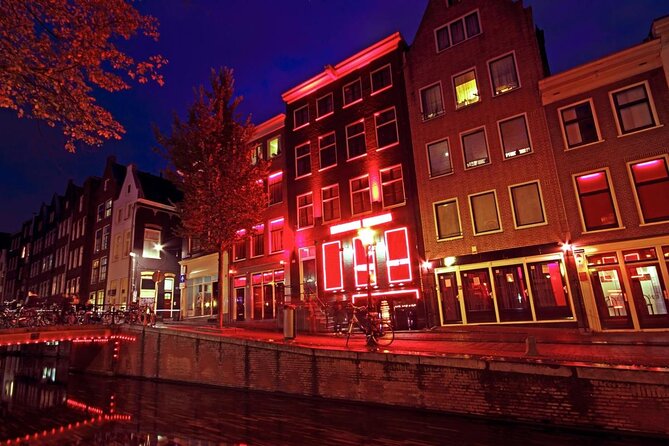
This part of the cruise runs along a tiny canal that’s described as the southern border of De Wallen, the red light district. You’ll see the Huis aan de Drie Grachten (House on the Three Canals) here too.
Now, a practical note: De Wallen can be intense if you’re squeamish. But from the water, you’re not walking past doors or scanning street life up close. You’re getting a distant view with context from the guide, and that keeps it more about Amsterdam’s contrasts and less about spectacle.
If you want the cleanest photos, position yourself so you’re not shooting straight through reflections.
Zuiderkerk and another dancing house sightline
You then cruise past Zuiderkerk and see the famous dancing house again from a different angle. This is smart routing. Seeing the same landmark more than once is a shortcut to understanding the shape of the canal network—how the city bends around its own history.
Oudezijds Voorburgwal: oldest-area context and famous street layers
You head down Oudezijds Voorburgwal, where the guide discusses the history of one of Amsterdam’s oldest areas and what the canal corridor has meant over time. You’ll also spot references like the church and the red-light district presence from a distance, which can help you connect what you’ve heard about the area to what’s actually built there.
You might want a moment here to slow down mentally. This canal stretch carries a lot of “Amsterdam layers,” from architecture to human activity, and it’s easier to digest when you’re sitting and moving rather than walking quickly.
Amsterdam’s oldest church area: proof of staying power
The cruise then continues to Amsterdam’s oldest church (as described on this route). Even if you don’t know the exact building details before you arrive, the guide’s framing helps. It becomes less of a landmark checkbox and more of a “how long has this been here?” moment.
Kolksluis: a medieval lock that’s still doing work
A highlight for me is the stop around Kolksluis, described as one of Amsterdam’s oldest locks still in function since the Middle Ages. You also pass traditional warehouses from the 17th and 18th century.
This section connects the city’s beauty to the city’s plumbing. It’s easy to fall in love with the canals as scenery; it’s also important to remember they’re infrastructure. Locks, water management, and warehouse history are part of the canal story that keeps Amsterdam standing.
Geldersekade canal corridor: old boundary to modern life
You cruise along Geldersekade, an important canal stretch described as the city’s old boundary, linking the area near Nieuwmarkt to Prins Hendrikkade. It runs along the eastern edge of De Wallen and borders the area known as Chinatown.
This contrast is the point. Amsterdam isn’t a single vibe. You can feel that in the canal bend: historic walls and older building types beside streets and cultures that keep evolving.
de Waag: a 15th-century structure with multiple lives
You’ll see de Waag on Nieuwmarkt square. The guide explains how it began as a city gate in the walls, then served different roles over the centuries—guildhall, museum, fire station, and even an anatomical theatre.
That multi-role detail is why this stop feels more meaningful than just seeing a pretty building. It shows how Amsterdam reused space rather than discarding it.
Tiny canal segments and medieval defense tower
The route includes a cruise through a cozy and tiny canal, then the guide points out a defense medieval tower. These smaller segments are often where you get the best canal-bent framing for photos, but also where the guide’s narration makes the buildings feel lived-in rather than labeled.
V.O.C. ship The Amsterdam: Dutch East India Company era
You pass the V.O.C. ship The Amsterdam, described as an 18th-century cargo ship tied to the Dutch East India Company. Even when it’s only visible briefly from the water, it adds a trade and shipping layer that helps explain why Amsterdam became what it is.
If you like cities with a strong maritime backbone, this is the part that makes the cruise feel bigger than architecture.
Modern architecture stretch and Amsterdam’s park edges
You cruise around a piece of modern architecture, then glide along the tranquil edges of Amsterdam’s oldest park. You’re essentially switching emotional gears: from old walls and historic canal craft to contemporary building and a calmer green edge.
That break is useful. It prevents the cruise from becoming one long photo session where everything feels the same.
Botanical Gardens and the Herengracht gentleman canal
You cruise along a stretch by the Botanical Gardens, then on Herengracht, often called the gentlemen’s canal. The route notes that this is where you find some of the most expensive canal houses in the canal belt.
This part is all about elegance and scale. From the water, you can see how the canal houses line up, how the façade rhythm works, and why the canal belt became a symbol of status.
Reguliersgracht: the Seven Bridges Canal viewpoint
You experience Reguliersgracht, known as the Seven Bridges Canal. From the water, the view is often the best because you can see how bridges stack across the waterway. It’s one of those places where a street glance doesn’t feel like the real thing.
Go for a spot with a clear view forward rather than craning sideways.
Prinsen canal and houseboat contrast
You cruise down the Prinsen canal, with a chance to see different houseboats and canal houses. This is where you feel the everyday side of canal life. It’s not just monuments—it’s housing, living, and adapting.
Finish on the Amstel under the Skinny Bridge
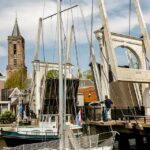
You end back on the Amstel River and go under Amsterdam’s famous Skinny Bridge, one of the few remaining wooden bridges in the city. Coming to the end with a narrow, distinct structure is a great closer—it gives your last minute a memorable shape, not just a fade-out.
Best time to go (and what weather really changes)
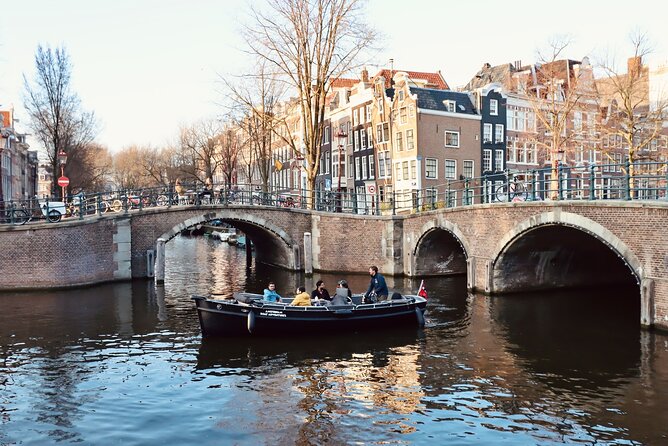
This cruise needs good weather. If conditions are poor, you’ll be offered another date or a full refund. So don’t plan this as your one-and-only rigid activity on a day where the sky looks shaky.
If you can catch a departure around sunset, you may get a more golden, moodier view—one past schedule at 16:30 was noted for including that timing. Even without sunset, a slightly cloudy day can be great for photos because you avoid harsh reflections off the water.
On windy days, you’ll feel it most on the open-air sections. That’s when your blanket matters and your layers matter more.
Who this tour is best for (and who should choose something else)
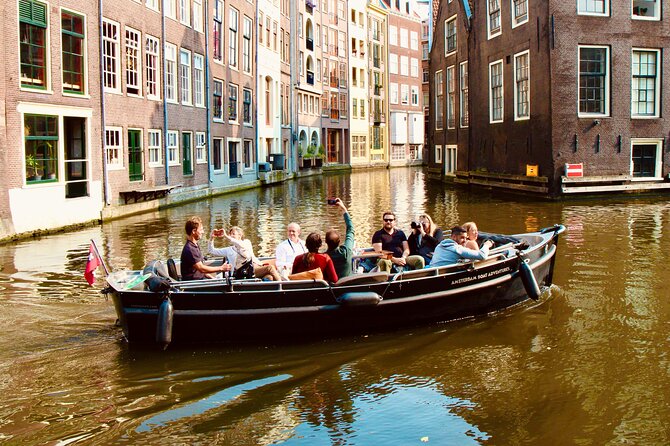
This is a strong match for:
- First-time Amsterdam visitors who want top sights without the big-boat crowd feel
- People who like history explained with a human voice and a bit of personality
- Anyone who wants canal-belt architecture and key landmarks in about 90 minutes
It may not be ideal if:
- You hate open-air experiences and run cold easily (even with blankets and rain cover)
- You need a super long deep architectural lecture. This cruise is designed for a practical pace, not a classroom session.
If you’re planning a busy schedule, this is also a smart connector activity. It’s long enough to feel like a real experience but short enough to fit between museums, meals, and evening walks.
Should you book the Amsterdam Canal Tour by Open Boat?
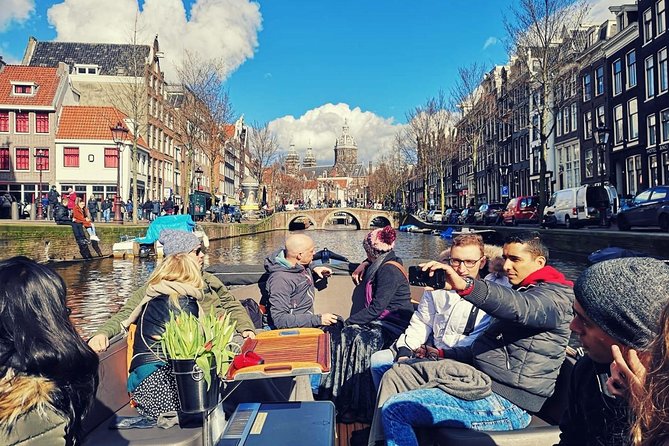
If you want a canal cruise that feels like Amsterdam, not like an amusement ride, I’d book this. The mix of small group size, live English guiding, and included comfort items makes it easier to enjoy the views instead of managing discomfort. And the route hits the kind of landmarks that anchor Amsterdam’s identity—Amstel, the canal belt, De Wallen boundary canals, locks, and the Skinny Bridge finish.
My quick decision checklist:
- If you value a calmer boat experience over a giant-boat crowd scene, book it.
- If you’re traveling with people who don’t want to walk nonstop, this is a great alternative.
- If weather is iffy, keep your plan flexible since the tour runs on good conditions.
FAQ
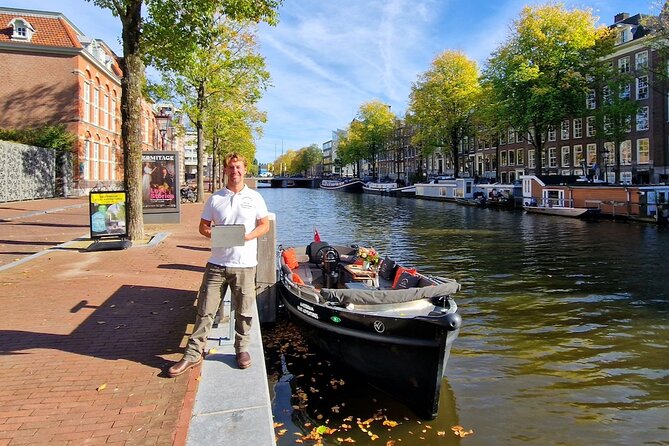
How long is the canal cruise?
The tour lasts about 1 hour 30 minutes.
What is the price per person?
The price is $36.28 per person.
How many people are on the boat?
This experience has a maximum of 12 travelers.
Where do I meet the tour?
You meet at Amsterdam Boat Adventures (Open boat tours), Nieuwe Keizersgracht 1, 1018 DS Amsterdam, Netherlands.
Is the guide English-speaking?
Yes, the guide offers commentary in English.
Is it an open boat, and do I get rain protection?
It’s an open-boat experience, but there is a rain canopy on rainy days.
What comfort items are included?
Blankets are included. Life vests are available upon request.
Can I buy drinks or bring my own?
You can buy drinks onboard or bring your own refreshments.
What drinks cost onboard?
Small beer is €3, and wine (white or rose) is €4. Soda and bottled water are €2.50.
What if the weather is poor?
This experience requires good weather. If it’s canceled due to poor weather, you’ll be offered a different date or a full refund.