REVIEW · ZAANSE SCHANS & WINDMILL TOURS
Zaanse Schans windmill tour with Italian guide
Book on Viator →Operated by AmsterdamViaggi · Bookable on Viator
A windmill village is only half the story here. Zaanse Schans sits by the Zaan River and gives you a clear sense of old Dutch life, with stops that go past photos. I like how the visit mixes windmills + food + crafts, and how you get explanations in Italian with enough time to ask questions.
Two of my favorite parts are the chance to see a spice mill and hear how spices tied into global trade, and the hands-on feel of the Dutch clog workshop. One thing to keep in mind: the program is weather-dependent, and you’re mainly walking through a working heritage village that can feel busy on good days.
In This Review
- Key highlights
- Zaanse Schans in a Half Day: why this windmill village works
- Meeting point, timing, and the smooth way out of Amsterdam
- The Italian guide effect: clearer stories, faster decisions
- Zaanse Schans mills and crafts: what you’ll actually see first
- Specerijenmagazijn Indie’s Welvaren: a 15-minute spice story
- Cheese and polder engineering at Catharina Hoeve
- The clog workshop at Kooijman: watch for the craft details
- Price and value: is $43.78 a fair deal?
- Who should book this Zaanse Schans windmill tour
- Should you book it?
- FAQ
- How long is the Zaanse Schans tour?
- How much does the tour cost?
- Where do we meet for the tour?
- Is the guide speaking Italian?
- What stops are included during the visit?
- Do I get a mobile ticket?
- Is the tour dependent on weather?
- Can I cancel for a full refund?
Key highlights
- Italian-language explanations that keep the story clear without dragging
- Zaanse Schans by the Zaan River, a UNESCO heritage-style windmill village setting
- Spice, cheese, diamonds, and clogs packed into about 3.5 hours
- Cheese tasting (including Gouda) built into the route
- A small-group feel with a maximum of 50 people
Zaanse Schans in a Half Day: why this windmill village works
Zaanse Schans is one of the best-known windmill villages in Europe, and it’s close enough to Amsterdam that you can do it as a true day trip. The setting is all about Dutch industrial-era storytelling: wooden windmills, canal-side views, and the idea that everyday products were once a big deal for trade and local jobs.
The biggest value for me is that the experience is not only about scenery. You’ll get a guided route that ties the sights to real themes: how Dutch industries worked, how people lived, and how global trade shaped what ended up in local stores and workshops. You also get a morning-style schedule that returns around 1:30 pm, which makes it easy to plan lunch and the rest of your Amsterdam day.
You should also expect a bit of tourist energy. This is a famous stop, so bring patience for crowds around the most photo-friendly mills and buildings. Still, the craft and food stops help it feel more than just postcard time.
You can also read our reviews of more guided tours in Amsterdam


Meeting point, timing, and the smooth way out of Amsterdam
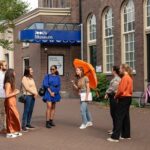
The meeting spot is the Grand Hotel Amrâth Amsterdam, at Prins Hendrikkade 108. It’s a convenient central location, and the tour runs daily (Monday to Sunday) with hours listed from 10:00 AM to 1:30 PM. So you’re basically committing to a focused half-day, not an all-day slog.
The trip is designed to keep logistics simple. You’re picked up at the meeting point and returned there at the end, and the group travels together. In past outings, the transport has been described as a clean minibus that feels comfortable for the ride out of the city.
If you’re the type who hates figuring out buses and timetables while everyone else takes photos, this kind of organized transfer is a win. You’ll spend your energy on the sights and tastings instead of navigating.
Practical tip: aim to arrive a few minutes early so you’re not rushing when you spot the right pickup.
The Italian guide effect: clearer stories, faster decisions
This tour is built around Italian-language guiding and a personalized show. That matters more than it sounds. When you’re dealing with Dutch history that can be vague from signage alone, you’ll appreciate having someone explain what you’re seeing and why it mattered.
The guide can also help you connect the dots between different stops. For example, spices, cheese, clogs, and diamonds all represent industries with their own supply chains and traditions. With an Italian guide, you can follow that logic without guessing.
You may be guided by speakers such as Valerio, Luca, Gianni, Emanuele, or Antony (these names appear in prior guides for this experience). Even when you don’t get the same guide, the consistent theme is the same: clear, organized explanations, plus the ability to ask questions without being rushed.
Group size is capped at 50 travelers, which is big enough to feel lively but small enough that you’re less likely to be lost in the crowd. That balance helps when the schedule moves through multiple mini-factory and tasting stops.
Zaanse Schans mills and crafts: what you’ll actually see first
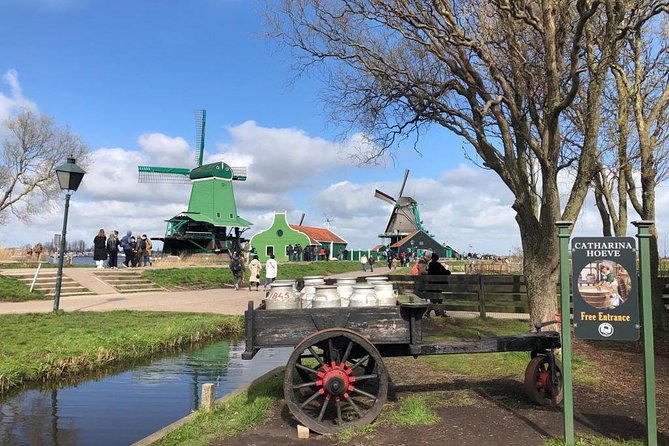
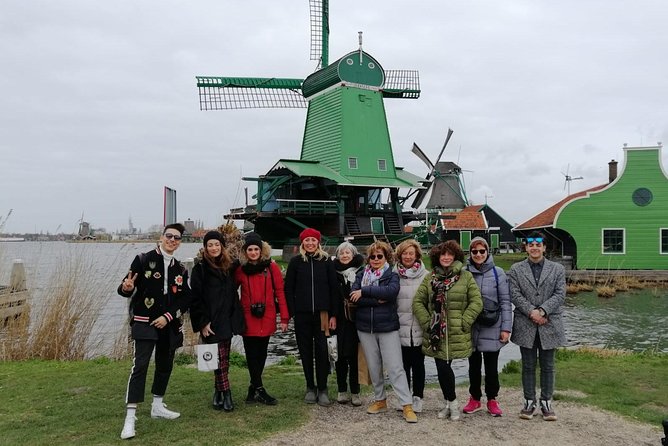
The day begins at Zaanse Schans, set along the banks of the Zaan River. You’ll follow an itinerary that mixes iconic windmills with industry buildings tied to dairy, diamonds, and traditional wooden crafts.
A standout here is the spice mill entry and explanation. You’re not just walking past the idea of spice history—you get it framed as part of the spice routes linked to overseas trading companies, along with details about customs and traditions connected to those goods. Even in a short visit, the goal is to give context so the windmills feel connected to real economic life, not just a backdrop.
You’ll also see the Dutch clog tradition, including a clog-making demonstration. That’s one of those experiences that’s both practical and visual: you watch how craftsmanship turns wood into everyday footwear, and you get the cultural meaning behind it.
Then come the “real world” product stops: a cheese factory area with free tasting of typical local cheeses, a small diamond maker visit, and mention of a cocoa factory stop in the overall program. Even if you’re not a serious foodie or collector, these stops help you understand how Dutch small industries created famous exports.
One possible drawback: the Zaanse Schans area can feel very tourist-focused. If you’re hoping for quiet, offbeat streets, you may find the atmosphere busier than expected. The route still helps, because it gives you reasons to slow down and look closely.
Specerijenmagazijn Indie’s Welvaren: a 15-minute spice story
Next you’ll head to Specerijenmagazijn Indie’s Welvaren, a spice mill experience focused on history and technology. You get entry plus a short demonstration that explains how spices and related business worked in earlier times.
This stop is short—about 15 minutes—so it’s not the place to go looking for a long museum-style read. Instead, think of it as a guided snapshot. It’s designed to make the Zaanse Schans spice story click, especially after the initial spice mill stop and the broader theme of trade routes tied to faraway expeditions.
If you like learning how everyday goods were made and moved, this is the “how did they do it” moment. If you prefer purely scenic wandering, you might feel the pace is a little structured here—but that structure is what makes the half-day feel worth it.
Practical tip: keep your questions ready. With an Italian guide leading the demonstration, you can usually get direct answers on the techniques and the historical context behind the spices.

Cheese and polder engineering at Catharina Hoeve
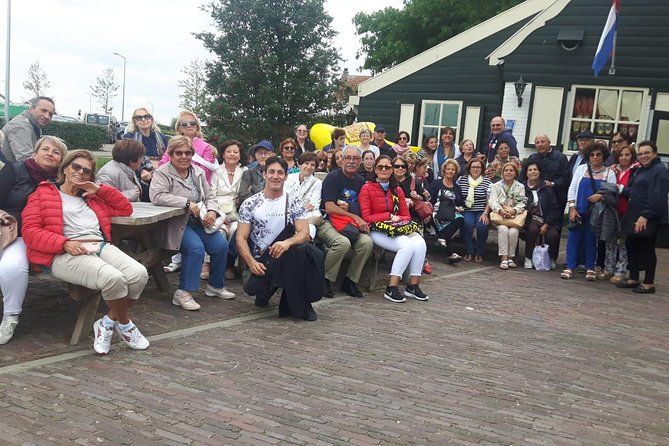
At Catharina Hoeve Cheese Farm, the experience shifts from global trade to Dutch land and water logic. You’ll get a typical Dutch dairy visit with tasting, including Gouda in different fragrances and flavors.
The explanation also goes beyond tasting notes. You’ll hear about reclaimed land and the birth of polders, plus the unique irrigation system that makes Dutch agriculture work in low-lying terrain. That’s not just trivia. It’s the kind of context that helps you understand why cheese became such a major part of Dutch identity: the land and water engineering supported consistent farming.
This is another stop that feels “small but meaningful.” Even with limited time, it connects the dots between geography and daily life. It also offers a break from walking while still keeping the narrative going.
A consideration: if you have dairy sensitivities, check what’s offered before committing. The tour data indicates free cheese tasting, so plan accordingly.
The clog workshop at Kooijman: watch for the craft details
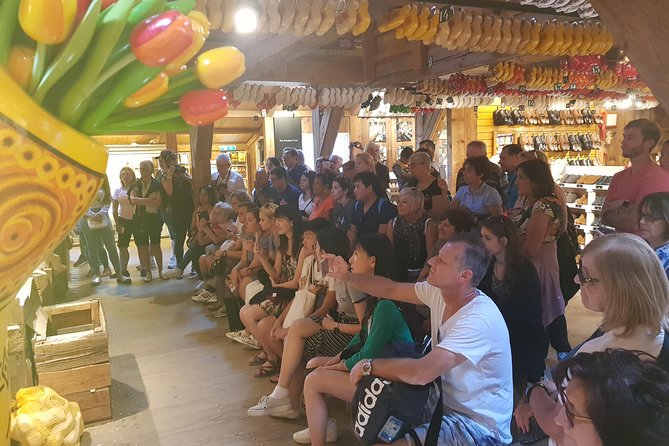
The final craft-heavy stop is Kooijman Souvenirs & Clogs Wooden Shoe Workshop. This part of the day is built around the Dutch clog tradition, with a special show in Italian.
What I like about this kind of workshop stop is that it gives you something to look for during the demonstration. Don’t treat it like a simple souvenir stall. The more you notice how the process works—how materials are shaped and how the craft is explained—the more the workshop becomes a cultural window rather than just shopping time.
This stop also pairs well with everything you’ve seen earlier. By now, you’ve heard about trade, industry, dairy production, and spice routes. The clogs bring it back to local craft: items made for working life, then transformed into cultural icons.
If you enjoy hands-on culture, you’ll probably walk out thinking about what you saw. If you’re only chasing windmills, this is the moment that turns the tour from scenery into understanding.
Price and value: is $43.78 a fair deal?
At $43.78 per person, this tour is priced like a well-packaged half-day with multiple paid experiences folded into one plan. The value comes from the number of “activity types” you get in about 3 hours 30 minutes: windmill village time, spice mill entry, cheese tasting, a diamond stop, and a clog workshop show.
You also get the practical benefit of an organized rhythm. The day starts at 10:00 AM and returns around 1:30 PM, so it’s easy to slot into your schedule without losing half a day to transit planning. Past guests have described the transport as clean and comfortable, which matters when you’re doing multiple stops in one morning.
Another value point: mobile ticket. That reduces friction, especially if you’re bouncing between attractions in Amsterdam and don’t want extra paperwork.
If you want the cheapest possible windmill visit, you can probably do it independently. But if you want guided context, tastings, and craft demos without logistics headaches, this is the better choice.
Who should book this Zaanse Schans windmill tour
I’d steer you toward this tour if you want:
- an easy half-day out of Amsterdam,
- Italian explanations that make history feel usable,
- more than just photos—spice, cheese, diamonds, and clogs.
It also suits families, people who like structured sightseeing, and anyone who appreciates the story behind everyday products.
You might consider a different option if you:
- hate guided schedules and prefer free time,
- need a fully quiet experience away from tourist areas,
- are sensitive to the idea of cheese tasting stops.
Should you book it?
Book it if you want Zaanse Schans to feel like a guided story, not a checklist of windmills. The big strengths—Italian-led clarity, multiple hands-on stops, and the mix of food and craft—make the time feel efficient.
Skip it if you’re chasing solitude or you only want panoramic windmill shots. This is a popular village with guided momentum, so the best match is someone who enjoys a structured walk with tastings and demonstrations.
If weather is shaky, keep an eye on conditions. The experience requires good weather, and that can affect whether you get the day you planned.
FAQ
How long is the Zaanse Schans tour?
The tour lasts about 3 hours 30 minutes and returns back to the meeting point around 1:30 pm.
How much does the tour cost?
The price is $43.78 per person.
Where do we meet for the tour?
You meet at Grand Hotel Amrâth Amsterdam, Prins Hendrikkade 108, 1011 AK Amsterdam.
Is the guide speaking Italian?
Yes. The experience includes personalized explanations and shows in Italian.
What stops are included during the visit?
You’ll visit Zaanse Schans and include stops such as the spice mill (Specerijenmagazijn Indie’s Welvaren), cheese farm tasting (Catharina Hoeve), and a clog workshop show (Kooijman Souvenirs & Clogs Wooden Shoe Workshop), plus additional industry stops like diamond making and mention of a cocoa factory.
Do I get a mobile ticket?
Yes, the tour uses a mobile ticket.
Is the tour dependent on weather?
Yes. The experience requires good weather. If it’s canceled due to poor weather, you’ll be offered a different date or a full refund.
Can I cancel for a full refund?
Yes. You can cancel up to 24 hours in advance for a full refund. If you cancel less than 24 hours before the start time, the amount paid is not refunded.