REVIEW · VAN GOGH MUSEUM TOURS
Rembrandt & Van Gogh Amsterdam walking experience
Book on Viator →Operated by Guidance Travel · Bookable on Viator
Amsterdam’s art trail is short, friendly, and human. This 2-hour walking tour connects famous painters to the streets, buildings, and views you can actually see—without making you sit through a lecture. I really liked how the guide’s background teaching stayed grounded in the exact place you were standing, and how often you get photo-friendly moments along the way.
The other thing I love is the setup for your next museum day. After the walk, the Rijksmuseum visit (ticket sold separately) tends to feel more personal and easier to follow. One thing to consider: you’re outdoors for a couple of hours, so this is not a substitute for time inside museums.
If you want a lively introduction to Dutch masters and a route that helps you get your bearings fast, this is an excellent match.
In This Review
- Key highlights (why this walk feels worth it)
- Why this Rembrandt & Van Gogh Amsterdam walk works so well
- Who this 2-hour art walk is best for
- Start point and end point: where you’ll begin and where it finishes
- The route: stop-by-stop art stories you’ll actually remember
- Stop 1: Weeping Tower (15 minutes, free)
- Stop 2: Nieuwmarkt (15 minutes, free)
- Stop 3: Trippenhuis (15 minutes, free)
- Stop 4: South Church (15 minutes, free)
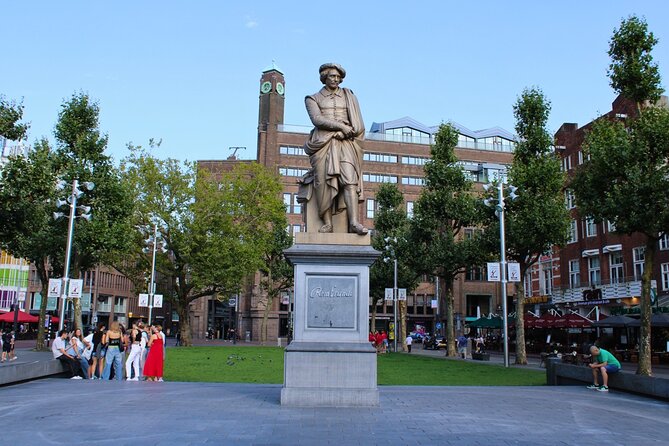
- Stop 5: Museum Het Rembrandthuis (15 minutes, free)
- Stop 6: Oudemanhuispoort (10 minutes, free)
- Stop 7: Staalstraat (10 minutes, free)
- Stop 8: Tivoli Doelen Amsterdam Hotel (10 minutes, free)
- Stop 9: Blauwbrug (10 minutes, free)
- Photo stops: when the city gives you the best frames
- The value of the guide: visuals, clarity, and real-life recommendations
- Price and what it really costs you
- Timing and pace: why 10–15 minutes per stop feels right
- Logistics that matter on an Amsterdam walk
- Should you book this Rembrandt & Van Gogh Amsterdam walking tour?
- FAQ
- How long is the Rembrandt & Van Gogh Amsterdam walking experience?
- Is the tour offered in English?
- How big is the group?
- Where do we meet, and where does the tour end?
- Do I need to print tickets?
- Are tickets included for all stops?
- What does the tour include?
- Are service animals allowed?
- Is free cancellation available?
- How will I get confirmation after booking?
Key highlights (why this walk feels worth it)
- Small group (max 15), so you’re not lost in the crowd
- Short stops (about 10–15 minutes) that keep the pace moving
- Free admission at each stop listed, plus a local guide included
- Big photo payoff from scenic bridges and viewpoints
- A guide who prepares with visuals, not just facts in the air
Why this Rembrandt & Van Gogh Amsterdam walk works so well
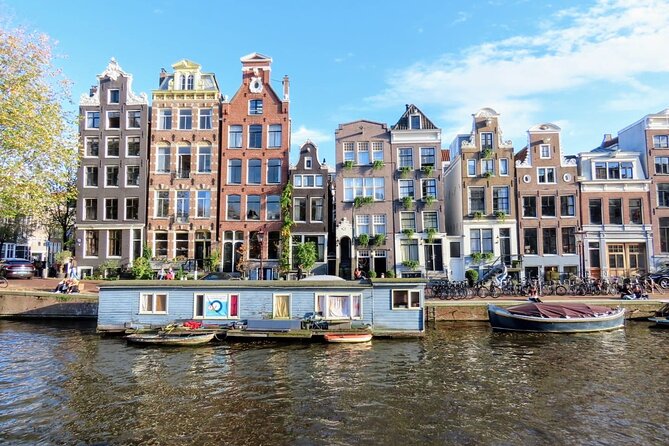
Amsterdam has a way of overwhelming first-timers. Streets look charming from every angle, but the art and history can feel like random names on plaques. This tour gives you a path where each stop links to a specific artistic story you can remember.
I especially liked the way the walk stays practical. You don’t need to be an art expert. If you care about painters, and you enjoy standing in the real location where art-world ideas formed, you’ll feel like you’re traveling with someone who knows where to point and when to slow down.
And yes, the tour has Rembrandt and Van Gogh front and center. Even when the specific stops focus on Dutch Golden Age figures like Rembrandt, Vermeer, and Frans Hals, the theme is clear: you’re seeing the foundation that later artists built on.
You can also read our reviews of more tours and experiences in Amsterdam.



Who this 2-hour art walk is best for
This experience is ideal if:
- You’re in Amsterdam for the first time and want an art-focused orientation
- You like walking at a relaxed pace while learning meaningful details
- You plan to visit the Rijksmuseum and want context first
- You prefer a small-group tour where you can ask questions
It also fits couples and solo travelers well. The route is designed as a smooth loop through central neighborhoods, with frequent stops that don’t drag.
If you’re the kind of traveler who wants one long museum room-by-room session, this won’t fully satisfy that craving. It’s a walking and storytelling tour, not a museum ticket in disguise.
Start point and end point: where you’ll begin and where it finishes
You start at Prins Hendrikkade 95, 1012 AE Amsterdam. The end point is Blauwbrug, 1011 PT Amsterdam, near the center of town, between Rembrandtplein and Waterlooplein.
The tour uses a mobile ticket, so bring your phone and make sure your battery is charged. It’s also offered in English, and the maximum group size is 15—small enough that you can actually hear the guide.
A small practical note: one review mentioned a bit of confusion finding the starting point, even though the guide was there and ready. I’d treat that as your cue to arrive a few minutes early and double-check the exact meeting spot on your map.
The route: stop-by-stop art stories you’ll actually remember
The schedule is built around a rhythm of short stops—each one about 10 to 15 minutes. That matters because it keeps the learning bite-sized. You’re not stuck at one location waiting for the next segment.
Stop 1: Weeping Tower (15 minutes, free)
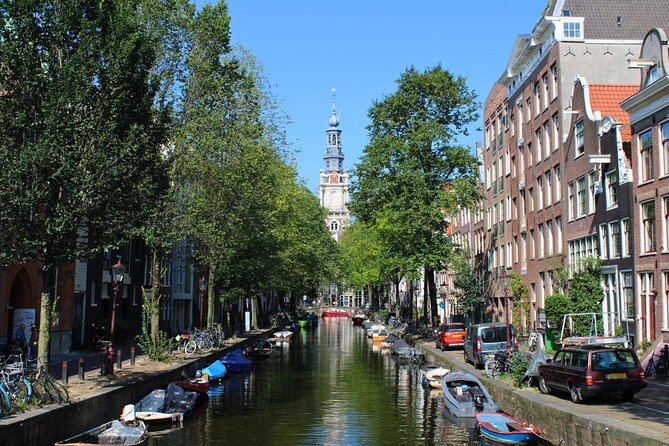
This is where the tour rewards your eyes right away. You’ll hear about scenes that captured well-known painters, then you’re treated to a sweeping view from one of the city’s standout vantage points.
Even if you don’t know the art names yet, this kind of start works. It teaches your brain what to look for: sightlines, architecture, and why painters were drawn to certain corners of the city.





Stop 2: Nieuwmarkt (15 minutes, free)
Next comes a lively central area that helps you understand how Amsterdam neighborhoods shaped the art world around them. You’ll connect the street setting to what artists noticed and how those impressions carried into their work.
This stop is a good moment to slow down and take photos because you’re transitioning from viewpoint energy to city-life energy.
Stop 3: Trippenhuis (15 minutes, free)
Here the tour brings you to a place linked to Rembrandt. You’ll also get a look at the Rijksmuseum’s background and the notable figures who once moved through its halls.
What I like about this stop is that it gives you a bridge between an artist and the institutions that helped art careers grow. It’s not just a portrait of Rembrandt as a lone genius—it’s Rembrandt in a network of patrons, buildings, and cultural power.
Stop 4: South Church (15 minutes, free)
This stop centers on the influence of Italy on Dutch painting in the 17th century. You’ll learn how a major technique helped raise Dutch artists’ profiles, and why that mattered for their fame.
If you love art history but hate heavy lectures, this is a strong chapter. It’s short, focused, and it answers the common question: why did Dutch painting suddenly look more “serious” and export-worthy?
Stop 5: Museum Het Rembrandthuis (15 minutes, free)
You’ll see the former site of Rembrandt’s 17th-century home. That’s the hook. Then the guide ties it to how the Dutch art market rose and how that market helped fuel Rembrandt’s success.
This is one of those stops where the details stick because the place feels personal. It’s harder to forget an artist when you’re standing near the doorways and streets that shaped daily life.
Stop 6: Oudemanhuispoort (10 minutes, free)
This segment moves you into the world of Vermeer and points you toward a famed collection now on display at the Rijksmuseum.
If you’re planning to go to the Rijksmuseum afterward, this stop is especially useful. It primes you to recognize connections when you’re facing actual paintings—like you already met the cast of characters.
Stop 7: Staalstraat (10 minutes, free)
Here the theme shifts again, this time toward a French painter’s inspiration from the artistic giants you’ve been learning about. You’ll also hear about one of Amsterdam’s thriving industries.
This stop keeps the tour from becoming a one-note parade of names. Instead, it shows how ideas traveled and how art sat inside everyday economic life.
Stop 8: Tivoli Doelen Amsterdam Hotel (10 minutes, free)
You’ll learn about a former headquarters tied to a major artistic story, and you’ll hear about the tale behind the only painting Frans Hals created in Amsterdam.
I like this kind of detail because it adds spice without adding confusion. It makes the artist feel specific, time-bound, and tied to a real location—rather than floating as a museum name.
Stop 9: Blauwbrug (10 minutes, free)
The tour ends at Blauwbrug, and it’s a strong finish. You’ll hear which painter used to paint here, then you’ll take in one of the city’s more breathtaking views.
Ending here is smart. You get a final “reset moment” for photos and reflection, and you finish near major sights for an easy continuation—whether that’s dinner, a canal cruise, or your next museum stop.
Photo stops: when the city gives you the best frames
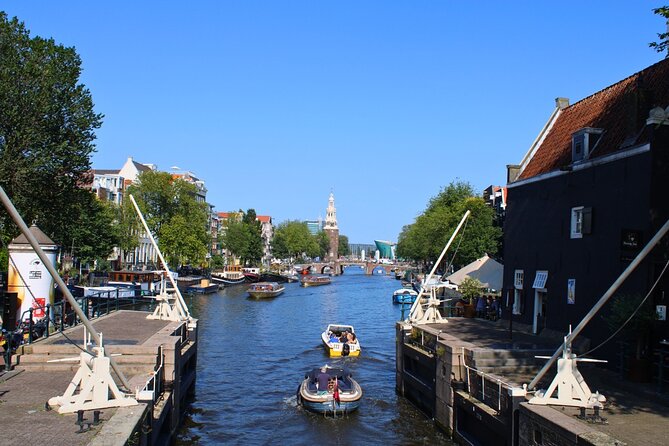
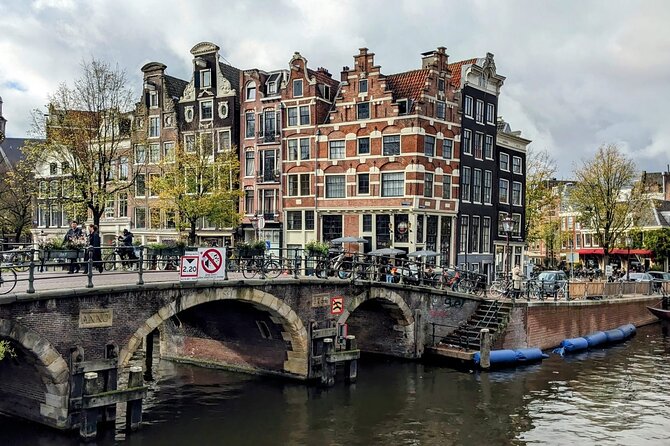
You’ll get plenty of chances to take photos, and the tour is built around that. The viewpoint start at Weeping Tower gives you a wide-angle feel for Amsterdam’s layout. Later, Blauwbrug delivers the kind of canal-and-bridge perspective that makes your camera roll feel happy.
My advice: don’t treat the photos like a separate activity. Use the stop time well—take a couple shots, then listen. The best photos usually happen when you understand what the guide is pointing at.
Also, because stops are short, you’ll want your phone ready before you reach the viewpoint, not after.
The value of the guide: visuals, clarity, and real-life recommendations
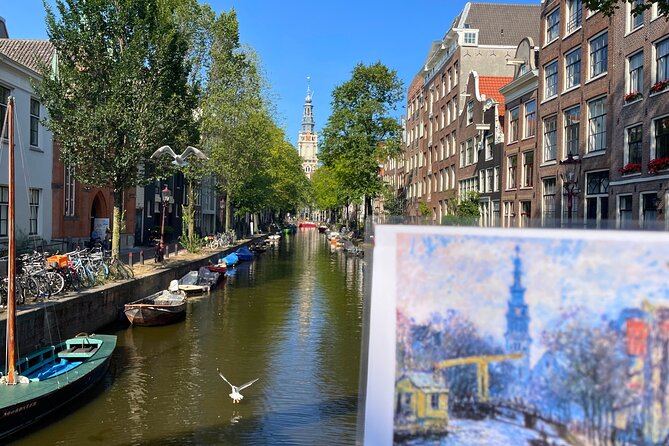
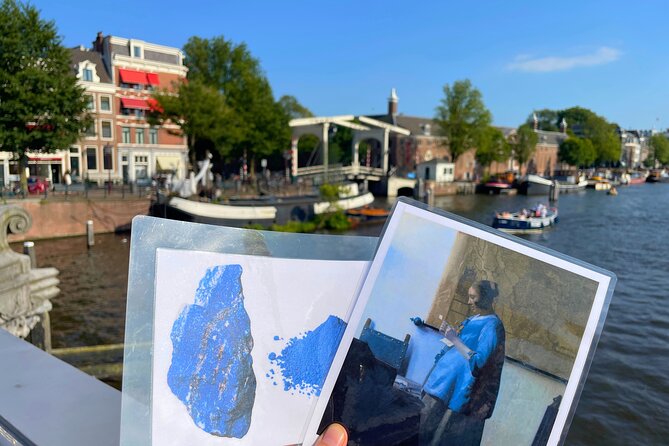
A major reason this tour earns top marks is the guide approach. In one review, the guide—Manouk—was described as exceptionally well-prepared, including pictures of the art tied to each location. That kind of visual support can turn a street-level story into something you can actually picture later in the museum.
Another review praised how Manouk handled communication clearly for a hearing-impaired traveler by speaking carefully and directly. That’s not just nice service; it’s smart tour management. It means the storytelling stays accessible.
And yes, the helpfulness doesn’t stop when the tour ends. Manouk shared recommendations at the end for lunch, a canal cruise, and even the best apple tart. That’s the kind of practical, local touch that makes a short tour feel like it gave you a plan, not just information.
Price and what it really costs you
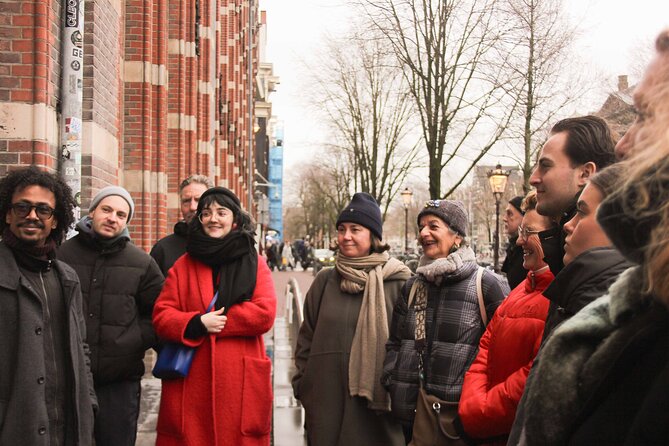
The tour itself is built to stay budget-friendly. Each of the listed stops has free admission tickets according to the tour details, and the local guide is included.
The extra cost to watch is the Rijksmuseum ticket: it’s €22.50 per person and not included. If you’re already planning to go, this walk can be a great warm-up. You’ll likely spend less time staring at placards trying to figure out what you’re looking at, and more time recognizing the connections you heard on the streets.
If you aren’t planning to visit the Rijksmuseum, the value still holds because the walk is packed with place-based stories. Just keep your expectations aligned: you won’t get the full museum experience in two hours outdoors.
Timing and pace: why 10–15 minutes per stop feels right
This is not a slow “wander and hope” walk. Each chapter is timed: around 15 minutes for several stops, and about 10 minutes for others. That pacing helps in Amsterdam, where distances can add up quickly.
Short stops also keep your attention strong. If you’re someone who gets museum fatigue, this format tends to feel refreshing.
One caution: comfortable walking shoes matter. The route is central and scenic, but it’s still a city stroll with repeated transitions.
Logistics that matter on an Amsterdam walk
A few practical points you can rely on:
- It’s offered in English
- The group max is 15 travelers
- It’s near public transportation
- Service animals are allowed
- Most people can participate
If you’re traveling with mobility constraints, you’ll want to consider that the experience is outdoors and movement-based, even though no specific accessibility details beyond service animals are provided.
And again: double-check the start point before you commit—one review mentioned finding it took a moment. Arriving slightly early removes that stress.
Should you book this Rembrandt & Van Gogh Amsterdam walking tour?
I’d book it if you want a smart, art-focused walk that helps you connect names to streets fast. It’s especially good for first-timers and for anyone who plans to visit the Rijksmuseum anyway.
Skip it if your main goal is spending hours inside museums, or if you want a purely Rembrandt-only route. This is a guided route through multiple masters and themes, tied tightly to specific places and stories.
If you like art when it’s grounded in real streets, and you enjoy short stops with photo opportunities, this is a very solid use of your time.
FAQ
How long is the Rembrandt & Van Gogh Amsterdam walking experience?
It runs for about 2 hours.
Is the tour offered in English?
Yes, the experience is offered in English.
How big is the group?
The tour has a maximum of 15 travelers, which keeps it small-group.
Where do we meet, and where does the tour end?
You meet at Prins Hendrikkade 95, 1012 AE Amsterdam and the tour ends at Blauwbrug, 1011 PT Amsterdam, in the center between Rembrandtplein and Waterlooplein.
Do I need to print tickets?
No. You’ll receive a mobile ticket.
Are tickets included for all stops?
The stops listed on the route show admission ticket free. The Rijksmuseum ticket is not included (priced separately).
What does the tour include?
The tour includes a local guide.
Are service animals allowed?
Yes, service animals are allowed.
Is free cancellation available?
Yes. You can cancel for a full refund if you cancel at least 24 hours before the start time. If you cancel less than 24 hours before, the amount paid is not refunded.
How will I get confirmation after booking?
Confirmation is received at the time of booking.