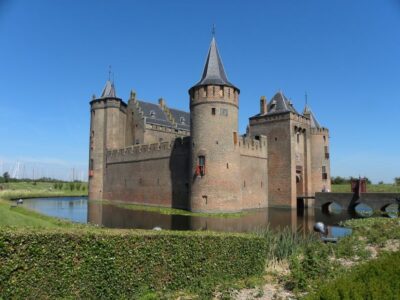
Amsterdam tells secrets if you know where to look. On this 2-hour walking tour, Antonis guides you through 750 years of Amsterdam with a fast, funny flow of stories that make the city’s layout click in your head. I especially love the way the walk explains practical water survival and the quiet weirdness of everyday details. One possible drawback: it’s packed with facts, so if you prefer long photo stops and slow pacing, plan for a dense hour-and-change.
You’ll join a small group (max 12), move without big crowds, and finish back where you started near the Bull. I like that the experience feels personal even if you’re solo, and Antonis keeps attention on you, not on a script. Bring comfortable shoes and water, because you’ll be on your feet for the full 2 hours.
In This Review
- Key things you’ll notice on the walk
- Amsterdam’s Hidden Facts: how 750 years fit into 2 hours
- Starting near the Bull: setting your “mud and money” mindset
- Dams, dikes, and the city built on mud
- The Golden Age section: trade, power, and big ideas
- Leaning houses, strange marks, and the fun side of engineering
- World War II: survival, systems, and the city’s stubborn endurance
- Old religions and liberal revolutions: the story behind Amsterdam’s attitude
- The A’Dam handwritten postcard: a small souvenir with a narrative
- What to bring (and how to make the most of the two hours)
- Price and value: is $28 fair for a 2-hour story walk?
- Language and pace: English and Greek with Antonis
- Who should book this tour (and who should skip it)
- Should you book Amsterdam’s Hidden Facts: 750 Years of Secrets?
- FAQ
- How long is the Amsterdam Hidden Facts walking tour?
- How much does the tour cost?
- Where does the tour start and end?
- What languages is the tour offered in?
- Who is the guide?
- What’s included in the price?
- Is video recording allowed?
- What should I bring?
- Can I cancel or pay later?
- What’s the maximum group size?
Key things you’ll notice on the walk
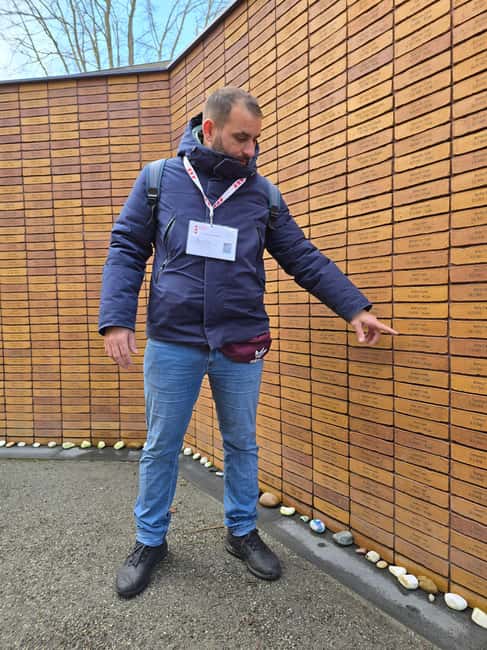
- Antonis’ fact-first storytelling turns history into something you can picture, not memorize
- 750 years in 2 hours: dams, trade, floods, and freedom connected like a cause-and-effect story
- The city’s water logic: why Amsterdam was built on mud and how systems saved it
- Weird-but-true details: why houses lean, and what the “XXX” clues are about as you walk
- World War II through a street-level lens focused on how Amsterdam endured
- A handwritten postcard from historic A’Dam with a Dutch stamp as your take-home artifact
Amsterdam’s Hidden Facts: how 750 years fit into 2 hours
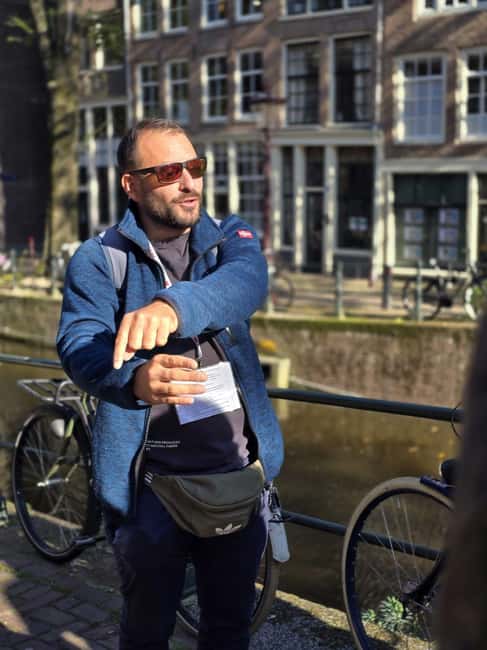
This tour is for people who love the moment when a city stops being scenery and starts becoming a story you understand. Amsterdam can look effortless at a distance. Up close, it’s engineering, politics, belief, and stubborn problem-solving—stacked layer after layer.
The trick here is the structure. You don’t get one theme and stick to it. You get a timeline that keeps circling back to the same big drivers: water control, trade networks, ideas about who should have power, and what happens when the worst comes. The result is that by the end, you’ll look at canals, buildings, and even street quirks with a reason behind them.
And yes, you’ll leave with that feeling of: Wait, how did it all hold together?
You can also read our reviews of more tours and experiences in Amsterdam.



Starting near the Bull: setting your “mud and money” mindset
The tour begins in front of the Bull, then heads out on foot with Antonis leading the story. The first part matters more than you might expect, because Antonis builds your mental model early: Amsterdam wasn’t just founded on nice views. It was founded on survival.
That means the walk starts with the early logic—how people handled water, how the city got shaped by its surroundings, and why later events (trade, religion, conflict) don’t make sense unless you understand the wet ground underneath. If you’ve ever wondered why Amsterdam’s buildings seem to have their own personality, this opening sets you up to notice those details instead of passing them by.
Also, this is small-group history. With a group that stays under 12, you can actually hear the guide, and the conversation can bend to the pace of the people around you.
Dams, dikes, and the city built on mud
One of the most satisfying parts of this tour is how it treats everyday city features as clues. You learn about the first dam and the dikes—those early moves that turned messy water management into something that supported a growing place.
Then the guide connects it to the city you see today. Amsterdam is famous for canals, but the real secret is the infrastructure behind them. You’ll hear how floods weren’t rare disasters; they were part of the city’s reality. That’s why the systems that saved Amsterdam mattered so much. It wasn’t only about bravery. It was about organization, engineering, and people willing to coordinate.
You’ll also pick up explanations for the physical oddities that visitors often shrug off. The tour highlights questions like:
- Why houses lean
- Why Amsterdam is built on mud
- What’s with the “XXX” you might spot as you move through town
I like this approach because it changes your walk from sightseeing into detective work. You’re not hunting for facts to impress someone later. You’re understanding the logic of the streets you’re standing on.
Practical note: this section is concept-heavy. If your brain needs a small reset, take a breath, snap a photo, and let the story settle. Antonis’ humor helps a lot here.
The Golden Age section: trade, power, and big ideas
Once you’re grounded in the water-and-survival base, the walk shifts into the Golden Age. This is when Amsterdam’s story expands—through trade, wealth, and the kind of ambition that turns a practical town into a cultural powerhouse.
What I appreciate is that the Golden Age isn’t presented as glowing paintings and perfectly dressed merchants. It’s shown as a result of earlier choices: controlling water, organizing labor, building networks, and creating conditions where ideas could circulate. That makes the era feel less like a chapter and more like a continuation of the same problem-solving mindset.
You’ll also hear how religion and politics intersected with daily life. The tour points to old religions and liberal revolutions as part of the defining moments that shaped who got to participate in the city’s direction. For many people, Amsterdam is often summarized as tolerant and free. This walk gives you the machinery behind that reputation: conflict, negotiation, and constant rethinking.
If you like history that connects cause to effect, this portion delivers. If you want only names and dates, you might feel tempted to take notes instead of just listening. Either way, Antonis keeps it human and story-driven.
Leaning houses, strange marks, and the fun side of engineering
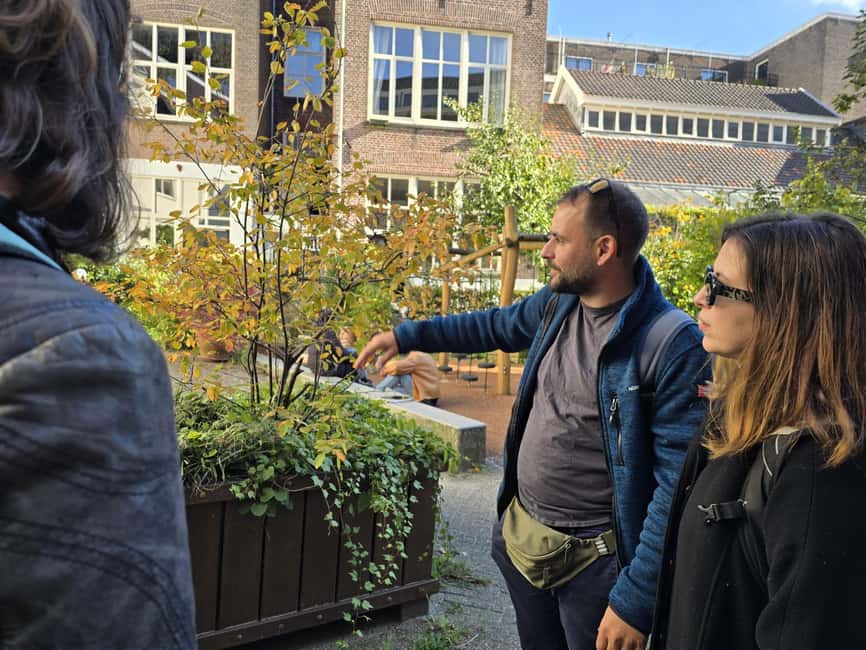
Here’s a detail I love: the tour doesn’t treat architecture like a museum object. It treats it like evidence.
As you move through the city, you’re invited to interpret things you’d otherwise ignore—especially building quirks. Houses leaning isn’t just an odd photo opportunity. You’re guided to understand why it can happen in Amsterdam’s specific building context, including the challenges of the ground.
And those “XXX” clues—mentioned as one of the “wait, what?” highlights—add a layer of real-world mystery. You learn to connect symbolic or practical markings to what was going on historically around the city. It’s the kind of moment where you look at something the same way twice: first as decoration or pattern, then as historical signal.
For value, this matters. Anyone can name landmarks. This tour teaches you how to read a city. That’s why people come away with head full of strange-but-true facts, not just a list of big events.





World War II: survival, systems, and the city’s stubborn endurance
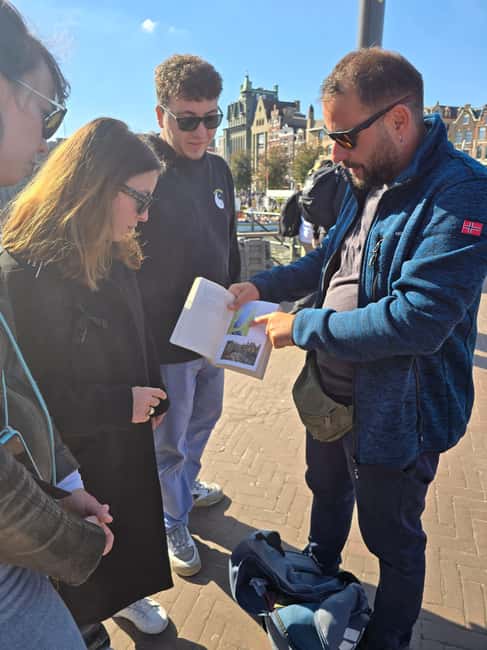
After centuries of growth and ideas, the tour turns to World War II. This isn’t handled as a detached timeline. You get stories tied to defining moments—how Amsterdam faced real danger, and how people navigated fear while the city’s systems still mattered.
The important part is how the guide frames Amsterdam as resilient rather than mythical. The city’s survival, again, comes back to organization and trust—social and structural. You hear how the same city logic that mattered for floods and water also shaped how people endured crises.
In a short walk, this kind of topic could become overwhelming. Instead, Antonis keeps it grounded and story-based, focusing on what changed and what persisted. You leave with a clearer sense that modern Amsterdam is built on layers of survival tactics—some technical, some personal.
If this is the kind of history you care about, this segment is one of the best reasons to choose this tour over something that only stays in the pretty past.
Old religions and liberal revolutions: the story behind Amsterdam’s attitude
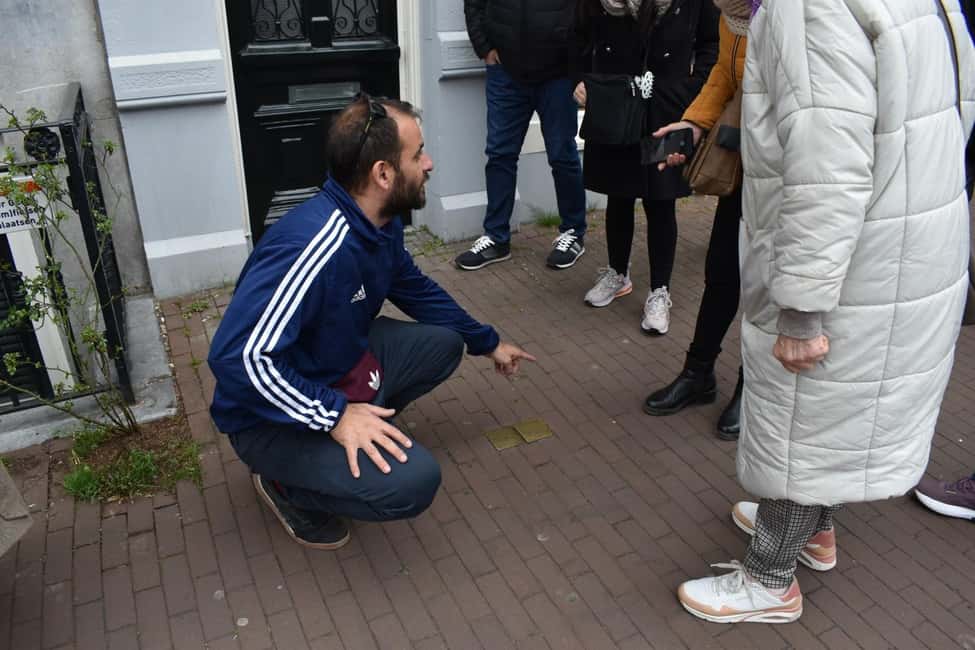
One reason this tour feels different from a standard “top sights” loop is the way it links belief and politics. You’ll hear about old religions and liberal revolutions as part of Amsterdam’s defining moments, tied to how people argued, compromised, and redefined public life.
What I found useful is that the guide doesn’t treat freedom as a slogan. He connects it to real conflicts and real changes in how people lived. That’s where the city’s trust and resilience themes start to feel more concrete. You begin to understand Amsterdam’s reputation as something that grew through friction, not a marketing line.
This section is also where the tour’s humor and warmth really help. Big ideas can get heavy fast. Antonis’ storytelling style keeps it moving, while still giving you the key concepts.
The A’Dam handwritten postcard: a small souvenir with a narrative
You don’t just get a photo and a memory. You get a handwritten postcard with a Dutch stamp tied to historic A’Dam. It’s a small, tangible token, and it fits the tour’s theme: Amsterdam history is not only on plaques. It’s in objects, documents, and signals.
I like that this souvenir isn’t generic. It’s part of the experience, not an extra you forget in the bottom of a bag. It also nudges you to slow down after the walk. If you send it, you extend the story into real life. If you keep it, it still acts like a mini archive reminder.
What to bring (and how to make the most of the two hours)
For a tour like this, the comfort choices make a bigger difference than you might think. Bring comfortable shoes, water, and weather-appropriate clothing. Amsterdam weather can flip on you, and because you’re walking continuously for about 2 hours, you’ll want to stay comfortable rather than “tough it out.”
You can bring a camera—capturing moments is easier when you’re not thinking about logistics. Just note that video recording is not allowed.
Also, because this experience is fact-heavy, it helps to mentally switch from tourist mode to listener mode. Let the guide’s storytelling carry you. If something grabs you, pause for photos. If not, just keep walking and let the connections build.
Price and value: is $28 fair for a 2-hour story walk?
The price is $28 per person for a 2-hour guided walking tour. For Amsterdam, that’s a relatively straightforward, low-friction ticket, especially because it includes the things that actually change the experience: a local guide and a small-group format.
Here’s why the value works:
- Small group (max 12) keeps the tour from turning into a noisy shuffle
- A guide who uses warmth and humor makes dense history easier to digest
- Handwritten postcard + Dutch stamp adds a real souvenir tied to the story
- 750 years in 2 hours is condensed, but it’s organized as a narrative, not a lecture marathon
The only reason to hesitate is if you dislike walking or you prefer to spend your vacation time mostly on photos and views. If you want stories, explanations, and the “why” behind the city, this is strong value.
Language and pace: English and Greek with Antonis
The tour runs in English and Greek, and you’ll be with live guide Antonis. If you’re comfortable with listening-heavy experiences, you’ll do great. If you’re the type who needs frequent breaks, consider bringing a little extra patience and using photo stops as mini breaks.
The format is designed for flow. It’s not built around long pauses or one landmark at a time. Instead, it moves through eras and themes with the city as the classroom.
Who should book this tour (and who should skip it)
This is a great pick if you:
- love history that explains how a city works
- enjoy weird details that turn into real understanding
- want more than canals and museums
- travel solo or as a couple and want a tour that doesn’t feel abandoned
It might be less ideal if you:
- want a mostly visual sightseeing route with minimal talking
- strongly prefer quiet, unstructured wandering
- can’t handle a short walking tour that’s packed with facts
If you’re somewhere in the middle—curious but not obsessive—this still works, because Antonis keeps the tone friendly and the story accessible.
Should you book Amsterdam’s Hidden Facts: 750 Years of Secrets?
I’d book it if you want Amsterdam to make sense, fast. The biggest strength is how the tour connects practical realities—water control, flooding, building challenges—to big historical chapters like the Golden Age and World War II. That connection is what turns “interesting facts” into actual understanding.
Also, the small group size (max 12) and Antonis’ attentive style make it feel more like a guided conversation than a broadcast. If you’re the type who asks why things are the way they are, this walk will reward you.
If you want a tour that’s mostly about famous sights and light context, look elsewhere. But if your dream Amsterdam day includes leaning houses, dams and dikes, and real stories that make you see the city differently, this is a solid choice.
FAQ
How long is the Amsterdam Hidden Facts walking tour?
It lasts 2 hours.
How much does the tour cost?
The listed price is $28 per person.
Where does the tour start and end?
It starts in front of the Bull and ends back at the meeting point.
What languages is the tour offered in?
The tour guide provides the tour in English and Greek.
Who is the guide?
The tour is led by Antonis.
What’s included in the price?
A professional local guide is included, plus a handwritten postcard with a Dutch stamp.
Is video recording allowed?
No, video recording is not allowed.
What should I bring?
Bring comfortable shoes, a camera, water, and weather-appropriate clothing.
Can I cancel or pay later?
You can cancel up to 24 hours in advance for a full refund. You can also reserve now and pay later to keep plans flexible.
What’s the maximum group size?
The group is small, with a maximum of 12 guests.