REVIEW · ANNE FRANK & WWII HISTORY TOURS
Amsterdam in World War II Tour
Book on Viator →Operated by Slagveldreizen.nl · Bookable on Viator
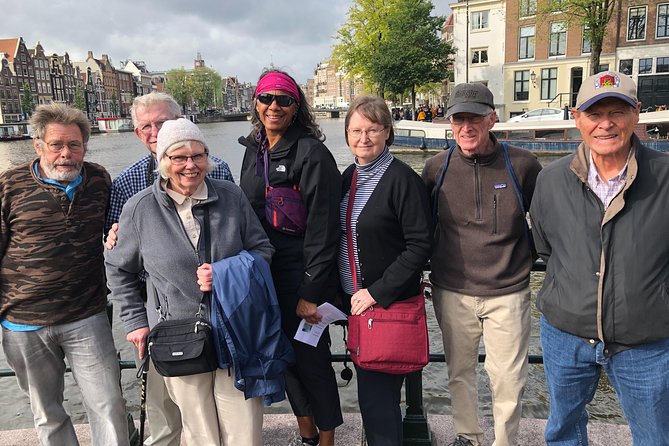
Amsterdam turns darker when you walk with a guide. This Amsterdam in World War II tour connects street corners to what happened from 1940 to 1945, with stops tied to the Nazi occupation and the city’s Jewish experience. The guides are three retired historians, and that changes the whole feel: you get stories grounded in research, not just facts read off a phone.
I also really like that it’s small-group by design—limited to 8 people—so the pace stays slow and you don’t fall behind. One possible drawback: you only visit Anne Frank House from outside; the museum isn’t part of the tour, so if you were hoping to go inside, plan for that separately.
In This Review
- Key points to know before you go
- Walking Amsterdam’s WWII story, block by block
- Your guide setup: retired historians, a small group, and real time to ask questions
- Route logic: how the stop order builds meaning from 1940 to 1945
- Stop 1: the occupation sites around Amsterdam (and why you start here)
- Anne Frank House: outside the museum, inside the context
- Statue of Multatuli: how the city changed after 1945
- Magna Plaza: a former post office tied to executions
- Nieuwe Kerk and Mozes en Aäronstraat: the Jewish street between major landmarks
- Dam Square: the occupation’s public moments and May 1945 remembrance
- The Grand Amsterdam (Sofitel Legend): City Hall, German troops, May 15, 1940
- Ending at the National Holocaust Names Monument: a respectful, lasting final beat
- Price and time: is €-ish value $46.44 really fair?
- Practical tips so the walk feels easy, not stressful
- Should you book Amsterdam in World War II Tour?
Key points to know before you go
- Retired historians lead the walk, and they bring the occupation to life with period context and clear explanations.
- Maximum 8 people keeps it personal, with time for questions and a pace that feels human.
- Mostly free stops, plus a quick Anne Frank House exterior start, make it easier to budget.
- You end at a solemn memorial: the National Holocaust Names Monument, close to the Portuguese Synagogue area.
- A route built for understanding, moving from occupation landmarks to postwar memory across central Amsterdam.
Walking Amsterdam’s WWII story, block by block
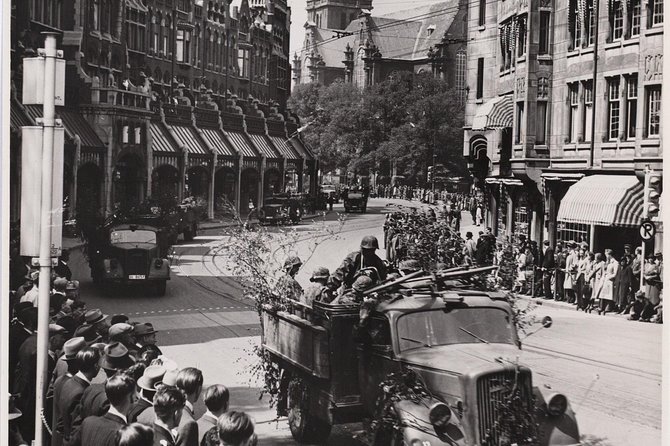
Amsterdam in World War II sounds heavy—because it is. What makes this tour worthwhile is how practical it feels once you’re moving. You’re not sitting in a classroom. You’re watching how the city layout still points you to real events: where people hid, where violence happened, and how official buildings and public squares got pulled into the occupation system.
The core focus is Amsterdam’s Jewish heritage alongside key military and occupation history from the German attack through 1945. That pairing matters. If you only chase battle dates, you miss the daily lives and the specific targeting that made the Holocaust personal and local. If you only focus on one famous story, you miss the broader mechanisms: deportations, forced control, propaganda, and the resistance network that formed in response.
This is also one of those tours where you learn to “read” the streets. A bridge becomes a timeline. A church becomes a lesson about the neighborhoods that sat between power and persecution. Even a well-known square like Dam can feel different once you understand who used it, who suffered there, and which memories survived.
You can also read our reviews of more tours and experiences in Amsterdam.


Your guide setup: retired historians, a small group, and real time to ask questions
The tour runs with guides who are retired historians (three of them, as a group). That’s not just a nice detail—it affects the way you experience the walk. Their role is to explain why these places matter and how they connect, especially around Jewish life and the German occupation of the Netherlands during WWII.
The small cap—8 people—is the other big deal. It means you’re not constantly weaving around strangers or straining to hear over traffic. The walk is described as slow, and that’s crucial when you’re dealing with complex history. When people can actually hear, you retain more. When you don’t have to sprint between stops, you notice details that you’d otherwise blow past.
From the names shared in past group experiences, I’ve seen references to guides like Peter and Ben—both described as passionate, prepared, and careful with pacing. If that kind of teaching style appeals to you, you’ll probably feel at ease asking questions, including the kind that start as “wait, how did that work?” and turn into “so what changed after liberation?”
One more practical benefit: your guide walks with you through central Amsterdam, which helps you stay oriented. This matters in a city where you can turn one corner and feel like you’re in a new planet.
Route logic: how the stop order builds meaning from 1940 to 1945
The way the stops are arranged does more than cover “must-see” places. It creates a storyline: occupation → persecution and refuge → wartime institutions → public violence and remembrance → the shadow these places still carry.
You start in the city center area at Prinsengracht 263 (1016 GV). The morning timing is set for a reason: the tour begins at 9:30 am, and it’s built to finish at the National Holocaust Names Monument at 1018 DP. That end point isn’t random. It’s close to the Portuguese Synagogue area and not far from Amsterdam’s city-center landmarks, so the closing chapter lands in a place designed for reflection.
The walking rhythm is short-stop focused: most stops are around 5–10 minutes, with one longer segment early in the tour. That structure is helpful because it prevents the “big museum fatigue” problem. You’re not trapped inside ticket lines for hours, and you still get meaningful context at each location.
Stop 1: the occupation sites around Amsterdam (and why you start here)
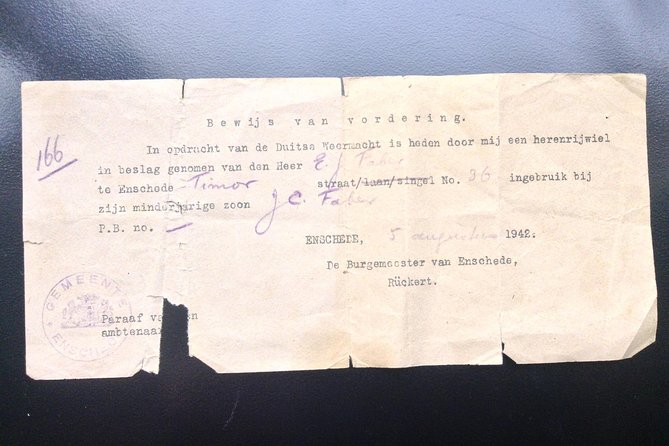
Early on, you spend about 2 hours 30 minutes on important Amsterdam sites and monuments tied to the Nazi occupation (1940–45). The ticket for this part is free, and that’s a big value point: a lot of WWII tours spend money just to “enter” something. This one leans more on location-based history.
Starting with occupation-linked sites before you reach the best-known names works well. It gives you a framework. By the time you’re standing near sites tied to Jewish history, you can connect the dots: how policies changed daily life, what control looked like on the ground, and how the city’s public spaces fit into the machinery of occupation.
The best way to use this part is to think in layers. Ask yourself: What is the role of this street or building in the occupation story? Who had to navigate it? What did ordinary life look like on the other side of a checkpoint, a registry office, or a wartime administrative space?
Anne Frank House: outside the museum, inside the context
You’ll begin outside Anne Frank House and hear the story about the German attack and the Jewish refugees. The tour notes that you do not visit the museum, and the admission ticket isn’t included.
This is where I’d set expectations clearly. If you want the interior exhibits and guided interpretation inside the museum, you’ll need to plan that separately. But there’s also a strong reason to do it from the outside first. It anchors the story in geography. The exterior view helps you understand what it meant to live under threat in a specific urban setting, right where the famous narrative took place.
Also, this stop is brief—about 10 minutes—so it doesn’t swallow the rest of the walk. It functions like a hinge: one minute you’re talking about broader occupation mechanisms, and the next minute you’re focusing on the human-scale reality of hiding and refuge.




Statue of Multatuli: how the city changed after 1945
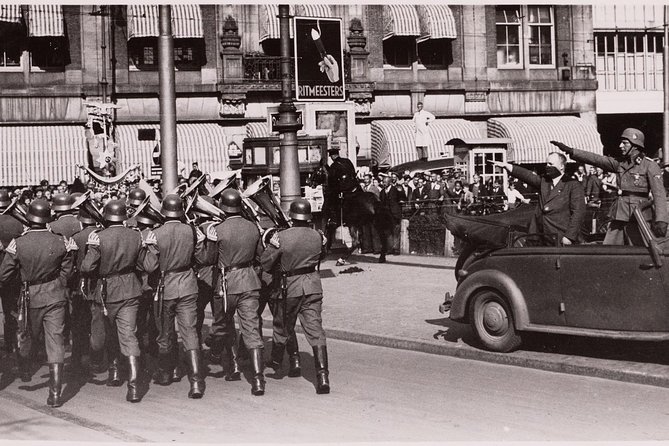
Next you’ll pause at the Statue of Multatuli in Raadhuisstraat and also see a bridge over the Singel. This stop is short—about 10 minutes—and it’s meant to show the city’s shift since the years after WWII.
That might sound like a “rest break” stop, but it’s actually smart history design. It reminds you that Amsterdam didn’t freeze in time at liberation. Places evolved, streets and functions changed, and the city rebuilt. Even memorial thinking has a timeline: what people wanted to remember, and how they wanted to live afterward.
If you like tours that don’t treat the past as a dead exhibit, this moment helps. You can stand there and look at what remains, then ask what changed.
Magna Plaza: a former post office tied to executions

At Magna Plaza, you’re shown a place that used to be the post office of Amsterdam during WWII. This stop is about 5 minutes, ticket free, and it includes a sharp detail: Dutch postmen were executed by the Germans.
That one fact hits harder than you might expect. A post office is normally about messages and delivery—small acts that keep a society connected. In occupation conditions, communication infrastructure can become leverage, surveillance, and forced compliance. When you understand that, the building becomes more than architecture.
Practical tip: take a slow look at the building’s setting. Post office buildings sit at the intersection of movement, bureaucracy, and daily routine. Even if you don’t know Dutch history deeply, this location helps you see how total war can turn normal life into risk.
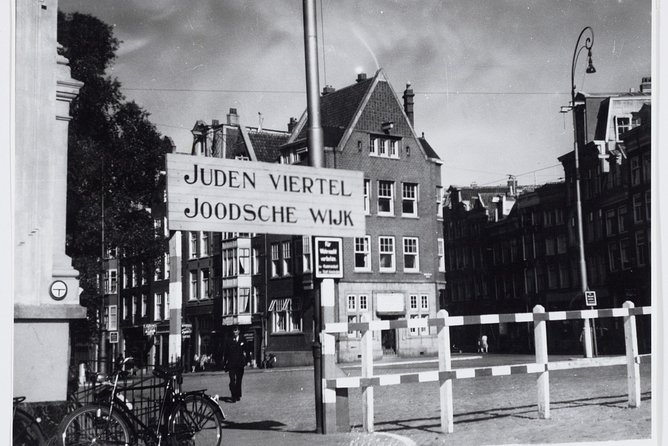
Nieuwe Kerk and Mozes en Aäronstraat: the Jewish street between major landmarks
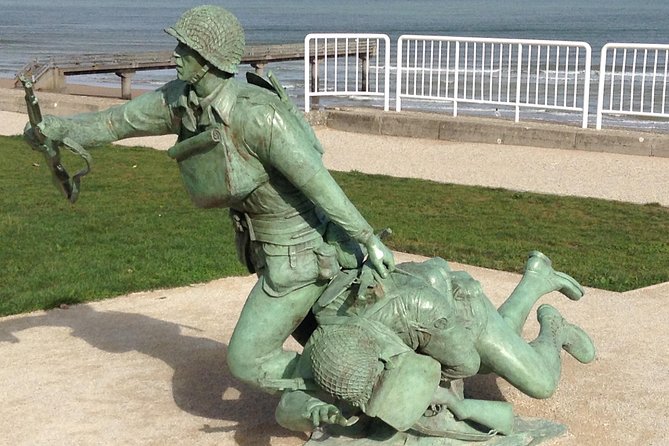
You’ll spend a few minutes at Nieuwe Kerk, about 5 minutes. The tour ties a WWII story to the street between the Royal Palace and the New Church, specifically Mozes en Aäronstraat.
Again, the stop is short, but it matters because it’s spatial. It gives you a mental map of where communities were located relative to the city’s symbolic power points. When you hear the story tied to a street like Mozes en Aäronstraat, you start understanding that Jewish history wasn’t confined to a single “district.” It sat across the city, in specific streets that can be reached today on foot.
If you’re the kind of person who likes to connect names to geography, this is a good stop for you.
Dam Square: the occupation’s public moments and May 1945 remembrance
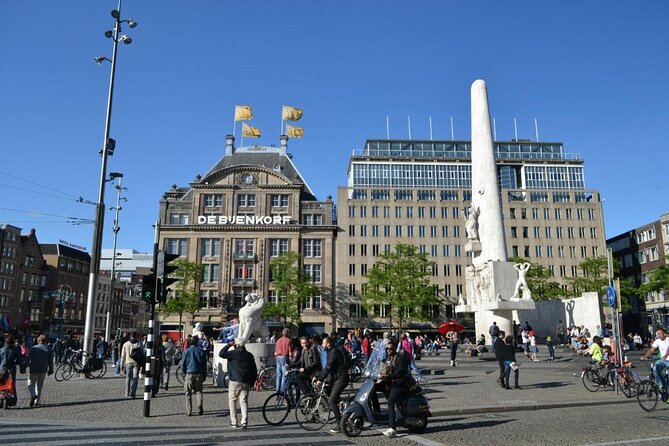
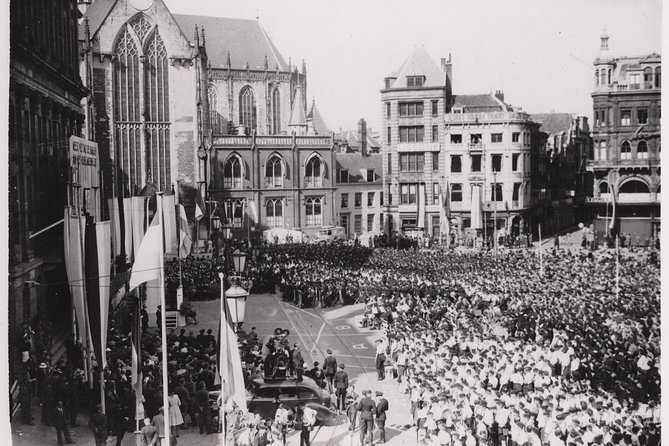
Dam Square is the heart of Amsterdam, and the tour gives it a solid chunk of time—about 25 minutes. It’s also ticket free.
Here’s what the tour highlights at Dam Square:
- A shooting incident on May 7, 1945, two days after the German surrender
- How Dutch volunteers were recruited there for the crusade against Bolshevism
- Remembrance day on May 4 and the story behind the WWII monument
This stop can feel like a lot at once, because Dam Square is historically busy even outside WWII. But the tour’s value is that it gives you a reason to look up and around. You’re not just staring at a big open square. You’re standing in a space where major public events happened—and then listening to how those events reverberate through monuments and commemorations.
My practical advice for this stop: don’t rush photos. Spend a minute grounding yourself—what the square is used for today, then what it meant back then. You’ll get more from the story when you can picture the square as a stage rather than just a sightseeing stop.
The Grand Amsterdam (Sofitel Legend): City Hall, German troops, May 15, 1940
The tour ends its central historical sequence near Sofitel Legend The Grand Amsterdam (often referred to as The Grand Hotel). This stop is about 5 minutes and ticket free.
The key WWII detail here: the hotel building was the City Hall in WWII, and German troops were welcomed by Dutch civil servants on May 15, 1940.
This is one of those moments that gives you pause. It’s not about dramatic combat footage. It’s about decisions made in official roles, at the door of power. That kind of story helps explain how occupation can work: it isn’t only enforced by outsiders. It can also be administered through institutions and paperwork, through visible acts that signal legitimacy.
If you want to understand WWII as something social and administrative, not only military, this is a strong stop.
Ending at the National Holocaust Names Monument: a respectful, lasting final beat
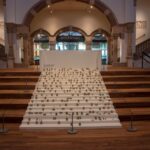
The tour finishes at the National Holocaust Names Monument, close to the Portuguese Synagogue and not far from the city hall area.
Ending here works because it shifts you from “events” to “memory.” You’re not just learning facts. You’re landing at a place designed for reflection—especially appropriate after hearing stories tied to Jewish heritage, refuge, persecution, and loss.
If you’re someone who gets emotional on history tours, this ending is likely to hit. It’s also why I’d schedule it early in the day rather than stacking it right before dinner plans. Let it settle.
Price and time: is €-ish value $46.44 really fair?
The price is $46.44 per person, and the duration runs around 3 hours to 3 hours 30 minutes. The group size is limited to 8, and the format is a walking tour with many free stops.
For me, the value comes from three places:
- Guide quality and structure: retired historians, plus a stop-by-stop route tied to the occupation story.
- Small group size: you’re paying for access to a teacher, not just to be led through streets.
- Low add-on costs: most stops are free, and the only clear ticket-related piece mentioned is Anne Frank House being outside only (and not including museum admission).
Could you do something cheaper? Sure—Amsterdam is made for self-guided wandering. But if you want the “why” behind each location, this tour saves you research time. It also helps you avoid common confusion: Amsterdam has many layers, and without guidance it’s easy to mix eras.
Practical tips so the walk feels easy, not stressful
This tour involves walking at a slow pace, but it’s still a few hours outdoors. Here’s how I’d prepare:
- Wear comfortable shoes. Central Amsterdam streets are friendly, but your feet will do the talking for 3+ hours.
- Bring a layer. Weather in the Netherlands can shift fast, and the tour requires good weather.
- Start with the right expectations about Anne Frank House: it’s outside here, with the museum not included.
- If you’re sensitive to heavy material, plan your evening afterward. This is WWII history, including victim stories.
- If you need it, service animals are allowed, and it’s near public transportation.
And one small mindset tip: you’ll get more from this tour if you treat it like a guided lesson, not a photo scavenger hunt. Let the locations do the heavy lifting.
Should you book Amsterdam in World War II Tour?
Book it if you want Amsterdam to make sense through WWII events—especially the city’s Jewish heritage and the realities of the German occupation. The small-group limit and historian-led format are the deciding factors. You’ll come away with a mental map and a better sense of how public spaces connect to private suffering and public memory.
Skip or adjust expectations if you specifically want museum time at Anne Frank House. This experience keeps you on the street and gives you the context outside, not the inside museum visit. In that case, pair this tour with a separate Anne Frank House museum booking.
If your goal is to understand WWII Amsterdam in a way that feels grounded and human—not just dates—this is a strong choice.