REVIEW · AMSTERDAM
Amsterdam: Fabrique des Lumières Dutch Masters Ticket
Book on GetYourGuide →Operated by Fabrique des Lumières · Bookable on GetYourGuide
Dutch Masters come to life in light. At Fabrique des Lumières in Westergas Park, you’ll watch Vermeer, van Gogh, Rembrandt, and Mondriaan spill across massive walls in a music-and-light show. What I like most is how the artwork feels scaled up to your whole body, and how the soundtrack keeps nudging the story forward as the images change.
One thing to plan around: the show is only shown once per day at your time slot (the first and last slots), and it starts exactly on your booked time.
In This Review
- Key things to know before you go
- Dutch Masters at Westergas Park: a light-and-music art show
- Timing is everything: first/last slot and exact start times
- Room by room: how the Dutch Masters program unfolds
- Seating and comfort: lockers, cold floors, and rules that matter
- Price and value: is the $21 ticket worth it?
- Who will love this (and who might not)
- Practical Amsterdam pairing: timing your day around the show
- Should you book the Amsterdam Dutch Masters ticket?
- FAQ
- How many times is the Dutch Masters exhibition shown each day?
- When should I arrive for my timed entry?
- How long is the experience?
- What is included in the ticket price?
- Is a guide included?
- What items are not allowed?
- Is the venue wheelchair accessible, and is it safe for people with epilepsy?
Key things to know before you go
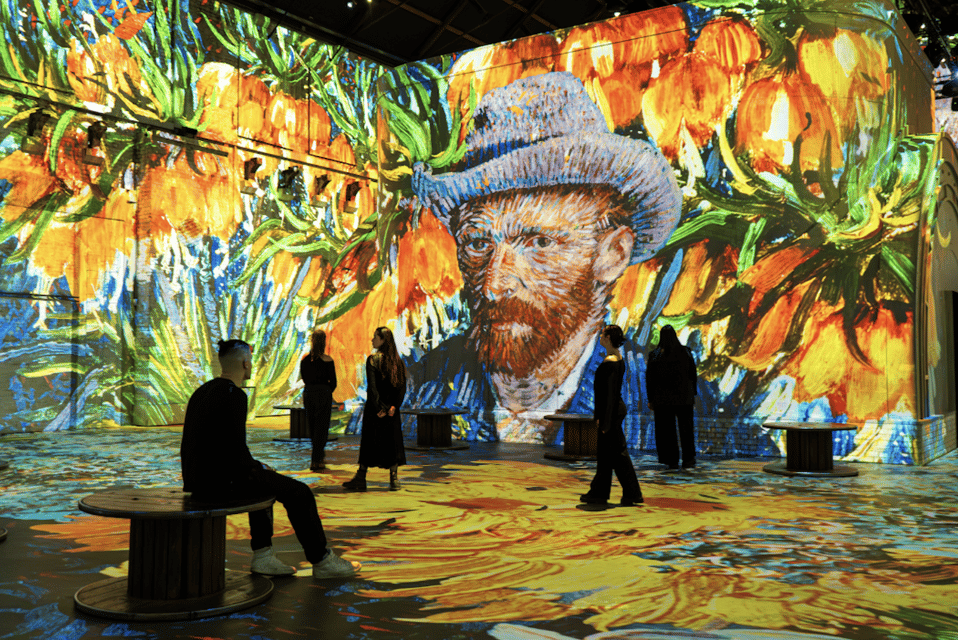
- Timed entry is strict: the exhibition runs once and starts exactly at your booked slot
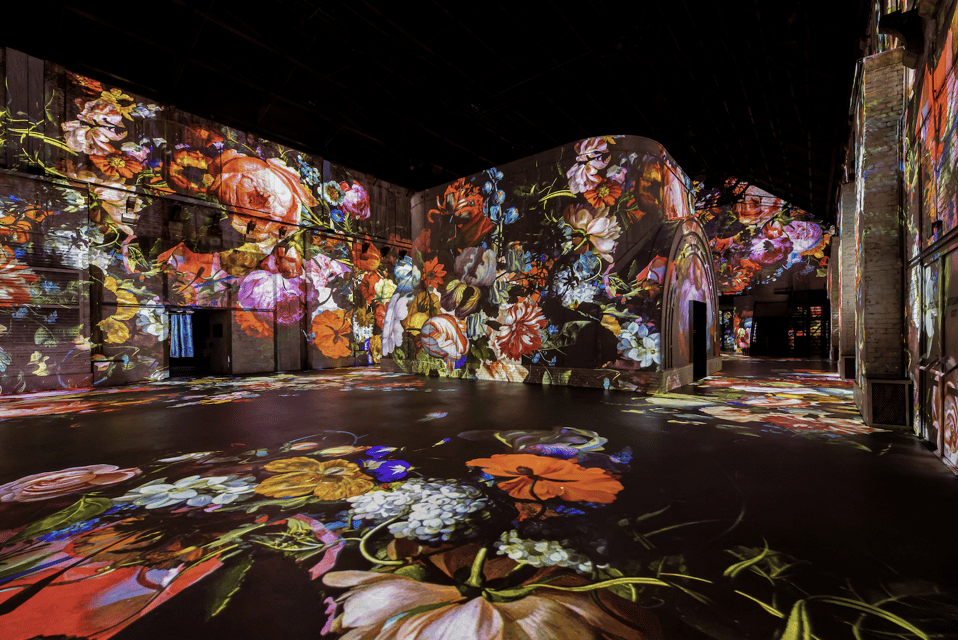
- Big space, big visuals: 3,800m² of projections with walls up to 17 meters high
- Dutch Masters lineup: Vermeer, van Gogh, Rembrandt, plus a shorter Mondriaan program
- Locker use included, but you can’t bring pets, strollers, or large bags
- Floor-level seating is common, so warm layers help if you get cold easily
- The route is room-based, with different themes and effects (including mirror-style rooms)
Dutch Masters at Westergas Park: a light-and-music art show
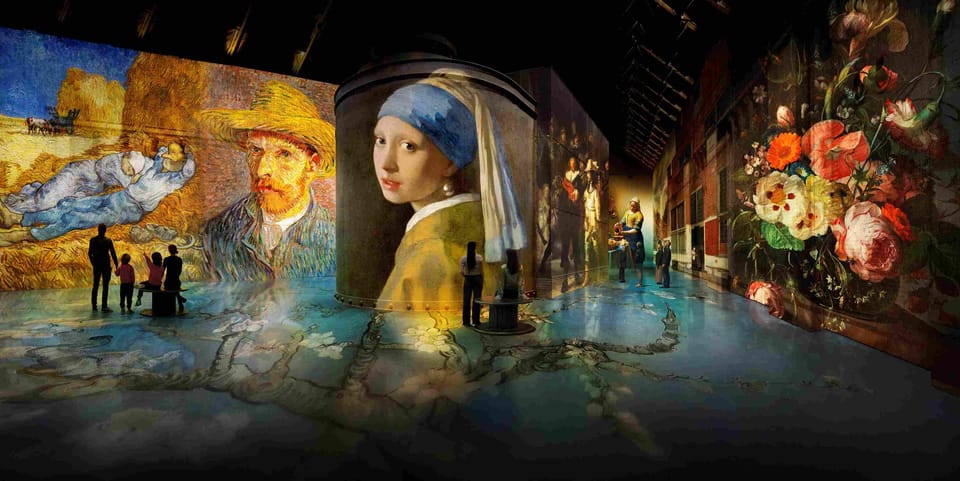
Fabrique des Lumières is built for modern spectacle. You walk into a large industrial space, where the walls rise as high as 17 meters, and the projections spread across roughly 3,800 square meters of surface area. Instead of standing in one spot looking at paintings behind glass, you move through the experience as the images shift in color, scale, and detail.
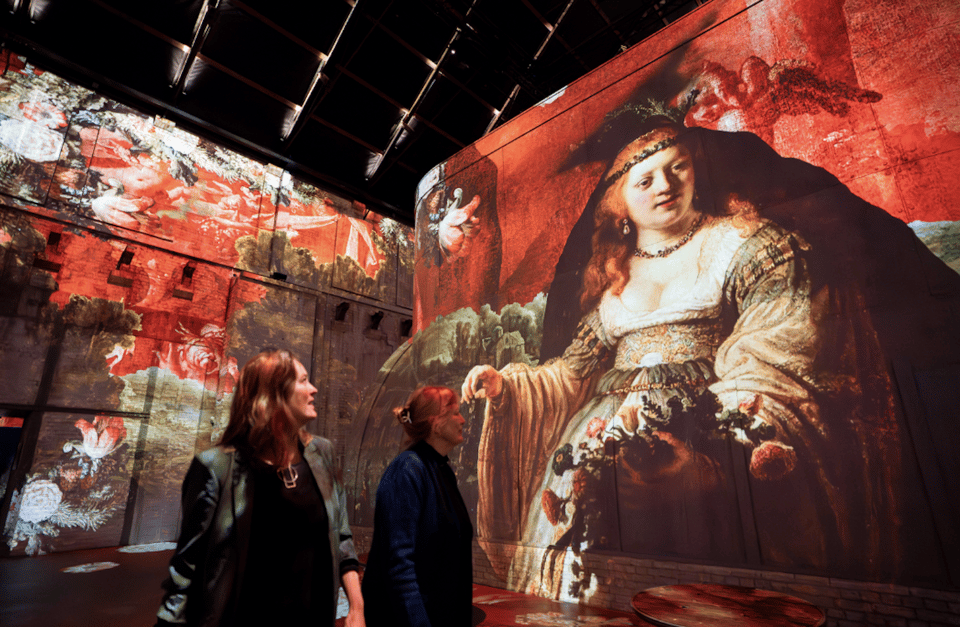
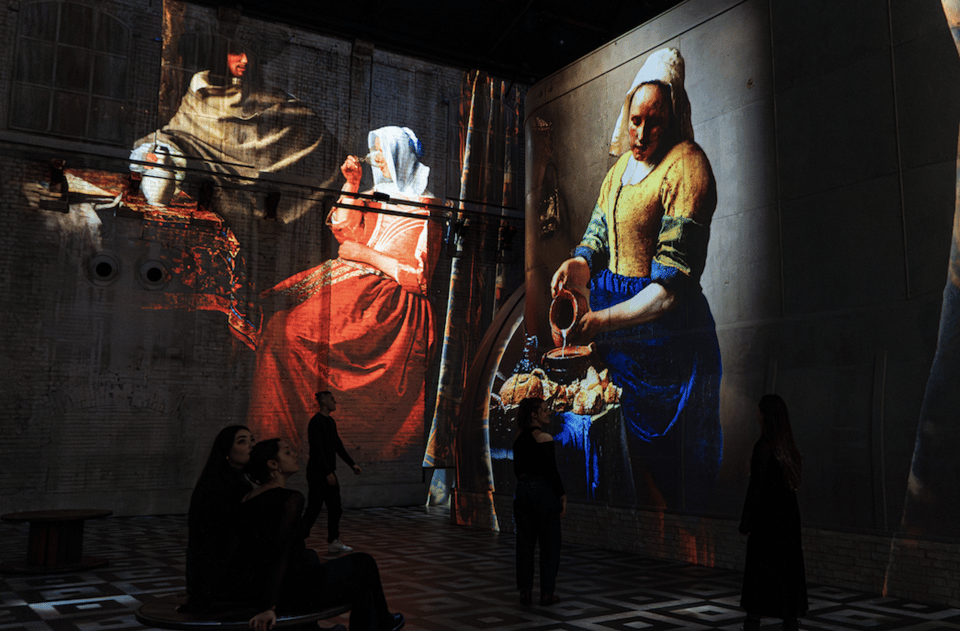
The Dutch Masters program focuses on familiar names from Dutch art history—Vermeer, van Gogh, and Rembrandt—then adds a short follow-up dedicated to Mondriaan. In plain terms, you’re not just seeing copies of artworks. You’re watching the artwork format get reimagined: the colors wash across the room, the brushwork style becomes part of the animation, and the music helps you feel what the scenes are doing.
I especially like when you already know some of these works from museums. The show doesn’t try to replace your museum memories. It gives you a second angle—more emotional, more sensory, and often more immediate than a label-and-wall approach. Several visitors also point out that the music is tightly matched to what’s showing, which matters more than people expect. When the audio sits right with the visuals, the story clicks.
You can also read our reviews of more tours and experiences in Amsterdam

Timing is everything: first/last slot and exact start times
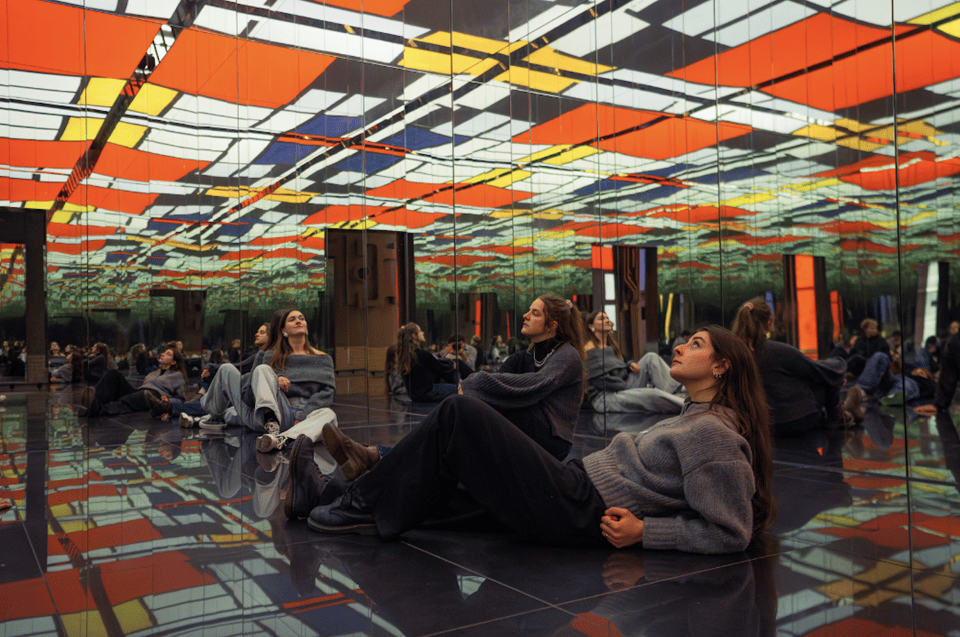
This one has a very specific schedule. The Dutch Masters exhibition is only available during the first and last time slot of the day. And here’s the key detail: your exhibition is shown only once, and it starts exactly at your booked time. Doors open 15 minutes before, so you’ll have a short window to get in, use your locker, and find your viewing spot before the projections begin.
That strict timing is the difference between an effortless visit and a frustrating one. If you’re even a little late, you can miss the start, and you can’t count on a second show to catch up. One practical tip: plan extra travel time and buffer for getting turned around in the park area. The venue sits in Westergas Park, and the building can feel a bit tucked away compared to the more obvious museum landmarks.
If you’re thinking about the best slot, match it to your energy level. A first-slot entry is great if you want the day to feel controlled. A last-slot entry can work well if you prefer a calmer Amsterdam rhythm and don’t mind that you’ll finish just when the center closes after your final show.
Room by room: how the Dutch Masters program unfolds
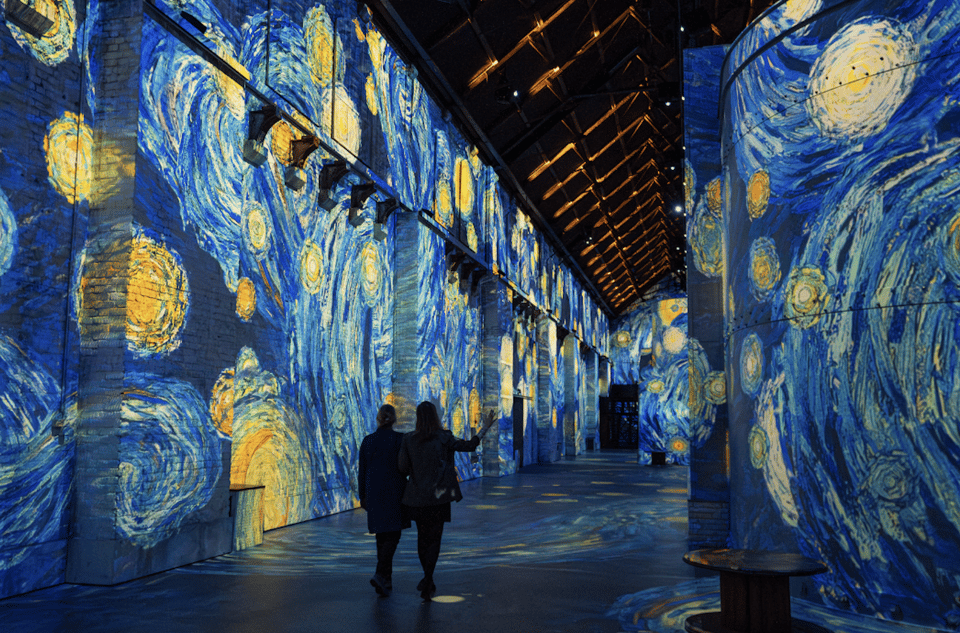
The show is organized as a sequence of areas—each one with its own mood, lighting, and pace. You don’t just watch one long projection the whole time. You’ll move between rooms, and the experience changes as the program shifts from one artwork theme to another.
Here’s what that typically feels like:
- You enter, stow what you need in a locker, and settle into the room as the projections start.
- The artwork expands beyond the canvas. Figures, sky tones, and interior details scale up across the walls, often making you feel like you’re standing inside the scene.
- Music runs throughout, and the visuals tend to change with the soundtrack’s tempo and mood. That combination is a big reason people call it emotional, not just entertaining.
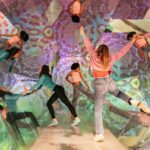
- Several rooms emphasize different visual effects, including mirror-style space that changes how you perceive the light.
After the main Dutch Masters portion, you get a shorter program dedicated to Mondriaan. This segment traces his artistic evolution toward neoplasticism, focusing on his move away from traditional painting rules. The point isn’t only to show the finished look. It’s to show the stepping stones that lead there—how the style becomes more structured, more stripped down, and more about arrangement and color logic.
From a comfort standpoint, be ready for floor-level viewing. Many people sit during the show, and if you’re sensitive to cold, bring warm layers. There’s also a practical note for language: some visitors say it helps to know where to sit to catch the English explanation/format they need, so don’t wait until the last minute to choose your spot.
Seating and comfort: lockers, cold floors, and rules that matter
Fabrique des Lumières includes locker use, which is helpful because the venue doesn’t allow luggage or large bags. You also can’t bring pets or baby strollers. The center is wheelchair accessible, so if you need mobility support, you can plan around that.
What you should take seriously is comfort. Reviews often mention that the show is watched from the floor and that it can be cold inside. If you hate sitting down for long stretches, treat this as a “dress for comfort” moment. Wear warmer socks, consider thermal layers, and bring a light extra layer even in mild weather. Some people also wish for more seating cushioning, which tells you the priority is atmosphere over plush comfort.
Locker strategy is another small but smart move. Since the show starts at your exact slot time, use your locker right away when you arrive. Don’t leave anything urgent to the last minute, because once the experience begins, you’ll want to stay focused on the show rather than scrambling.
Price and value: is the $21 ticket worth it?
At about $21 per person, the Dutch Masters ticket is priced like a museum ticket, but the format is very different. What makes the value work is that you’re buying access to:
- a timed entry slot,
- skip-the-ticket-line entry,
- locker use,
- and a full art-and-music presentation across a huge projection space,
plus the added short Mondriaan segment after the main show.
Is it a bargain? It depends on what you want from art. If you’re looking for long-form curatorial lectures, you won’t get that here. There’s no guide included, and some visitors wish for more description of what you’re seeing. If you want clear background and lots of textual context, you’ll likely prefer a museum.
But if you want art as a multi-sensory experience—color, scale, sound, and movement synchronized into one program—the ticket can feel like a fair trade. One theme in the feedback is that people felt emotionally moved and impressed by the projection quality, including how the music reinforces what’s on screen. There’s also a practical angle: if you’re not able to get into a specific big museum you wanted, this can be a strong backup plan without eating your entire day.


Who will love this (and who might not)
I think the Dutch Masters show fits best when you’re:
- excited by visual effects and live music,
- curious to see famous artists presented in a new way,
- and open to a room-by-room flow instead of a slow, labeled gallery walk.
It also helps if you already know these artists from museums. The show can sharpen your appreciation because you recognize the painting style—but you experience it at a different scale, with different pacing, and with the emotional cue of the soundtrack.
It may not be ideal if:
- you get easily uncomfortable sitting on the floor for about an hour (give or take, depending on the room pacing),
- you need a lot of written explanations while you watch,
- or you have epilepsy, since the experience is listed as not suitable for people with epilepsy.
Also keep in mind that this is a popular attraction, and noise can happen—especially if there are families in the room. If you know you prefer quiet, consider choosing a time slot when you’re less likely to share space with lots of kids, and arrive early so you can pick a viewing spot that helps you stay focused.
Practical Amsterdam pairing: timing your day around the show
Because your entry is timed and your show is only played once per slot, this works best when you build your day around it. I like treating it as a “chapter” in your Amsterdam art plan rather than something you tack on at the end.
If you’re doing museums, you can use it as a warm-up. Some visitors describe it as a great intro before visiting galleries—meaning you leave with a fresher sense of style and composition before you go hunt the originals. If you’re doing a more relaxed day, pair it with a pre- or post-show walk in Westergas Park. There’s also coffee nearby, so you can do a simple rhythm: coffee, then the show, then a slow wander outside to reset.
One small “don’t miss” item: there’s a photo booth at the end of the hall, which is an easy win for anyone who wants a quick souvenir without overthinking it.
Should you book the Amsterdam Dutch Masters ticket?
Book it if you want a memorable, music-driven way to experience Dutch art with huge scale and a clear timed structure. For around $21, you’re getting a lot of show time in one big projection space, plus the Mondriaan follow-up.
Skip it if you mainly want quiet, label-heavy museum learning, or if sitting on a cold floor for the duration sounds like misery. And if epilepsy is a factor, this isn’t the right choice.
If you do book, the best single move is simple: arrive early for your exact slot and plan warm layers. That way, you spend your time watching the light and music do their thing—rather than rushing, shivering, or hunting for a comfortable spot.
FAQ
How many times is the Dutch Masters exhibition shown each day?
The Dutch Masters exhibition is only available during the first and last time slot of the day, and it is shown only once. It starts exactly at your booked time.
When should I arrive for my timed entry?
Doors open 15 minutes before the exhibition. Arrive directly at Fabrique des Lumières and plan to be there in that window.
How long is the experience?
The experience is listed as 1 day, and the show itself is commonly experienced as about an hour in practice, with additional time to move through the rooms.
What is included in the ticket price?
Your ticket includes timed entry to the Dutch Masters at Fabrique des Lumières and locker use.
Is a guide included?
No guide is included.
What items are not allowed?
Pets, baby strollers, and luggage or large bags are not allowed.
Is the venue wheelchair accessible, and is it safe for people with epilepsy?
It is wheelchair accessible. The experience is not suitable for people with epilepsy.