REVIEW · AMSTERDAM
Amsterdam: Cultural Highlights in English/German/Italian
Book on Viator →Operated by Amsterdamliebe · Bookable on Viator
Amsterdam can feel like a puzzle. This walk links the big landmarks and the side-stories in between, with a guide who makes the streets feel logical fast. I like the small-group setup (max 15) and the free-admission stops, so you can spend your money on food instead of entry lines.
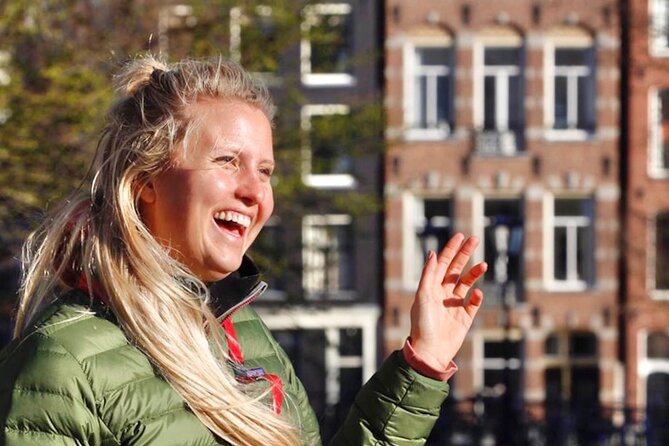
I’m also a fan of how the guide approach goes beyond dates and buildings. Guides like Deborah, Justin, Josh, Stephanie, Marina, Justus, and Noeme are described as organized, paced for real people, and happy to answer questions—plus you get recommendations that can actually last your whole trip. The tour may be listed as German here, so check your language when you book.
One thing to plan for: it’s still a walking tour. You’ll cover about 3 to 4 kilometers in roughly 2 hours, and if weather is poor the tour may switch dates—so wear good shoes and bring water. Also, one review noted that an Anne Frank House-related moment didn’t run as expected in their case, which can sting if that’s a top priority for you.
In This Review
- Key highlights worth factoring in
- A 2-hour walking loop that helps you read Amsterdam
- National Monument and Dam Square: where Amsterdam’s story starts
- Beurs van Berlage and Nieuwe Kerk: wealth and belief in walking distance
- Multatuli’s statue and Magna Plaza: ideas and reuse
- Westerkerk and the Jordaan link you’ll notice for the rest of the day
- Anne Frank statue and the limits of what’s guaranteed
- Gay Monument and the 9 Straatjes: history you can walk right into
- Spui and the Begijnhof: a quiet corner tied to the Reformation
- Language, group pace, and how to get the most out of your guide
- Price and value: why $33.88 can make sense in Amsterdam
- Should you book Amsterdamliebe’s Cultural Highlights tour?
- FAQ
- How long is the Amsterdam cultural highlights walking tour?
- How far will I walk during the tour?
- What languages are available?
- Are there admission fees at the stops?
- Does the route include the red-light district?
- Will the guide take us to a coffee shop?
- Is this tour suitable for children?
- How many people are in the group?
- What happens if the weather is bad?
Key highlights worth factoring in
- Free admission at every stop so your ticket price stays focused on the guide
- Up to 15 people keeps questions from getting lost in the crowd
- A guided storyline across the city from Dam Square to the 9 Streets
- Jordaan-linked church stop at Westerkerk gives context for a whole neighborhood
- Anne Frank and LGBTQ+ monuments connect history to what Amsterdam shows today
- Shopping tips near the end help you turn the 9 Straatjes area into a useful detour
A 2-hour walking loop that helps you read Amsterdam
This is the kind of tour that works best on Day 1 or Day 2. You start at the National Monument and finish back near the same hub, so you don’t end the day feeling stranded or turned around. Since you walk about 3 to 4 kilometers, you’ll see a lot without fighting bikes, trams, and traffic.
The tour is also designed for comfort and flow. The plan is a steady set of short stops, not long museum marathons, and it avoids the red-light district except for passing on the southern side. That makes it a solid choice if you want Amsterdam’s culture and street texture without that specific focus.
And yes, it’s a mobile-ticket tour. That matters because you’re not wasting time at ticket counters before you even start.
You can also read our reviews of more tours and experiences in Amsterdam.

National Monument and Dam Square: where Amsterdam’s story starts
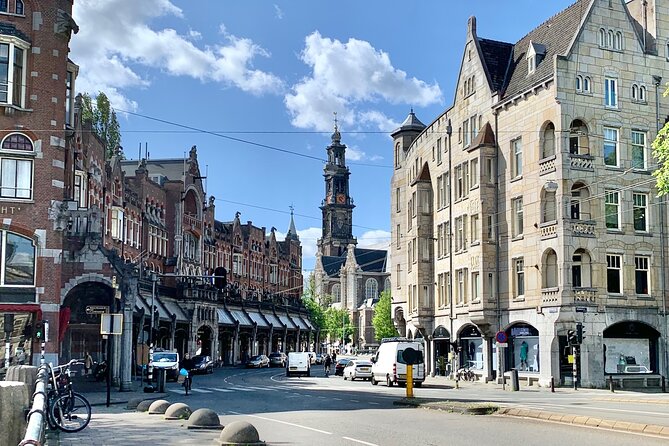
You kick off at the National Monument near Dam, a natural way to begin because it anchors the center of the city. Even if you’ve seen photos before, the guide’s framing helps you understand why this spot keeps showing up in Dutch public life.
Then you head into Dam Square, where the guide connects the origin of Amsterdam to the way the city formed around this area. You also get to explore key buildings tied to the old town-house/royal palace theme, which is useful because Dam Square isn’t just a pretty postcard spot—it’s the stage for centuries of power and administration.
This first stretch is short, but it sets the tone. You’ll know what questions to ask as you move on, like how trade, governance, and city planning shaped what you see today.
Beurs van Berlage and Nieuwe Kerk: wealth and belief in walking distance
Next up is the Beurs van Berlage area, a stop that helps explain how Amsterdam grew into one of the world’s wealth engines during the Golden Era. This is a good point in the tour to ask how money moved, how institutions formed, and why a city invests in its public face.
Right after that, you visit the Nieuwe Kerk. The payoff here is learning what the church meant for Amsterdam’s development, not just admiring the exterior. It’s a useful contrast to the wealth focus of the Beurs van Berlage—same city, different drivers.
In practice, these two stops work because they give you two lenses at once. If you’ve ever wondered why Amsterdam looks the way it does—clean lines, strong architecture, formal squares—this pairing shows you the logic.
Multatuli’s statue and Magna Plaza: ideas and reuse
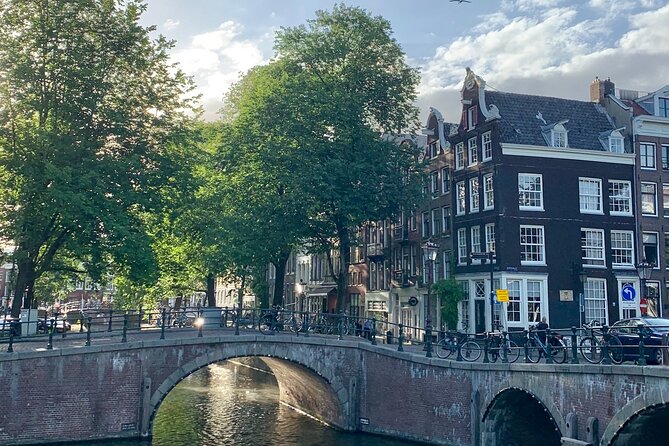
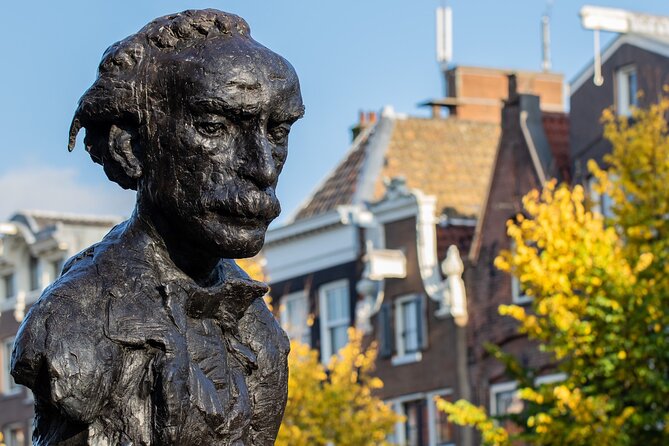
You’ll then meet a statue of Multatuli and hear how Amsterdam connects to the colonial era through one of the Netherlands’ most important books. This is the kind of stop that turns a statue from a photo target into context for how literature influenced public conversations.
From there, you move to Magna Plaza, which may look like just another polished building from the outside. The guide explains the importance of its earlier life as a former post office, and that theme matters more than you’d expect: Amsterdam keeps layering older infrastructure into modern routines.
I especially like stops like this because they teach you to read buildings for function. It’s not about memorizing dates. It’s about noticing how the city reuses space and how that affects what you experience on foot.
Westerkerk and the Jordaan link you’ll notice for the rest of the day
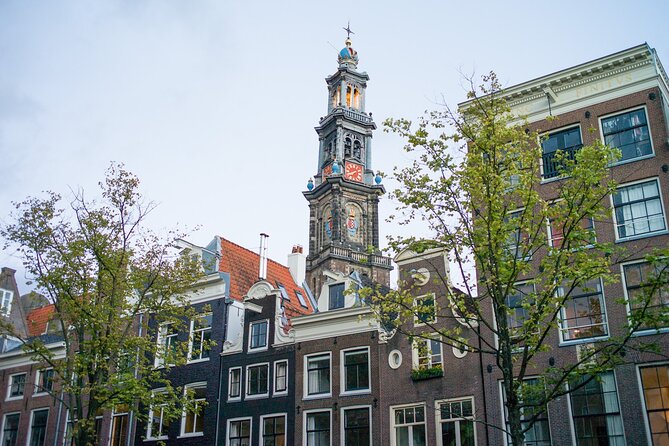
One of the strongest “place-to-neighborhood” connections on this route is Westerkerk. The guide points out that it’s the biggest church of Amsterdam, and then you get the historic connection with the Jordaan area.
This is a stop that pays off after the tour. Even if you don’t go deep into Jordaan immediately, you’ll understand why certain streets and landmarks feel connected, and why people talk about this area the way they do.
If churches in general aren’t your thing, don’t skip it. The value here is the neighborhood context. If you like architecture and city geography, it’s even better.




Anne Frank statue and the limits of what’s guaranteed
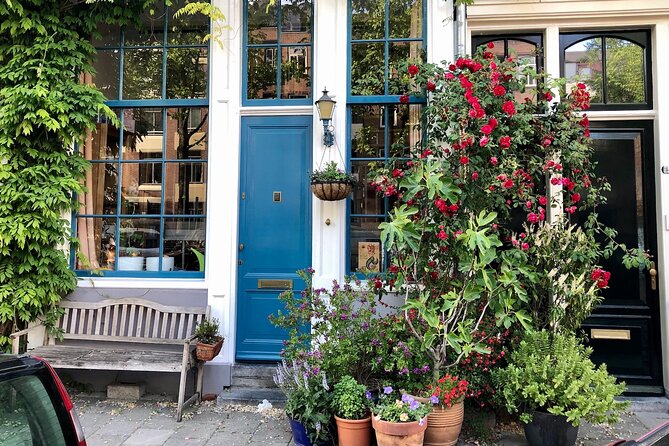
Next is the statue of Anne Frank. The guide uses it as a starting point for Jewish history in Amsterdam and how Anne Frank and her family experienced their time here.
This stop has emotional weight, so go in with a bit of patience and let the guide do the connecting work. It also helps to know this tour doesn’t mention a full museum visit in the standard itinerary you’re following—it’s specifically a statue stop—so if you’re planning your trip around a particular Anne Frank House visit, be prepared that access plans can vary.
One review noted that an Anne Frank House visit didn’t happen smoothly for their group, with no replacement or reimbursement mentioned. I can’t promise how any specific day will go, but if that’s a must-do, pair this tour with a flexible plan for later so you’re not relying on this stop alone.
Gay Monument and the 9 Straatjes: history you can walk right into

Then you hit the Gay Monument, a stop that explores the history of Amsterdam’s LGBTQ+ scene. This is another context moment: it helps you connect modern street culture to the longer story of rights, community, and visibility.
From there, you reach the 9 Little Streets, also known as the 9 Straatjes. The guide doesn’t treat it like a random shopping detour. You get shopping tips so you can actually use this area after the tour ends, instead of wandering for 30 minutes and guessing.
This part is also where your energy returns. You’re done with the main information arc, so you can switch modes: snack, browse, and explore at your own pace while keeping the tour’s background in mind.
If shopping matters to you, arriving with a plan helps a lot. If shopping doesn’t matter, you can still enjoy the streets as a walk-through neighborhood experience.
Spui and the Begijnhof: a quiet corner tied to the Reformation
The final notable stop is Spui, with a visit connected to the Begijnhof. Here, the guide explains reformation-era themes and how the Begijnhof fits into Amsterdam’s development.
You may also be encouraged to try spotting the hidden church inside. Even if you don’t catch every detail, this is the kind of stop that reminds you Amsterdam isn’t only canals and big squares. There are small, tucked-away places where history lived and where the city’s spiritual and social life shaped daily routines.
This also works well as a finale because it’s calmer than some of the earlier center-stage locations. You get closure, not just a rush to the next photo.
Language, group pace, and how to get the most out of your guide
This tour is offered in multiple languages, but the one you’re looking at is noted as German. If you don’t read or listen comfortably in German, double-check the language option at checkout so you’re not stuck during the explanations.
That said, the guide quality here matters a lot. Reviews call out guides who took their time, explained with clear structure, and made sure the group could keep up. One review even highlighted the pace being adjusted for the slowest person, which tells you the tour isn’t built for speed-walking.
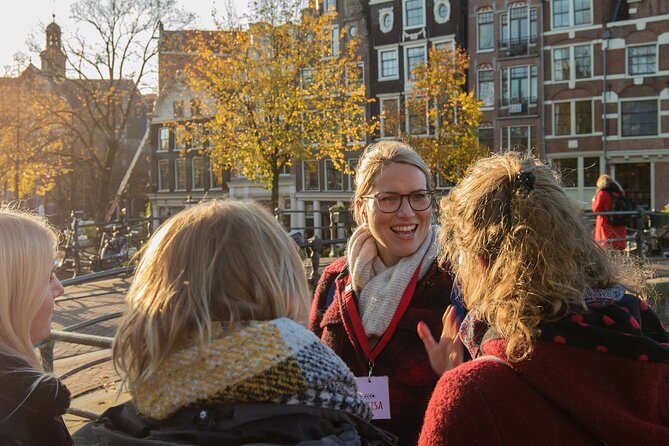
To get the most out of it, bring your questions. This is a good setup for asking why a building looks the way it does, how a neighborhood gained its identity, or how a symbol connects to a broader story. Guides such as Justin and Stephanie are described as answering and sharing practical tips, not just reading a script.
If you’re traveling with kids, this can be a good “starter” activity. It’s short stops, walking-based, and the flow is easy to follow.
Price and value: why $33.88 can make sense in Amsterdam
At $33.88 per person for about 2 hours, the real value is what you don’t pay extra for. All the sights on this route can be visited for free during the tour, and the guide is included in that price. That means you’re paying mainly for direction, context, and the ability to see more in less time.
Also, it’s a small group. In a city where big walking groups can turn into silent line-walks, max 15 people is a sweet spot for interaction. You’re more likely to hear your own questions answered, and you don’t feel like a single face in a crowd.
You’ll also cover about 3 to 4 kilometers. That’s a manageable distance for a first orientation walk, especially if you’re balancing this with canal cruises or museum tickets later.
Should you book Amsterdamliebe’s Cultural Highlights tour?
Book it if you want an efficient first orientation and you like street-level context more than heavy museum time. The mix of Dam Square, Golden Era wealth themes at Beurs van Berlage, church and neighborhood links at Westerkerk, plus the Anne Frank and LGBTQ+ monument stops gives you a fuller Amsterdam picture than a landmarks-only stroll.
Skip—or be cautious—if your top priority is a specific museum or a timed ticket inside the Anne Frank House itself. This tour’s listed focus is the Anne Frank statue, and at least one review described a missed Anne Frank House moment on their day. In that case, plan your Anne Frank House visit separately with your own flexibility.
Also, plan for the fact that it’s a walking experience. Comfortable shoes and water aren’t optional if you want to enjoy the stories without rushing.
If your travel style matches: guided clarity, short stops, free sights, and a helpful guide with real recommendations, this is a strong way to start.
FAQ
How long is the Amsterdam cultural highlights walking tour?
It runs for about 2 hours.
How far will I walk during the tour?
You’ll walk roughly 3 to 4 kilometers total, so comfortable shoes matter.
What languages are available?
It’s offered in English, German, and Italian, but the specific tour listed here is in German.
Are there admission fees at the stops?
No. You won’t have to pay admission fees during the tour, and the sights can be visited for free.
Does the route include the red-light district?
It does not include the red-light district. You’ll only pass it on the southern side.
Will the guide take us to a coffee shop?
No, the coffee shop will not be visited.
Is this tour suitable for children?
Yes, it is suitable for children.
How many people are in the group?
The maximum group size is 15 travelers.
What happens if the weather is bad?
This tour requires good weather. If it’s canceled due to poor weather, you’ll be offered a different date or a full refund.