REVIEW · CANAL CRUISES
Amsterdam: Canal Cruise on a Wooden Refugee Boat
Book on GetYourGuide →Operated by Rederij Lampedusa · Bookable on GetYourGuide
Canal cruising with refugee stories hits different. I love the way a wooden boat with real refugee roots turns Amsterdam’s waterways into something personal and urgent, and I also love that guides have refugee backgrounds and share their own journeys in plain, human language.
One thing to plan for: the boats are open. If it’s wet out, you’ll feel it, so bring rain gear and expect a real boat ride, not a cozy indoor one.
In This Review
- Key takeaways before you go
- From Mediamatic Pier to a Mediterranean Refugee Boat
- The 90-Minute Route: Canals, the Amstel, and What You’ll Actually See
- The Storytelling That Changes the Tour: Lived Experience at Boat Level
- The Refugee Boat History: From Egypt’s Fishing Boat to Amsterdam Canals
- What Makes the Conversation Work (and What to Ask)
- Price and Value: Why $41 Can Feel Cheap for What You Get
- Weather Reality: Open Boats, Rain or Shine, and What to Bring
- Who This Tour Suits Best (and Who Might Want to Skip It)
- Should You Book This Wooden-Boat Canal Cruise?
- FAQ
- How long is the Amsterdam canal cruise?
- Where do I meet the boat?
- Is the tour guided in English?
- What kind of boat is it, and is seating provided?
- Is the boat open-air, and do they sail in the rain?
- Can I bring snacks or drinks?
- What should I bring with me?
- Do they offer free cancellation or pay later?
Key takeaways before you go
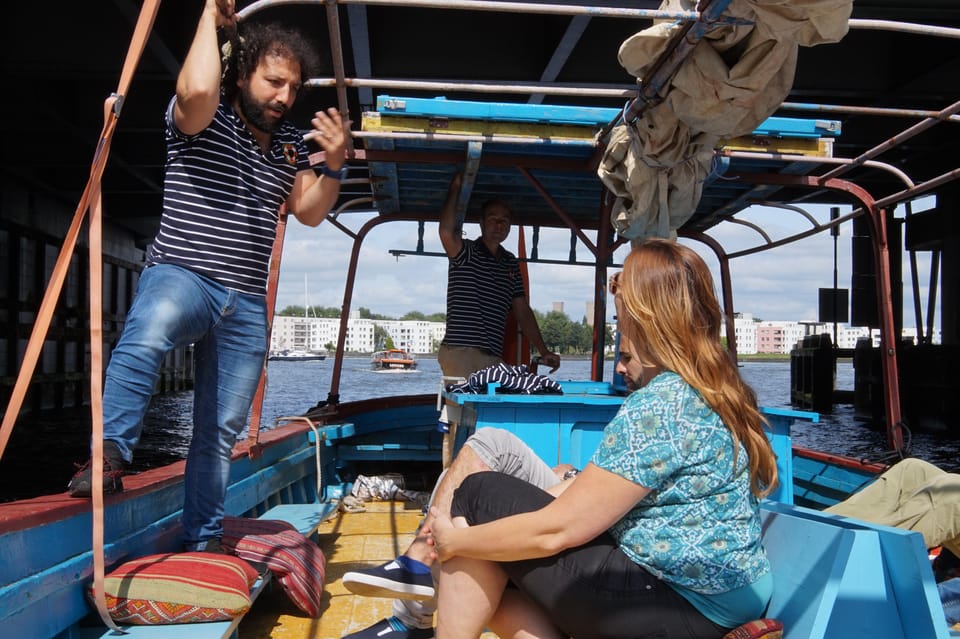
- A symbolic wooden boat that once ferried people across the Mediterranean, now used to meet and educate in Amsterdam
- Refugee-background storytellers trained to become captains and guides, so you’re hearing lived experience, not a script
- 90 minutes of canals or the Amstel with room for conversation, not just one-way narration
- Migration history built into the route, including stories tied to smugglers and refugee boats that later ended up in Amsterdam
- Space for questions, which makes the tour feel like an honest dialogue instead of a lecture
From Mediamatic Pier to a Mediterranean Refugee Boat
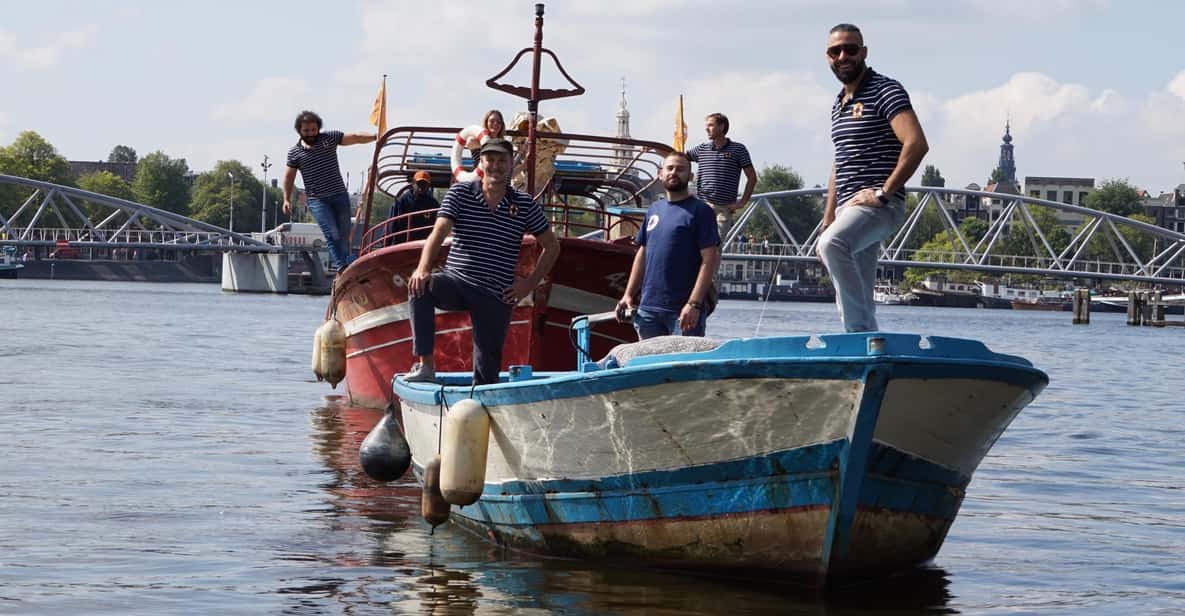
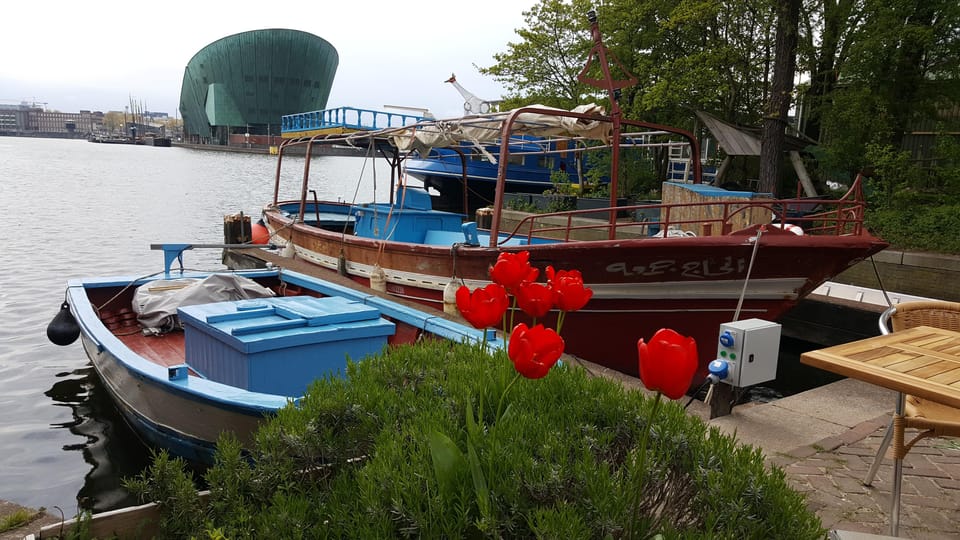
Your tour starts at Mediamatic (Dijksgracht 6), about a 10-minute walk from Amsterdam Central Station. The spot is easy enough to find: pass the glass house, take the small path, and you’ll see the boats in the water.
Mediamatic is more than a random meeting point. It’s an art center with a café and a vegan restaurant. If you’re early, you can grab a drink or something to eat and get your bearings fast before boarding. You can also bring snacks and drinks for the ride, which helps if you know you get hungry during tours.
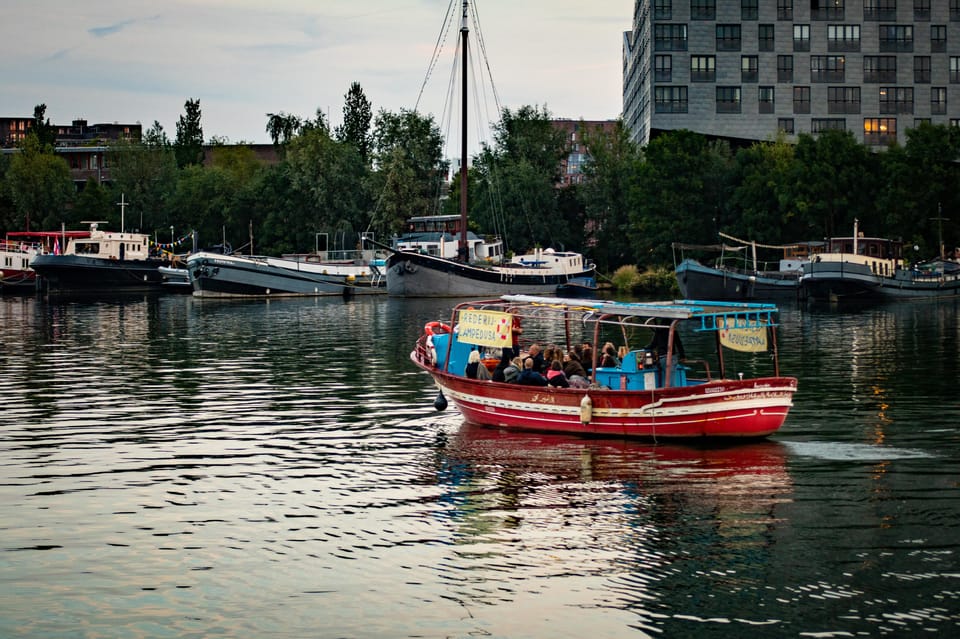
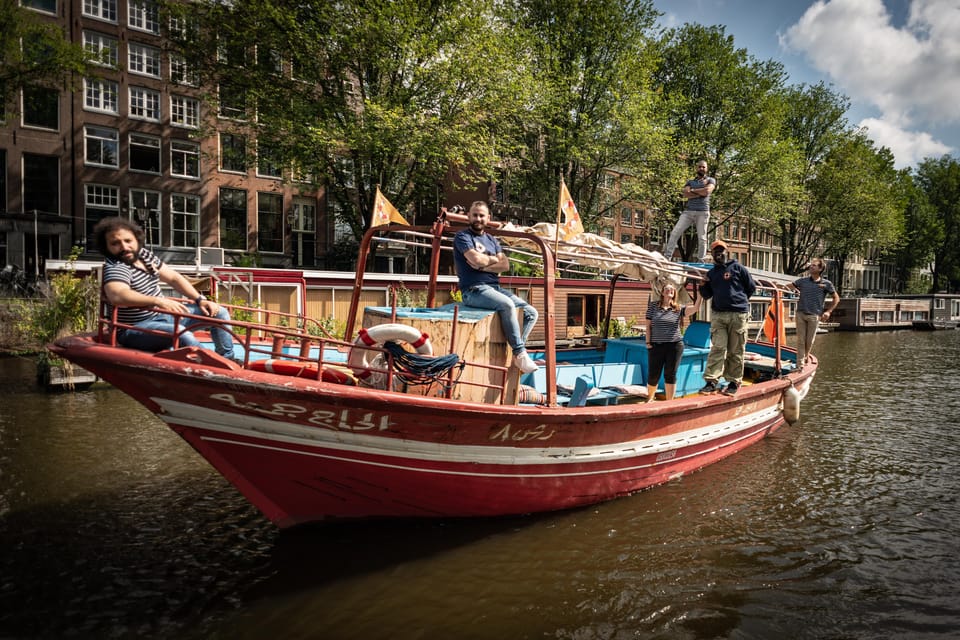
When you step onto the boat, you’ll notice it right away: this isn’t a sleek tourist vessel. It’s a colorful wooden boat with pillows to sit on. That matters, because it frames the whole experience. You’re not just touring the canals. You’re on a boat built around memory and meaning.
You can also read our reviews of more boat tours in Amsterdam

The 90-Minute Route: Canals, the Amstel, and What You’ll Actually See
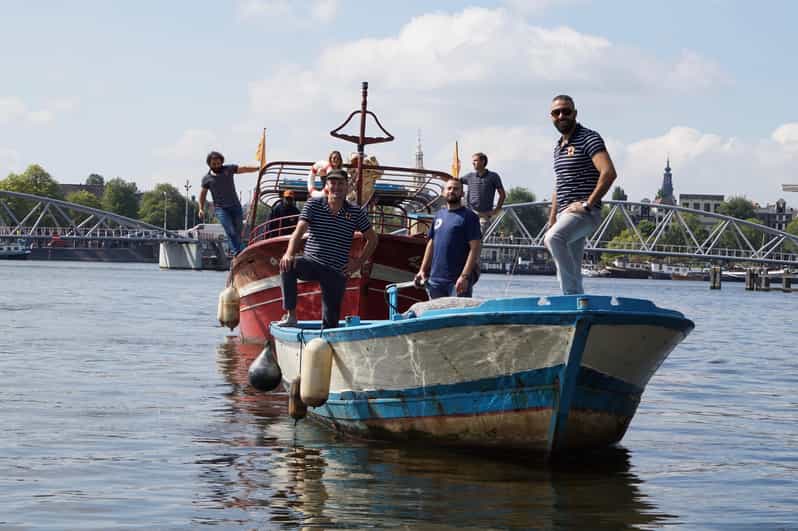
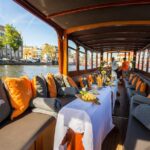
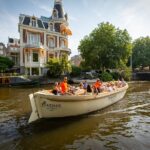
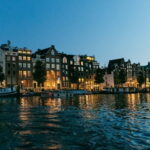
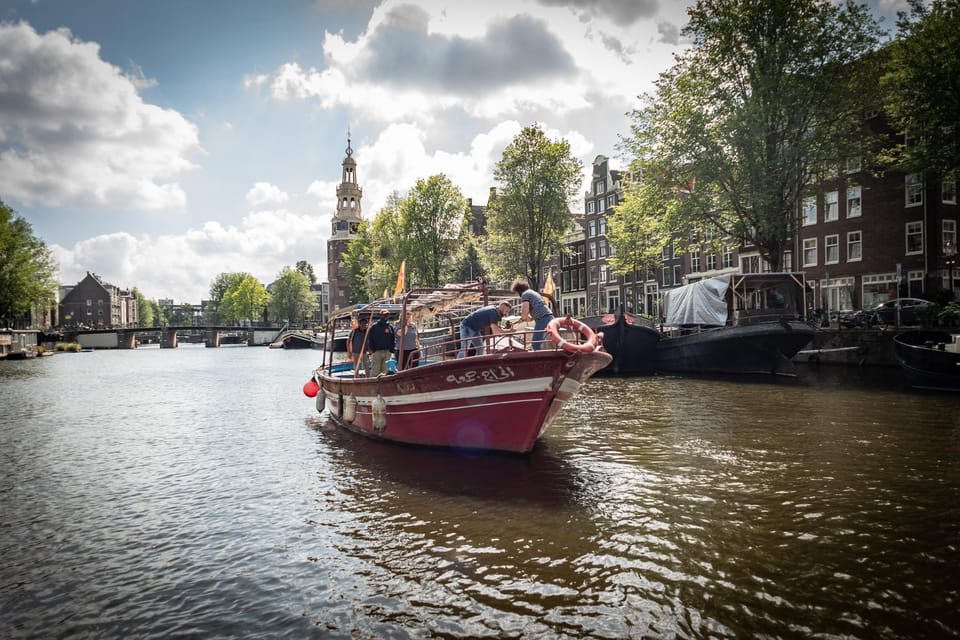
The sailing time is about 90 minutes. Depending on the day and route, you’ll go through Amsterdam’s canals or along the Amstel River. Either way, the format stays the same: you’re cruising through a city of bridges, narrow streets, and canal homes that look postcard-perfect from the water.
Here’s the practical point: Amsterdam canals can make you feel like you’ve seen everything fast—until a story changes how you look at them. With this tour, the narration connects what you’re seeing on the water to how Amsterdam has been shaped by newcomers over time. You’ll hear about the city’s success across the centuries, and then you’ll watch the view through a different lens: migration as a continuing force, not a one-time event.
You also get the kind of movement that helps you understand the city. From a canal deck, you grasp scale quicker than from a street sidewalk. You see how neighborhoods connect, and you realize how central the waterways are to everyday life here.
If you want canal views with more meaning than photos, this is built for you.
The Storytelling That Changes the Tour: Lived Experience at Boat Level
This is the core of the experience, and it’s exactly what makes it different from typical canal cruises.
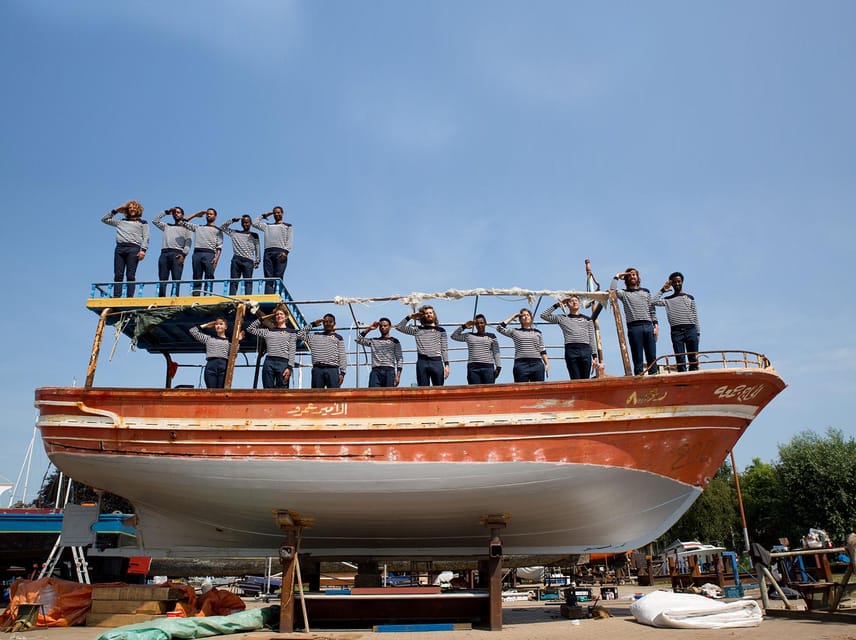
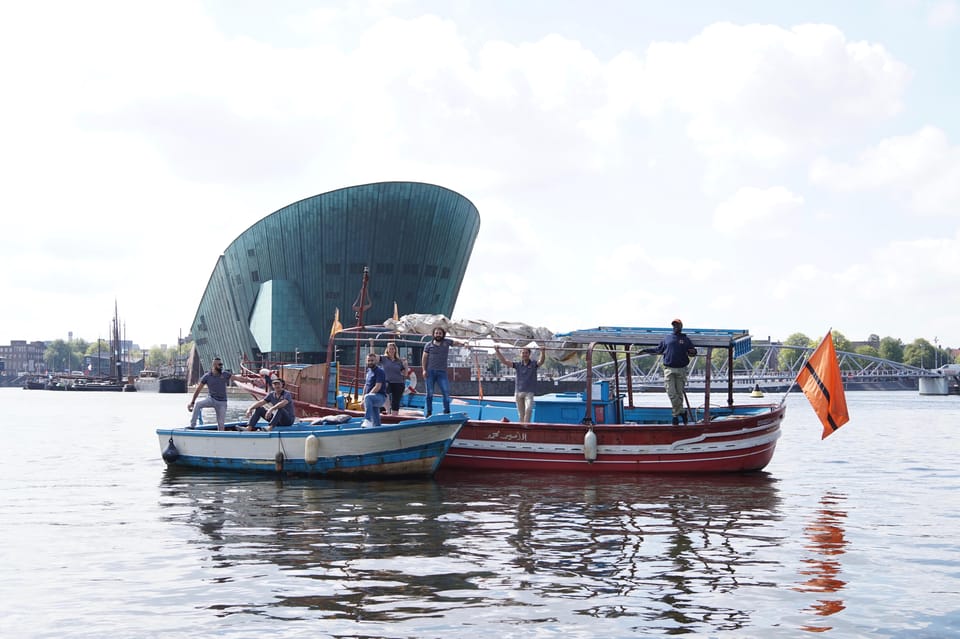
The guides are storytellers with refugee backgrounds. They’re part of Rederij Lampedusa, which works as a social enterprise and integration program. The company describes the operation as a meeting place and a collective program, and you feel that tone on the boat: you’re not watching from above; you’re traveling with people who are sharing their real journeys.
During the ride, the story content shifts between personal experiences and historical context. Some of it is light, because human stories include humor. Some parts can be heavy, because the reality behind migration is heavy. That balance is handled as a conversation, not as a lecture. There’s time for reflection, and—importantly—there’s time for questions.
That question time is not an afterthought. You’ll be able to ask things as you go, and the guide can connect answers back to what’s happening outside the window. That makes the whole thing feel more like a dialogue than a performance.
The Refugee Boat History: From Egypt’s Fishing Boat to Amsterdam Canals
One of the most striking pieces of the story is how migration history is tied to actual boats.
You learn about the journey of a fishing boat from Egypt, used by smugglers to transport dozens of people across the Mediterranean. That detail matters because it pushes the conversation past vague headlines. It’s not just about the idea of migration—it’s about the specific routes and methods that people used to survive and escape.
The tour also explains how two of these original refugee boats eventually ended up in Amsterdam’s canals. That’s the moment where the symbolism clicks into place: the wooden boat you’re sitting on becomes a physical link between the Mediterranean story and the Amsterdam present.
Even if you already know some migration history, you’ll likely appreciate how the tour turns it into something you can feel while you’re moving through the city. You’re seeing the canal walls and house facades, but the story is about human movement and what cities do with arrivals.
What Makes the Conversation Work (and What to Ask)
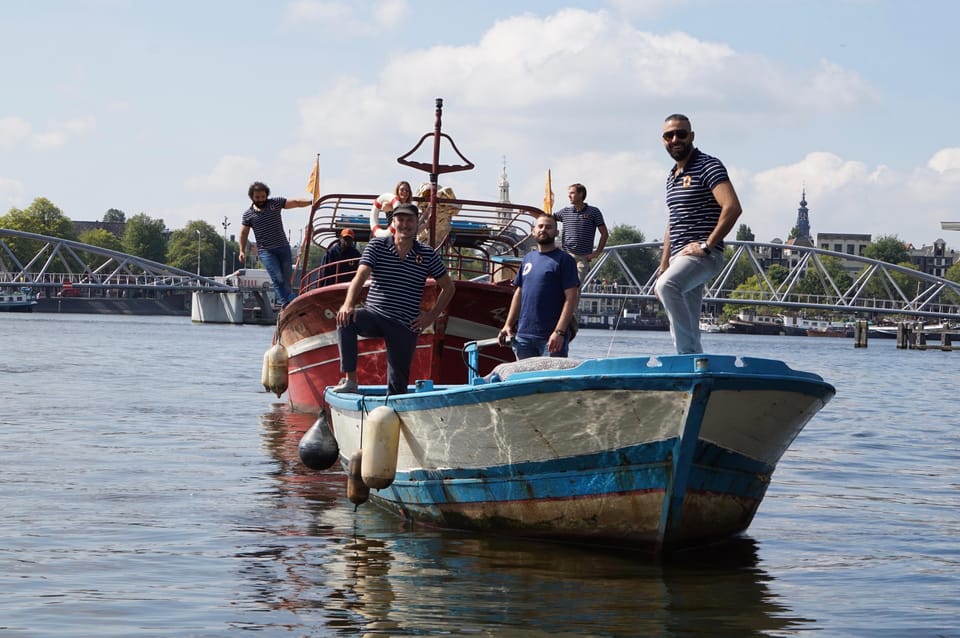
I like tours where you can talk back. This one deliberately builds in time for meaningful conversation and real interaction. That gives you control over what you leave with.
A useful approach for your questions is to focus on what connects the story to the city you’re seeing. For example:
- How does the guide’s personal journey connect to the wider history of migration?
- What does it mean to Amsterdam that newcomers keep enriching the city?
- How do the refugee boats and the canals of Amsterdam connect, practically and emotionally?
If you want a more practical takeaway, ask about what life in Amsterdam looked like after arrival—what felt easy, what felt hard, and what changed over time. If you want history, ask about the Egyptian fishing boat story and how those boats reached Amsterdam. If you want to understand the present, ask how the program supports storytellers who become captains and guides.
One detail worth noting: guides can bring both humor and emotion. So if you’re the type who worries about getting stuck in a heavy lecture, don’t. The guide handling keeps it human.
And yes, in at least one recent sailing, a guide named Yusuf was described as charming, intelligent, and reassuringly confident on the boat. That kind of calm matters when you’re sitting on an open vessel and sharing personal stories at the same time.

Price and Value: Why $41 Can Feel Cheap for What You Get
At about $41 per person for roughly 90 minutes, you’re paying for more than a scenic ride. You’re paying for:
- a wooden boat with historical meaning,
- guides with refugee backgrounds sharing personal narratives,
- and a real social enterprise where education and integration are part of the mission.
Let’s be honest: standard canal cruises can also be around this range (or higher) and still feel like a one-way history slideshow. Here, the experience has a thicker purpose. You’re not only learning facts—you’re spending time in a group setting where you can ask questions and get answers grounded in lived experience.
The value also shows up in the small comforts that make the ride smoother: pillows for seating, and the fact that the tour keeps sailing rather than canceling at the first sign of drizzle.
So if your goal is a canal photo plus a checkbox, this might feel more intense than you expected. But if your goal is to understand Amsterdam with your eyes and your ears connected, this price starts to make sense fast.
Weather Reality: Open Boats, Rain or Shine, and What to Bring
This tour is on open boats, which changes the feel of the experience. Rain or shine, you’ll keep sailing. In severe weather (including thunderstorms), the company will reschedule for safety.
So don’t dress like you’re going to a museum. Instead, pack like you’re going on a boat:
- a sun hat if it’s bright,
- and rain gear if there’s any chance of showers.
Also, bring a calm mindset. An open-air canal cruise can get chilly if the wind picks up. The good news: when it’s blowing and gray outside, the boat and stories can feel even more powerful. You’re not hiding from weather, and you’re not hiding from the reality of human journeys either.
If you want to plan around comfort, check the forecast the day of, and aim for layers.
Who This Tour Suits Best (and Who Might Want to Skip It)
This tour is a great fit if you want Amsterdam beyond the usual superlatives. It’s especially good for:
- people who like canals but also want context,
- anyone who values conversation over passive sightseeing,
- and travelers who want to support a social enterprise with a clear mission.
It’s also a strong choice if you’re traveling with someone who gets restless on long lectures. The pace here stays active: you’re moving, looking, listening, and then talking when there’s room for questions.
Who might want to skip it? If you’re looking for a purely lighthearted, low-emotion cruise where you only want scenery and jokes, this may feel too serious. The stories can be emotional. That doesn’t mean it’s depressing; it means it’s real.
And because the boats are open, if you hate being out in damp weather at all costs, you should think twice—or dress for it like it’s a boat day.
Should You Book This Wooden-Boat Canal Cruise?
If you want a canal cruise that actually changes how you see the city, I’d book it. This is not just “Amsterdam from the water.” It’s Amsterdam from the perspective of migration, memory, and ongoing arrival—shared by people who lived it.
Choose it if:
- you like asking questions and getting answers,
- you’re okay with emotional topics alongside moments of humor,
- and you want value that goes beyond scenery.
Skip it if:
- you want an ultra-casual cruise with minimal emotional content,
- or you know open-boat weather will ruin your day.
FAQ
How long is the Amsterdam canal cruise?
The tour runs for about 90 minutes, listed as 1.5 hours.
Where do I meet the boat?
You meet at Mediamatic, Dijksgracht 6, where you can see the boats in the water near the glass house.
Is the tour guided in English?
Yes. The tour includes an English-speaking guide.
What kind of boat is it, and is seating provided?
It’s on a wooden refugee boat, and you’ll have pillows to sit on.
Is the boat open-air, and do they sail in the rain?
The boats are open. They sail rain or shine, but if there’s severe weather (including thunderstorms), the tour may be rescheduled for safety.
Can I bring snacks or drinks?
Yes. You’re welcome to bring your own snacks and drinks aboard the boats, and there are also a café and vegan restaurant at Mediamatic before or after.
What should I bring with me?
Bring a sun hat and rain gear.
Do they offer free cancellation or pay later?
Yes. There is free cancellation up to 24 hours in advance for a full refund, and you can reserve now and pay later.