
REVIEW · BODY WORLDS AMSTERDAM
Body Worlds Amsterdam: The Happiness Project Ticket
Book on GetYourGuide →Operated by Tours & Tickets · Bookable on GetYourGuide
Your next Amsterdam stop may be surprisingly personal.
Body Worlds Amsterdam The Happiness Project uses 200+ authentic anatomical specimens and plastinated human displays to explain how happiness can affect the human body, not just your mood. I like how the exhibition stays science-forward while still feeling human, with clear layout, plenty of reading, and interactive moments that keep it from turning into a lecture.
The big caution is emotional content at the end.
The final section focuses on babies at different stages of pregnancy using donated specimens, which can be upsetting if you have experienced miscarriages or stillbirth. The good news is you can go past that area so you still see the rest of the exhibition.
In This Review
- Key highlights not to miss
- Body Worlds Amsterdam on Damrak: what your ticket gives you
- The Happiness Project theme: why mood gets a full anatomical spotlight
- Touring the exhibition: 6 floors, 200+ specimens, and plenty of reading time
- Plastinated humans and interactive stations: hands-on science without a lab coat
- Your free InBody Scan: the real-world payoff
- Emotions at the end: pregnancy specimens and your boundaries
- How long to plan, and when to go in Amsterdam time
- Price and value: is $26 worth it?
- Practical tips before you go: audio guide, language, and comfort
- Who should book Body Worlds Amsterdam Happiness Project?
- Should you book? My decision rule
- FAQ
- Do I need to enter at a specific time-slot?
- What does my ticket include?
- Is an audio guide included?
- How long should I plan to spend inside?
- Are there age rules for children?
- Can I cancel and get a refund?
Key highlights not to miss

- 200+ authentic anatomical specimens tied to the Happiness Project theme
- Free InBody Scan with a report on fat percentage, protein, minerals, and water
- Plastinated humans you can walk around, with lots of readable labels
- Interactive health stations like blood pressure and body analysis tools
- English and Dutch signage, plus optional audio guide in more languages
- Six-floor layout, with a clear flow that helps you avoid backtracking
Body Worlds Amsterdam on Damrak: what your ticket gives you
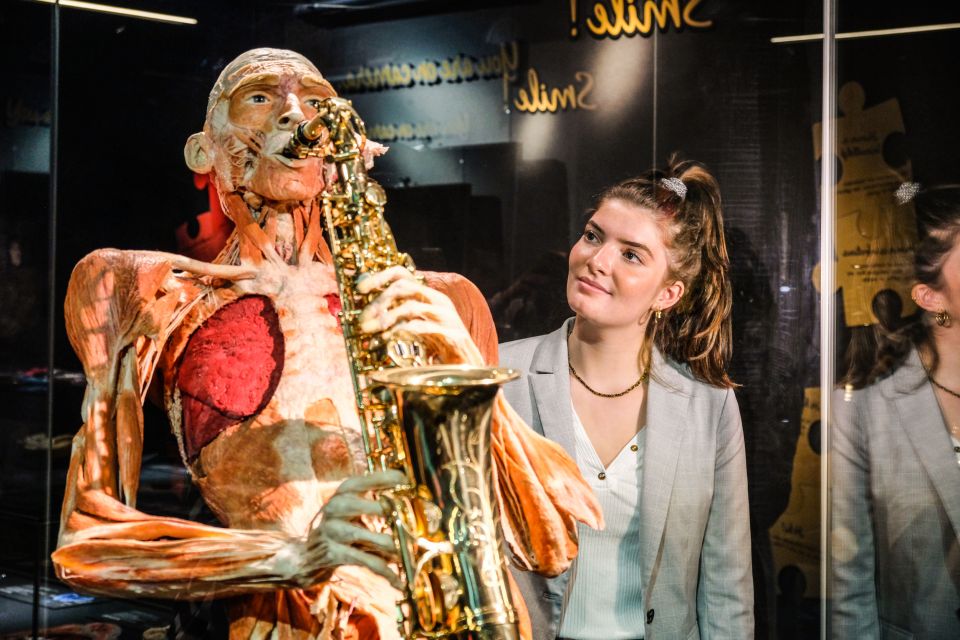
Body Worlds Amsterdam The Happiness Project is in the center of town, at Damrak 66 (1012 LM). Your ticket is set up for a specific time-slot, so it is not one of those museums where you wander in whenever you feel like it. You’ll go straight to the museum entrance and scan your voucher for entry.
The exhibition itself is the main event: entrance to the Body Worlds museum. An audio guide is not included with this ticket option, so if you want extra narration and extra detail, you’ll need to rent one on-site. One thing I appreciate about the setup is that the museum is easy to find and you can plan it as a focused block without fighting for time.
Price-wise, it’s $26 per person for a day. That sounds like a lot until you realize you’re not just paying for a few rooms of displays. You’re paying for a full, multi-floor exhibition built around real anatomical specimens and interactive stations, plus a free body composition scan that turns the science into something about you.
The Happiness Project theme: why mood gets a full anatomical spotlight
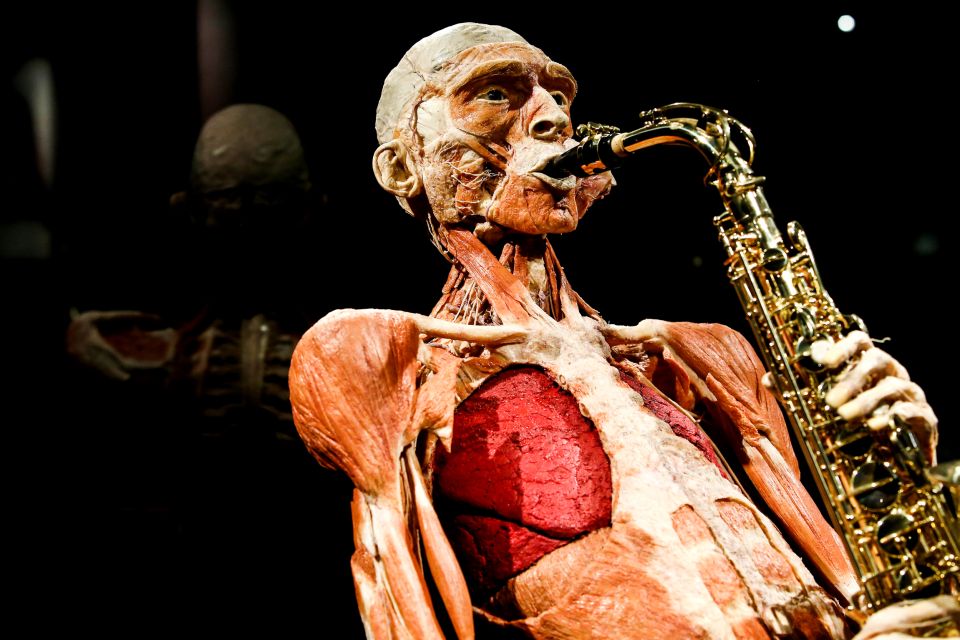
This exhibition is designed around one question: how can happiness and emotional wellbeing connect to physical health? The Happiness Project frames feelings as something your body responds to, not just something you keep in your head.
That theme shows up throughout the exhibition using the body as the reference point. You’re not only looking at anatomy for its own sake. You’re being nudged to connect the dots between wellbeing, resilience, and vulnerability of the human form. Even if you do not think of yourself as a “science museum person,” the theme is approachable because it keeps coming back to how the body works in everyday life.
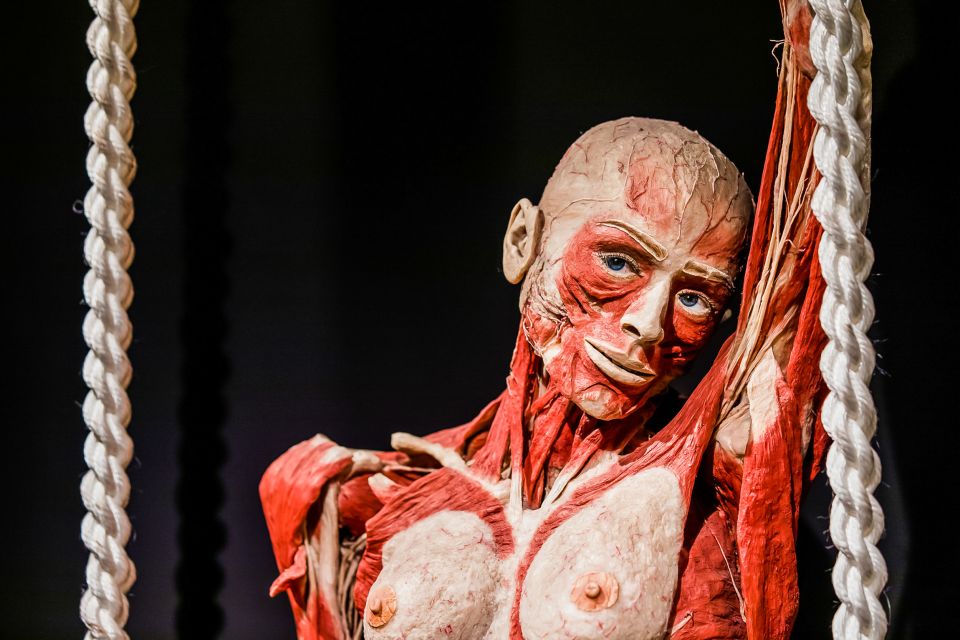
The show is by Dr. Gunther von Hagens, the name tied to plastination. If you’ve heard that term before, this is where it becomes real: you’re looking at preserved anatomical displays created to help people understand structure and function. It’s a different kind of biology lesson than a textbook.
Touring the exhibition: 6 floors, 200+ specimens, and plenty of reading time

Body Worlds Amsterdam is laid out across multiple floors, and several visitors note a six-floor experience with a clear path for moving through. A common flow is starting higher up and working your way down, which helps you keep momentum and avoid the dreaded “where did I leave my brain” feeling.
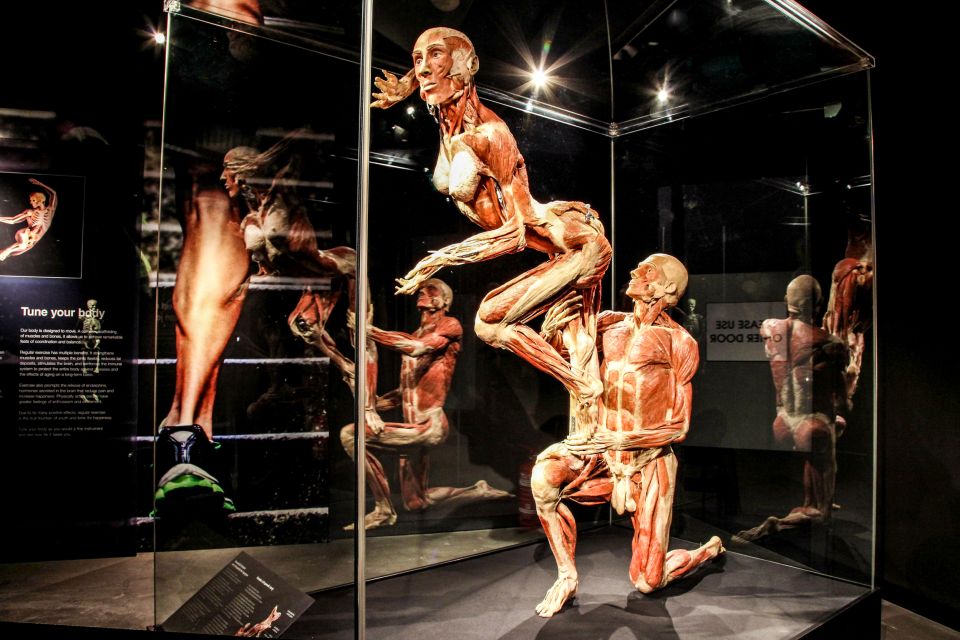
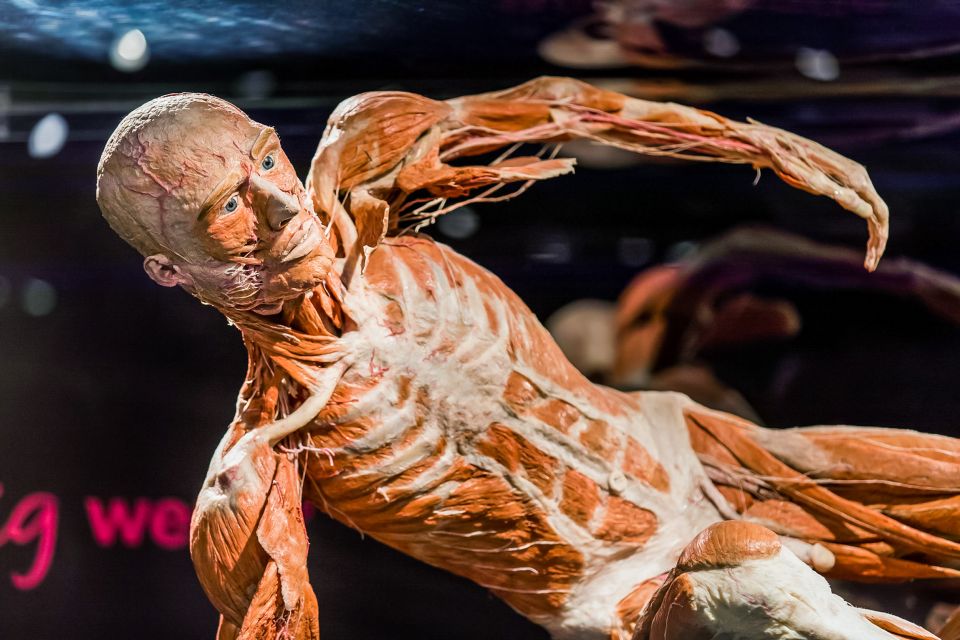
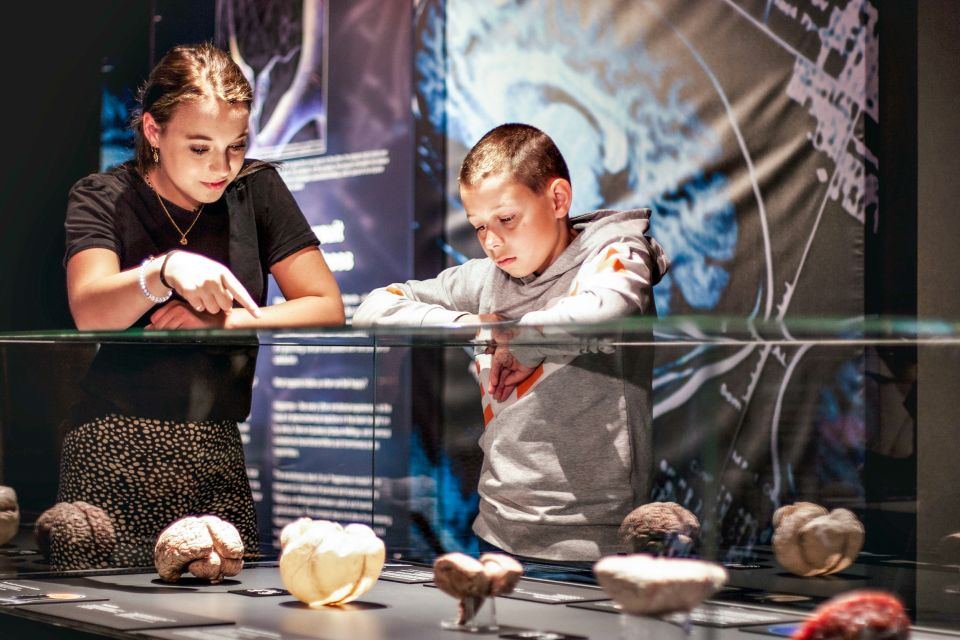
The displays include more than 200 authentic anatomical specimens. You’ll see real preserved human forms, plus models and interactive elements that are meant to help you understand the body in layers—structure, organs, systems, and how all of it connects. Some areas can feel intense at first glance, but the way the museum guides you makes it easier to settle in. It’s not designed as gore-and-scream shock value. It’s graphic in a scientific way.
What I like most is the pacing. You can read at your own speed because there’s a lot of written explanation on display. People also appreciate that you can walk around and absorb the content without feeling rushed into a guided script. If you like facts, you’ll have plenty. If you prefer a lighter touch, you can skim labels and still get the main story.
One practical note: a few interactive stations may not work perfectly at any given time. I would not assume every screen and machine will be flawless during your visit, so treat interactive tools as a bonus rather than your make-or-break plan.
Plastinated humans and interactive stations: hands-on science without a lab coat
A major part of the appeal is that you can interact with plastinated humans and see anatomy from angles you’d never get in a classroom. It’s not abstract. You’re standing close enough to notice details, then stepping back to understand the bigger picture.
Along the way, you’ll run into interactive health tech. Based on what’s been reported, you might see things like:
- virtual anatomy-style learning
- blood pressure interaction stations
- body analysis machines that fit the wellbeing theme
Even if some tech is out of service temporarily, the exhibition still works because the physical specimens and the signage carry the main weight. In other words, you’re not relying on one working screen to make the visit worthwhile.
This is also a good place for mixed groups. If you’re with someone who thinks they only tolerate museums under protest, the interactive science angle often wins them over. It gives you something to do with your hands and something to talk about besides aesthetics.
Your free InBody Scan: the real-world payoff
This ticket includes a free InBody Scan, which is one of the most “value-added” parts of the experience. Instead of only learning anatomy from the outside, you get a health check that estimates body composition.
Your report can include:
- fat percentage
- protein levels
- minerals
- water
That personal angle is where the Happiness Project theme becomes practical. You’re seeing how the museum connects happiness, wellbeing, and health, and then you’re also getting a snapshot of how your body composition measures up. It’s the closest thing to taking the exhibition home with you.
Plan a little patience for the scan area, especially during busy times. One visitor noted the printers used for scan outputs may run out of ink, so the scan experience can be slightly less smooth if you’re unlucky with timing. Still, the scan is part of the ticket, so it’s worth treating it as a highlight you’ll want to budget time for.
Emotions at the end: pregnancy specimens and your boundaries
There’s a section at the end focused on babies at different stages of pregnancy using donated specimens. For some people, that hits hard. If you’ve had pregnancy loss, it can be upsetting.
The museum does give you a way to manage that. People report you can go past that section so you don’t lose the rest of the exhibition. That matters, because it’s easy to get stuck mentally if you arrive expecting a calm science visit.
I’d recommend setting your expectations before you go. This is a museum built from real donated anatomical material, so parts of it will be emotionally charged even when the presentation is respectful.
How long to plan, and when to go in Amsterdam time
Body Worlds Amsterdam is not a half-day filler and it’s not an all-day marathon either. Many visitors suggest around 1.5 to 2 hours to see everything comfortably, including reading time and interactive stops.
If you have limited time in Amsterdam, this fits nicely because it’s in the center and you can pair it with a meal nearby. If you have a full day, it works as a focused break from walking, since you sit and stand your way through a structured indoor route.
Timing matters. One good tip is to avoid going when school groups are in full flow, since it can affect the vibe and how calmly you can read and move. You don’t need a perfect schedule, but choosing a time-slot when it’s not crowded makes a big difference for an exhibition where text and attention are part of the point.
Price and value: is $26 worth it?
At $26 per person, this ticket can feel like a splurge until you look at what’s included. You get:
- entrance to a multi-floor exhibition
- more than 200 anatomical specimens
- interactive elements tied to the wellbeing theme
- a free InBody Scan with a body composition report
That scan alone gives you something many paid activities do not. It turns the visit into an experience that includes a personal output, not just a viewpoint.
It also helps that the exhibition is designed for learning. Several visitors point out it’s not boring and not too short. Others feel it’s a good deal for the amount of information and the uniqueness of what you see. Even if you only care about the science angle, the combination of anatomy + happiness theme keeps it from feeling like a one-note exhibit.
The key is your own interest level. If anatomy and biology are actively interesting to you, the price will feel fair quickly. If you hate anything that feels graphic or emotionally heavy, then it might not.
Practical tips before you go: audio guide, language, and comfort
Two things make your experience easier once you’re inside.
First, language support. Many displays have English and Dutch signage, so you’re not dependent on one language to understand the core message. If you want even more detail in multiple languages, an audio guide is available on-site even though it’s not included in your ticket.
Second, plan for text. The museum is readable, which is great. It also means you’ll want comfortable shoes. You’ll be standing, walking between floors, and slowing down to read labels and look closely at specimens.
If you want the most from your visit, renting an audio guide can help you connect each display to the bigger Happiness Project idea. One visitor specifically recommended doing that, calling it worth the extra cost.
Finally, don’t be shy about asking staff questions. One person highlighted a staff member named Anas as especially helpful. If you get momentarily lost in a floor plan full of specimens (it happens), staff can usually point you back to the route.
Who should book Body Worlds Amsterdam Happiness Project?
This is a strong choice if you fit any of these:
- you like science, anatomy, and real visuals
- you want an educational experience that doesn’t feel like a textbook
- you like interactive stations and want a hands-on element
- you’re curious about how emotional wellbeing might relate to physical health
It’s also a good family option in many cases. The exhibition is suitable for adults and children, with specific ticket rules for ages:
- children aged 4 and under enter free
- 6–17 needs a child ticket
Still, keep the content in mind. If your household is very squeamish about human anatomy or you know someone in your group is sensitive to pregnancy-loss themes, you may want to prepare them (or plan to skip that final section).
Should you book? My decision rule
Book it if you want a central Amsterdam attraction that mixes real anatomical specimens, a clear wellbeing message, and an included InBody Scan. At $26, the scan plus the multi-floor exhibition makes the math work.
Skip or adjust expectations if you’re strongly uncomfortable with human anatomical displays or you’re worried about emotional content at the end. You can go past the pregnancy section, but it’s still part of the exhibition layout.
If you’re undecided, here’s the simple test: if you’d enjoy reading your way through biology with a positive, science-backed happiness theme, this is one of the few places in Amsterdam where the topic feels both unusual and practical.
FAQ
Do I need to enter at a specific time-slot?
Yes. Access is only possible at your chosen time-slot, so plan to arrive around that scheduled entry window rather than treating it like a walk-in museum.
What does my ticket include?
Your ticket includes entrance to the Body Worlds Amsterdam exhibition, plus a free InBody Scan (a health check that reports fat percentage, protein, minerals, and water).
Is an audio guide included?
No. The ticket includes admission only. An audio guide is not included, though it may be available to rent on-site in multiple languages.
How long should I plan to spend inside?
Most visits seem to take around 1.5 to 2 hours, depending on how much you read and whether you stop at the interactive stations and InBody Scan.
Are there age rules for children?
Yes. Children aged 4 years or younger enter free of charge. A child ticket applies for ages 6–17.
Can I cancel and get a refund?
You can cancel up to 24 hours in advance for a full refund.